

By David Dodge, GreenEnergyFutures.ca

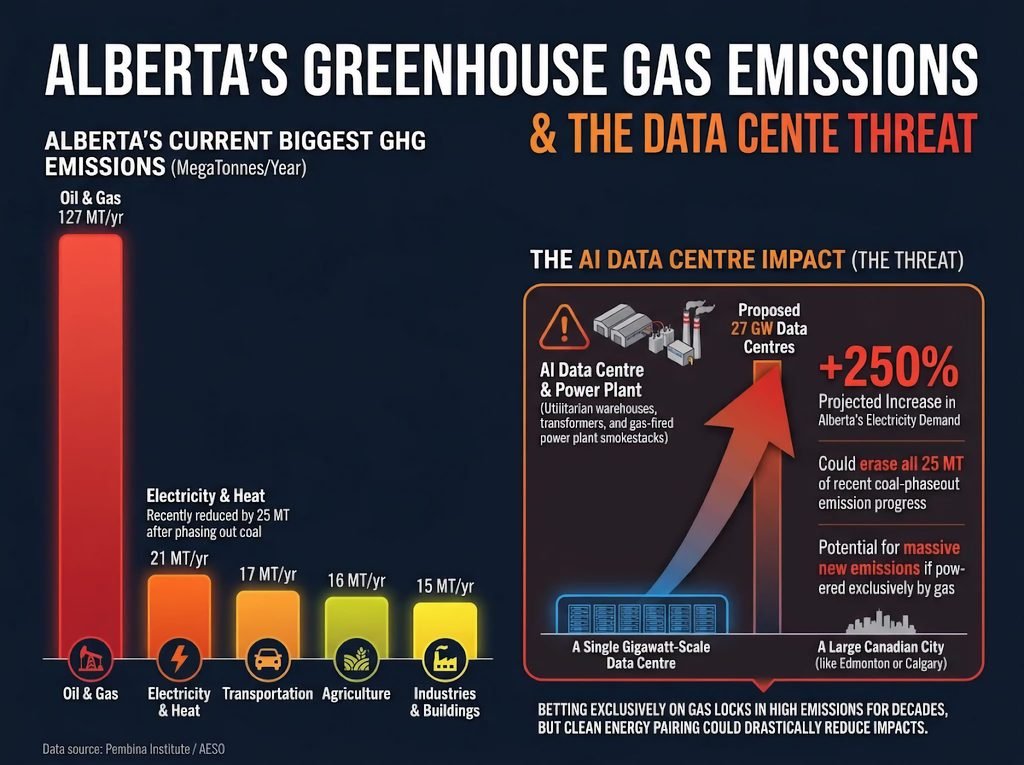
The data centre gold rush is happening around the world and could drive electricity demand in Alberta up by 250%, resulting in rising electricity rates and soaring greenhouse gas emissions.
Pembina Institute policy analyst Will Noel says these energy-hungry data centres could erase all progress in reducing greenhouse gas emissions.
“We’re seeing gigawatt-scale facilities proposed in Alberta using roughly the same amount of electricity as a large city like Edmonton or Calgary,” says Will Noel, senior electricity analyst with the Pembina Institute.
Yes, one project could use as much electricity as a large Canadian city.
Data centres could increase electricity demand by 250% in Alberta
“The latest project development queue published by the Alberta Electric System Operator, the AESO, has nearly 27 gigawatts of new data centre proposals, which is about two and a half times the current electricity needs of the entire province,” says Noel.
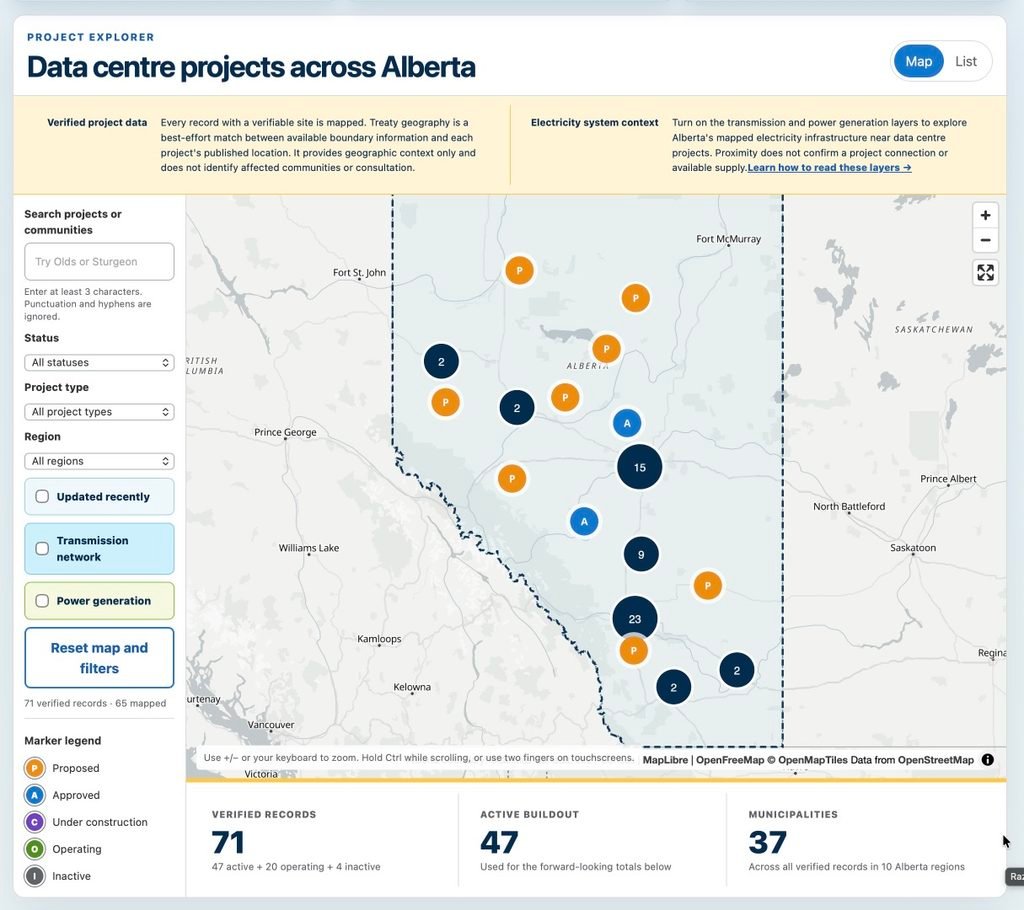
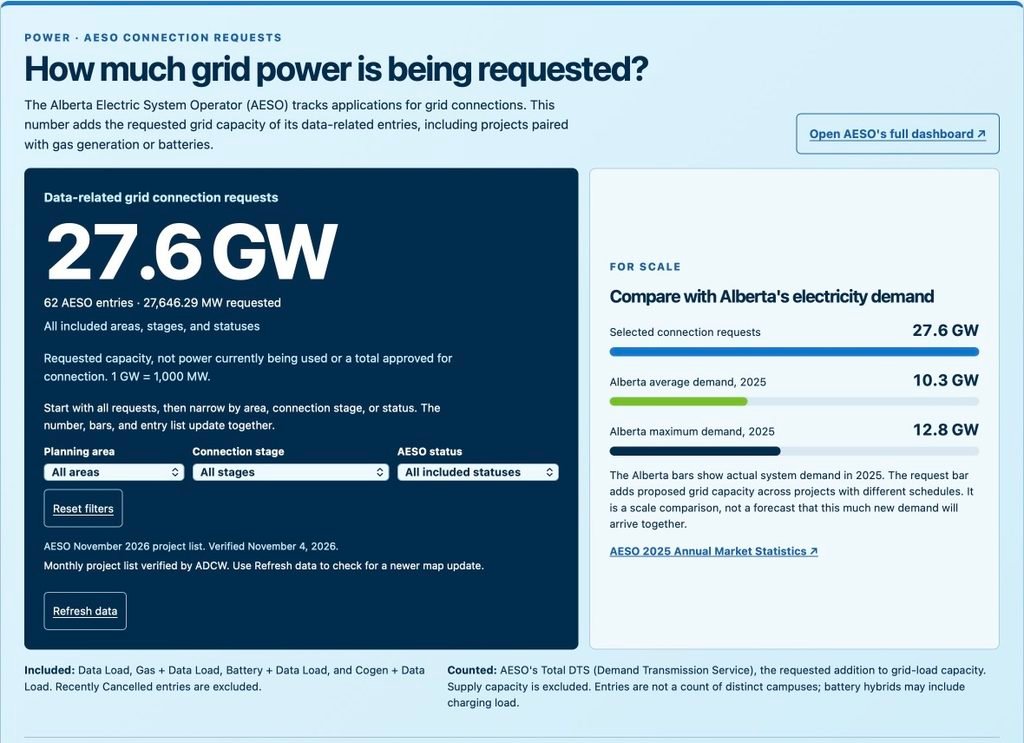
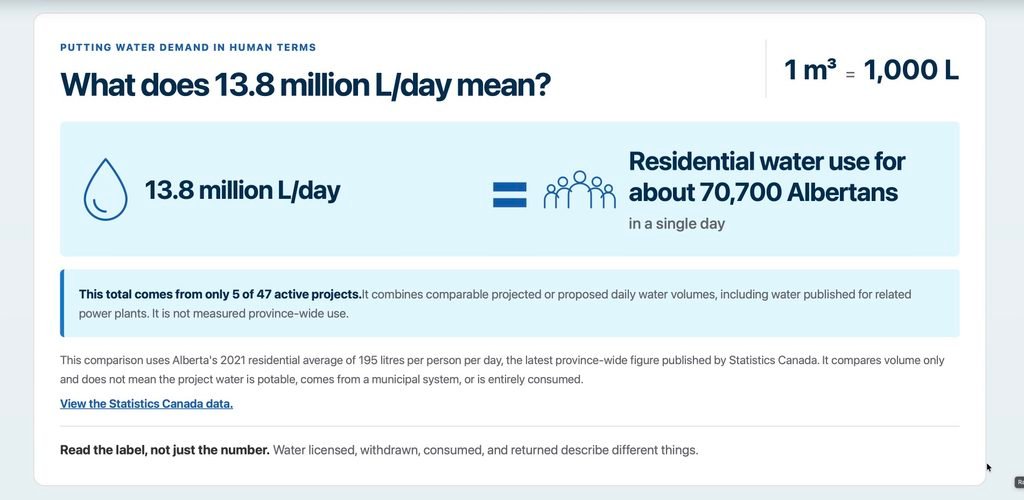
It’s the wild west out there as jurisdictions scramble to attract this largely unregulated industry and the billions in investment it represents. The result could be increased electricity rates, soaring greenhouse gas emissions, significant water use and, as we’ve already seen in other jurisdictions, data centres can be very noisy neighbours.
This has led to a growing backlash against data centres in Canada and the U.S. and was a factor in the U.S. election.
Will Noel argues that the impacts are not inevitable, noting that data centres are not inherently bad. “Really, it’s their choice of electricity supply that dictates their environmental impact,” says Noel.
Good ways to build data centres
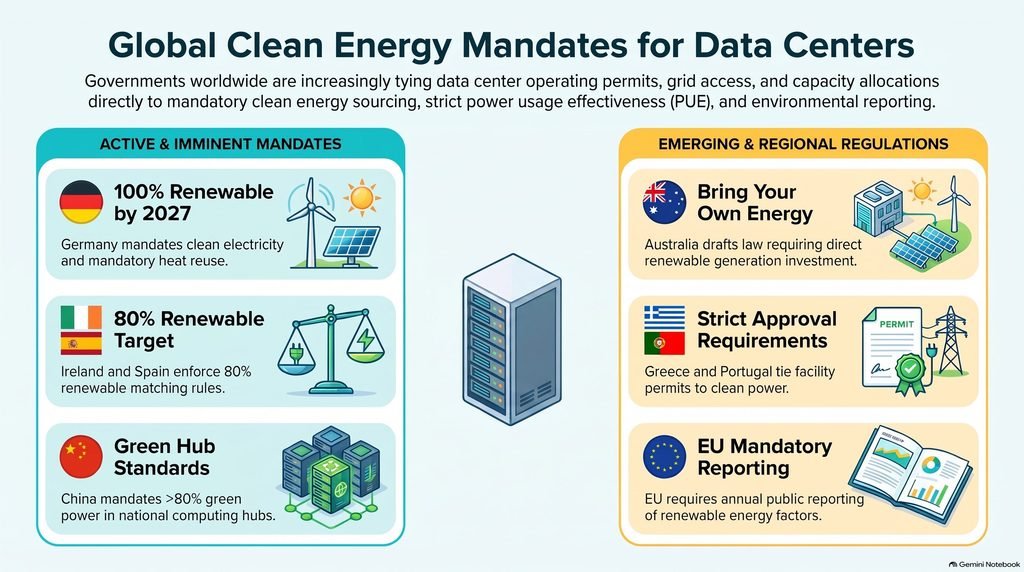
Germany has specified that 100% of data centre electricity consumption must come from renewable energy by January 2027.
Spain says data centres larger than 10 megawatts must match 80% of their hourly electricity consumption with renewable generation.
Ireland and Portugal have similar policies.
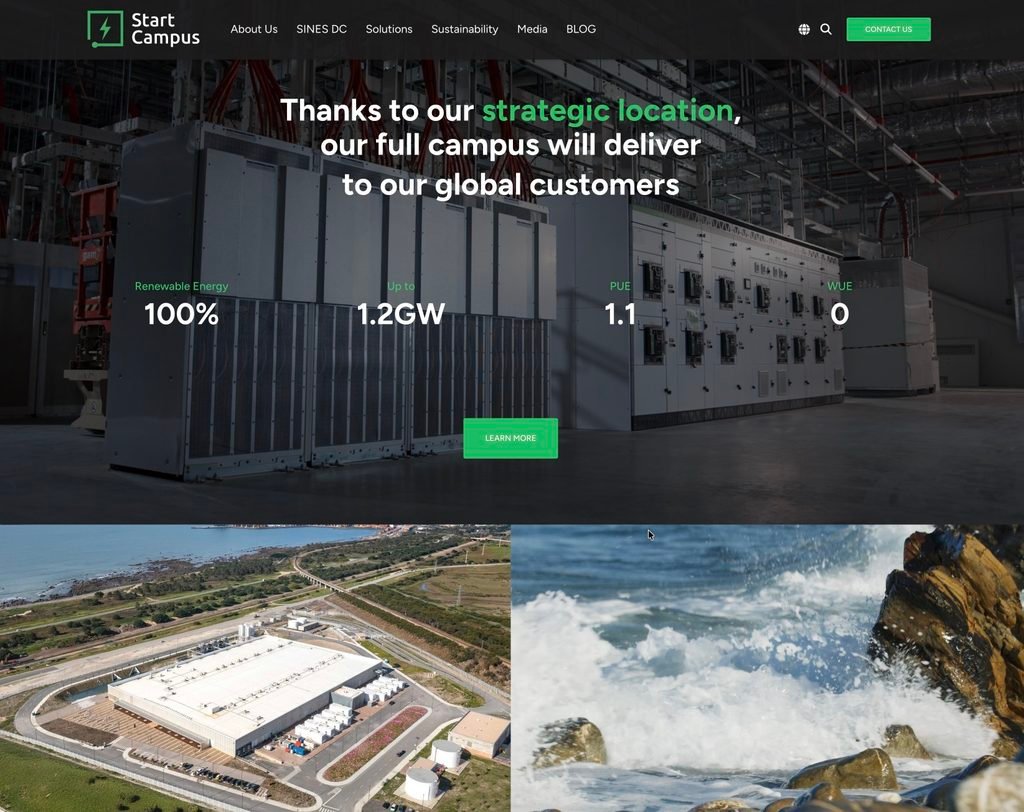
The SINES Start Campus is a 1.2-gigawatt project that will run on 100% renewable energy and use a seawater cooling system. They are many examples around the world.
But in Alberta, the dinosaurs still roam
But in Alberta, the government requires them to use gas.
“The Alberta electric system operator is developing a bring-your-own power rule that doesn’t allow wind and solar to compete. They require gas to be the sole source,” says Noel.
The staggering projected growth in data centres, powered by gas, could erase climate emissions reductions in Canada.

“Canada’s electricity emissions have dropped by about twenty-five megatons per year. And that’s primarily driven by Alberta successfully phasing out its last coal-fired power plant,” says Noel.
Yes, Alberta did one good thing that dramatically reduced greenhouse gas emissions by eliminating coal, but that progress could be wiped out.
And this appears to be where climate action ends in Alberta. Current policies are to block clean energy and supersize fossil fuel development and use as if climate change doesn’t exist.
If you want to do a deep dive on data centre impacts, check out The Energy Mix’s “Hidden Wonder Valley” investigative series. It’s mind-boggling.
It doesn’t have to be this way in Alberta
Just a few years ago, Alberta’s renewable energy industry was booming with billions in investment and billions more poised to follow.
The province effectively shut that down by adding unprecedented layers of barriers and red tape.
“We’ve [Alberta] got cheap gas, we’ve got low-cost renewables and good resources, but the policy environment just isn’t allowing it,” says Noel.
You may recall it was tech firms that led the push for 100% renewable energy with pledges from Google, Apple, Meta, Microsoft and Amazon just a few years ago. They too seem to have abandoned those lofty goals, but it’s not that they wouldn’t build renewable energy.
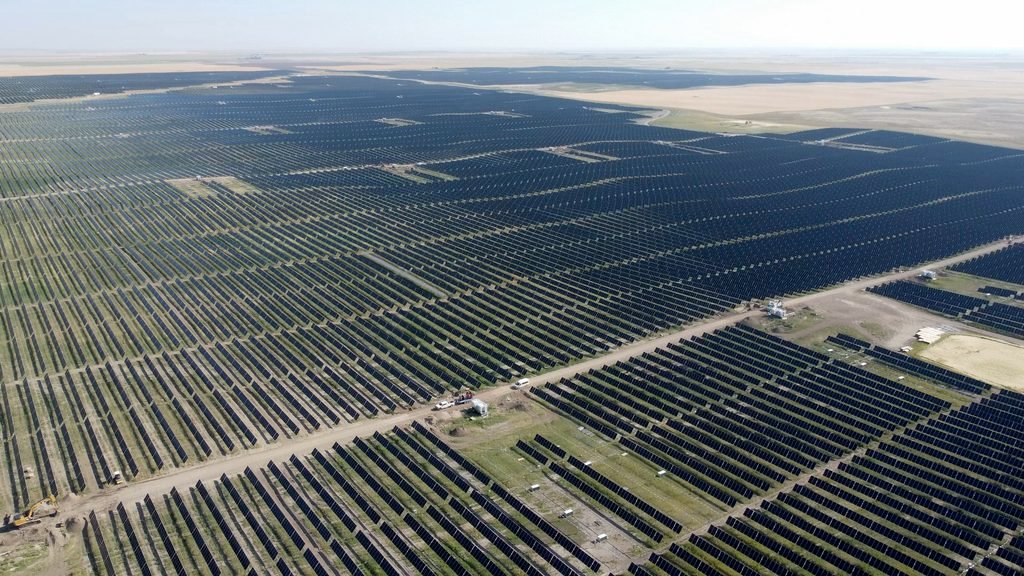
In June 2021, Amazon purchased 400 MW of the 465 MW Travers Solar project’s capacity in a 15-year PPA. This was before Alberta blocked renewable energy when market forces were attracting billions in investment in Alberta. Travers Solar is the largest solar project in Canadian history and 80% of its electricity was sold before it was completed.
Alberta is blocking renewables
“If renewables were allowed, we’d probably see some sort of mix like we are with Google in Minnesota and Texas, where they buy up as much renewable projects as they can,” says Noel.
“There’s lots of construction ready projects here in Alberta just waiting. If they were allowed to, they would procure those, run as much of them off wind and solar as they could and put a smaller gas plant and, the net emissions would be just a fraction of what we’re really looking at,” says Noel.
Alberta’s brazen and exclusive push for gas means large, highly inflexible gas power plants will be built that lock one of the highest emissions jurisdictions into higher emissions for decades.
Alberta could be using “flexible gas plants” paired with large renewable projects, batteries and other new technologies that could not only drastically reduce emissions but also attract investment in clean energy and the economy of the future.
Analysts say that, at the very least, betting exclusively on fossil fuels is a risky investment strategy. Blocking clean energy doubles down on Alberta’s dependence on fossil fuels and kills the golden goose of diversification.
Water use, noise and electricity rates
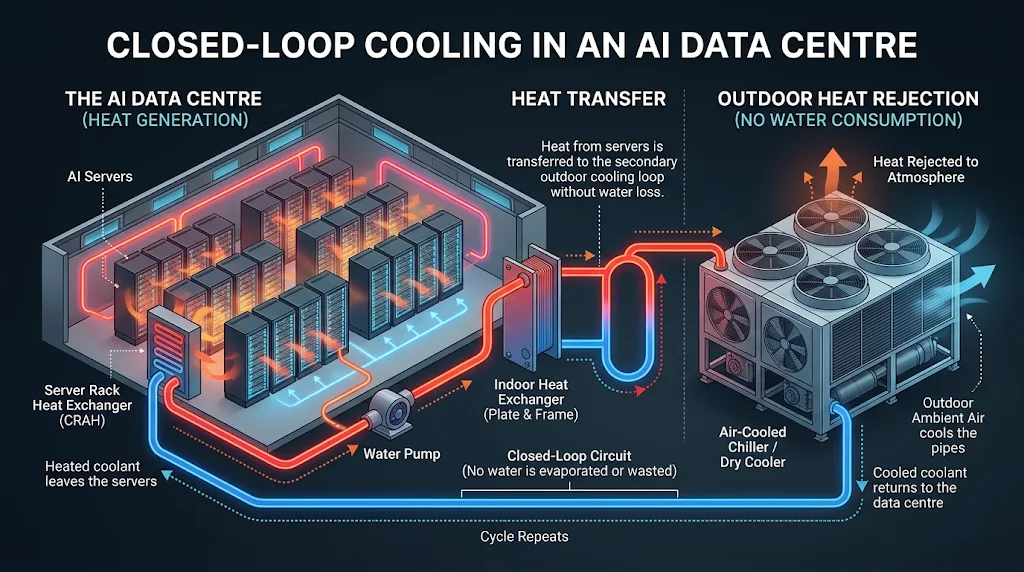
Data centres and their accompanying power generation facilities could use staggering amounts of water to cool operations.
“The technology exists, the closed loop cooling where you have to charge it once and then, top up leaks here and there,” says Noel.
Requiring this technology through regulations could minimize the water impacts. However, “With that, it is worth noting that there’s a bit of a trade-off between water and energy,” says Noel. In other words, it takes energy to save the water, but the energy could be clean energy.
Data centres can also be very noisy neighbours. Jason Haley of Southhaven, Mississippi, describes the constant noise as “torture.”
He’s one of three named plaintiffs in a class-action lawsuit against Elon Musk’s SpaceXAI company that has been operating nearby since 2025.
Will Noel and his colleagues at the Pembina Institute have looked at electricity rates as well. The data centres get 1,200 megawatts of grid access while they build their own power generation facilities. “The price [of electricity] is going to go up by an estimated $260 to $460 per year, per household.”
The future is emissions
The oil and gas sector in Canada is the largest source of greenhouse gas emissions in the country, representing 30% of emissions. With Alberta’s requirements for gas power generation for AI data centres, this will only get worse.
Alberta represents 38% of Canada’s greenhouse gas emissions with just 12% of Canada’s population.
As part of Prime Minister Mark Carney’s “grand bargain” with Alberta to support oil and gas and pipelines, he got Alberta to agree to an industrial carbon price of $130/tonne by 2040 and a few other measures, but he also weakened other climate policies.
With data centres poised to erase any climate emissions progress made so far, Alberta has no apparent or credible plan to develop renewable energy or reduce emissions in any credible way.
Green Energy Future CKUA.com Audio Podcast
Subscribe to Green Energy Futures YouTube Channel
Chasing Net Zero Series
