
By David Dodge, GreenEnergyFutures.ca
Alberta is closed for business. Since 2024, 15 gigawatts of renewable energy projects have been cancelled in Alberta, resulting in the loss of billions of dollars of investment.
Not all of those projects would have been built, but on the other hand, more would have surfaced over that same time period, says Jorden Dye of the Business Renewables Centre Canada (BRC). In other words, renewable energy projects were booming in Alberta.
For perspective, the capacity of Alberta’s entire electricity grid is about 12 gigawatts. The Business Renewables Centre tracks corporate Power Purchase Agreements (PPAs), and they too were booming in 2023 thanks to Alberta’s deregulated electricity market.
As of 2023, the BRC documented 3.3 gigawatts of PPA deals representing more than $6 billion in capital investment. Those projects represent enough electricity to power 1.7 million homes in Alberta.
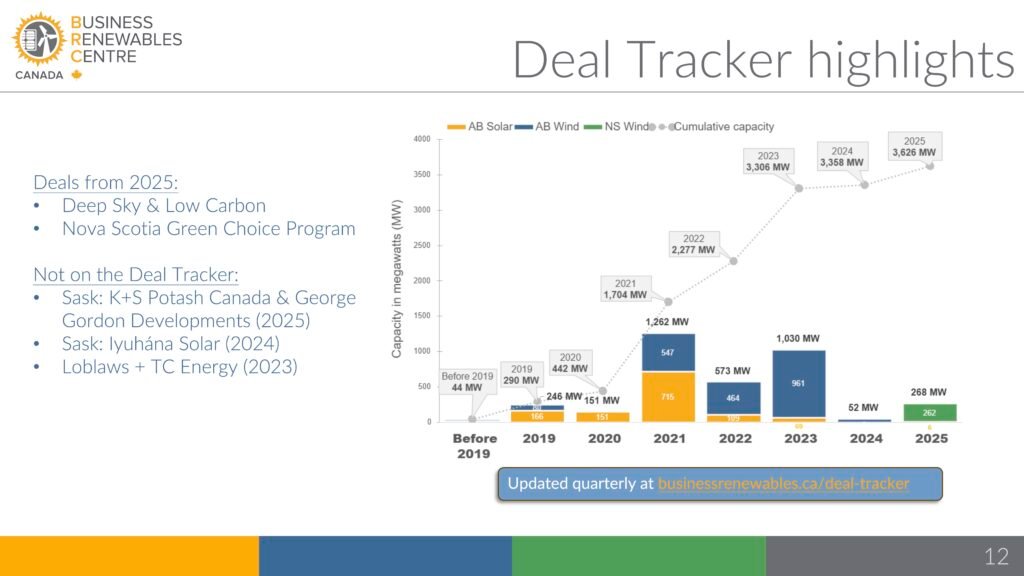
99% drop in PPAs
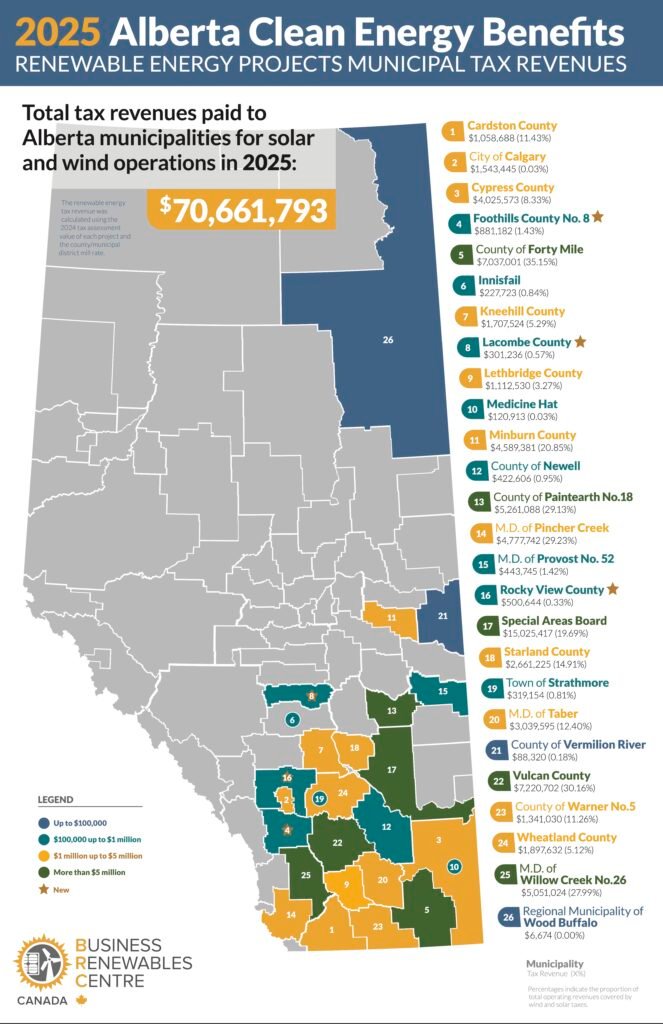
These projects also provide $74 million in tax revenue to cash-strapped municipalities. This amounts to 20% of the annual budget for some municipalities.
But since the renewable energy moratorium and changes made afterwards, “that uncertainty has led to a 99% drop in corporate PPAs,” says Dye.
In other words, renewable energy projects and PPA deals have essentially vanished from Alberta due to onerous regulations and uncertainty being levelled on the industry.
At the same time that Alberta was saying, “We’re not open for business, you have BC, Manitoba, and Quebec doing large-scale renewable procurement. And so this allows developers to say, ‘Hey, Alberta is too hard to work with. I’m going to go to these jurisdictions where there’s opportunity,’” says Dye.
And meanwhile, Nova Scotia has taken over as the leader in securing corporate PPAs for renewable energy.
PPAs were driving investment
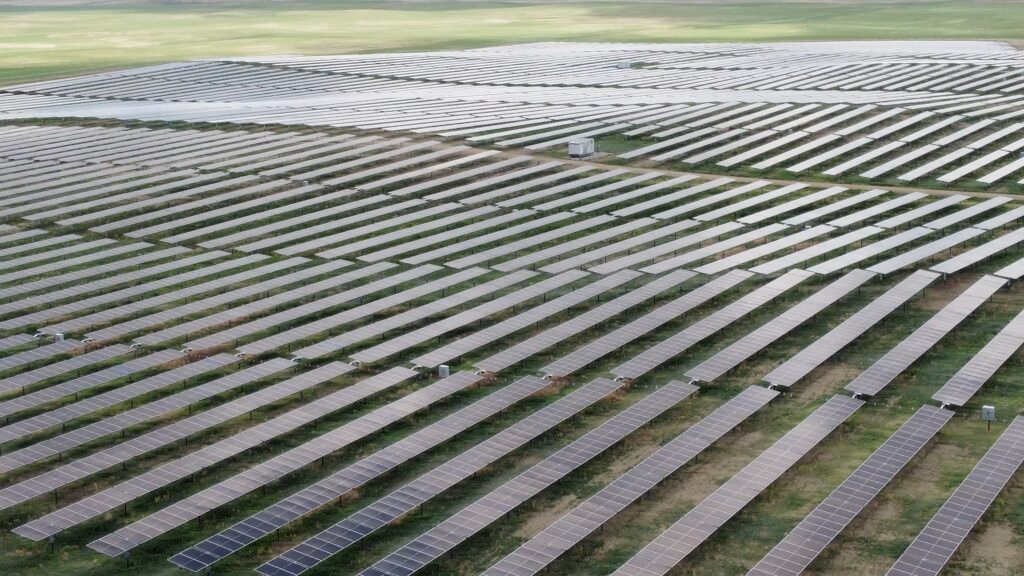
In June 2021, Amazon purchased 400 MW of the 465 MW Travers Solar project’s capacity in a 15-year PPA. This means the investment in the Travers Solar Project was secured before they produced their first electron.
And beyond the investment in renewable energy, Amazon purchased the energy to run its $4.3 billion data centre, announced in addition to their investment in renewable energy.
This added another 950 direct and indirect jobs in one of the largest technology investments in Alberta’s history.
Alberta’s moratorium on renewable energy stopped all development and soon after began imposing rules and regulations far more strict than those imposed on the oil and gas industry for viewscapes, reclamation, and other factors.
Then the province launched a major review of the electricity system.
“There’s transmission review, there’s the restructured energy market, there’s incumbency treatment. We talk about these as one thing, but it’s actually been five different processes,” says Dye.
It should be said that such a review was probably long overdue because the electricity system is not ready for the massive changes already occurring in how we produce and consume electricity.
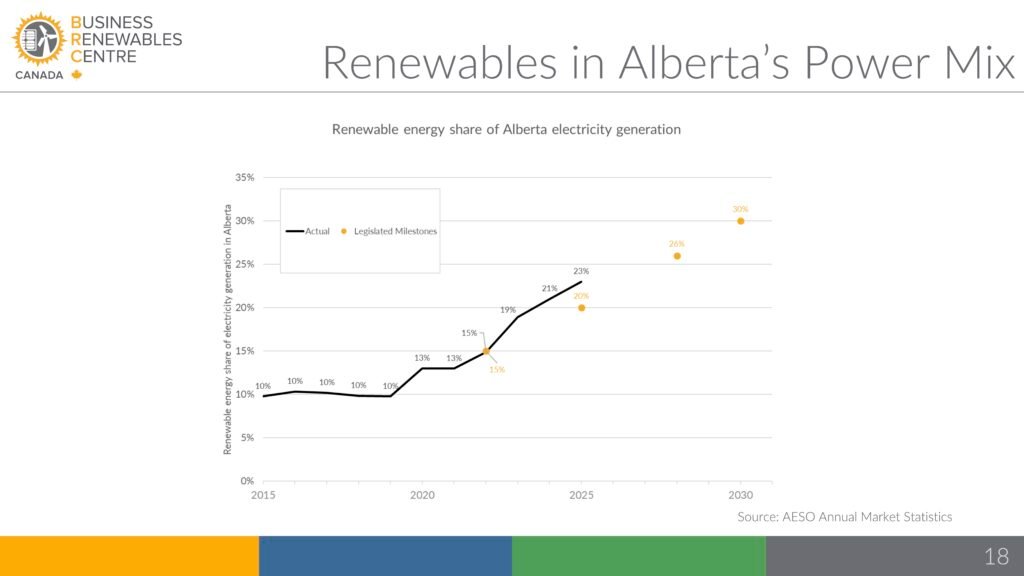
Regardless of Alberta’s negative posture towards renewable energy, decarbonization, electrification, and energy transition are occurring fast.
New regulations and policies are needed to facilitate the onslaught of EVs, electric heating systems, and tens of thousands of decentralized energy producers, such as the 41,000 homeowners who have already installed solar on their homes in Alberta. And perhaps most importantly, reform is needed to facilitate much high proportions of clean energy into the grid.
The question is whether these reforms will facilitate the grid of the future with low-cost renewables or put up more roadblocks to clean energy.
Knock-on impact on investment
Alberta had some of the leading renewable energy entrepreneurs in Canada building the future, climate-resilient grid, and producing cheaper electricity, but the province slammed the door on it.
And as Jorden Dye says, this antagonistic and unpredictable treatment not only affects the renewable energy industry but is affecting other investments.
“And this is, I think, the biggest point I want to make is this doesn’t impact just renewables,” says Dye. “When a government starts telling industry that we will arbitrarily penalize industries, we will start making regulations that create uneven playing fields, that have a knock-on effect across all investments.”
Losing 15 gigawatts of renewable energy projects would have represented an estimated more than $20 billion in investment and the loss of jobs and serious tax revenue for municipalities.
“We did an analysis last year that showed that from the canceled projects that were in late stage alone, municipalities have lost out on $84 million in annual taxes,” says Dye.
The gas dilemma
Meanwhile Synapse Data announced a month ago a $10 billion data centre in Olds, Alberta. Details are scant so far, but it is to be powered by a 1-gigawatt closed-cycle natural gas system.
Then in recent weeks TransAlta announced another data centre MOU to locate another large data centre at its Keephills gas-fired power plant that will use 230 MW of power initially, ramping up to 1-gigawatt over time.
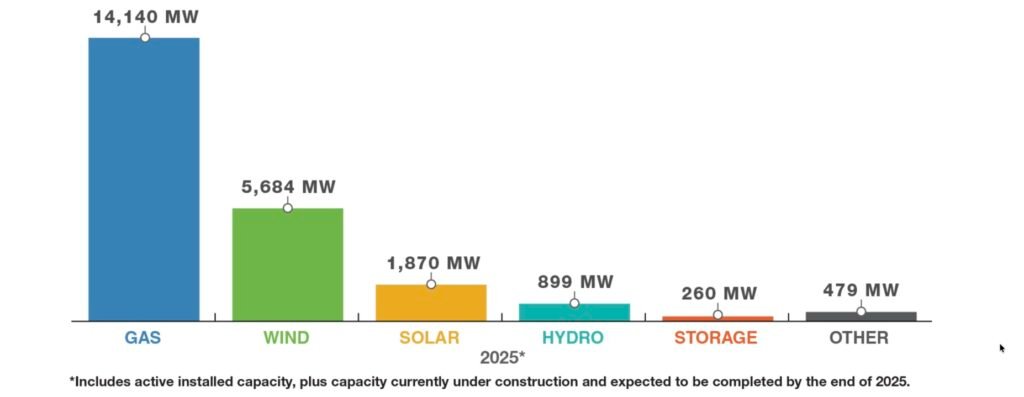
The risk is that Alberta is already deeply dependent on gas-fired power plants in a world where pressure is rising every year to cut emissions.
In many jurisdictions, natural gas is seen as a bridge fuel to clean energy.
Carbon capture projects for some of Alberta’s plants have been cancelled because they were too expensive.
Compounding this risk, big tech firms want clean power, and gas plants take longer to build and currently have supply chain issues in sourcing turbines and transformers.
Renewable energy projects can be built quickly, and that’s why the industry is booming in Europe in connection with data centres along with natural gas.
But long term “The EU’s 2020 digital strategy called for data centres to become climate neutral by 2030,” says an EU Parliament Briefing.
The Business Renewables Centre just produced their State of the Market Report for January 2026. Check out their slide deck here and their 2025 Renewables in Review Report here.
Green Energy Futures CKUA.com Podcast –
Subscribe Today, we have more than 400 episodes
