
Chasing Net Zero Series
By David Dodge, GreenEnergyFutures.ca
Doug Tarry is a leader in building climate-resilient, super energy-efficient net-zero homes in Canada. In fact every home he builds is built to a net zero ready standard.
Doug Tarry Homes, has built 686 net-zero-ready and net-zero homes in St. Thomas, Ontario. And Doug has even written a book, “From Bleeding Edge to Leading Edge: A Builder’s Guide to Net Zero, Homes” to help other builders follow in his footsteps.

St. Thomas is located halfway between Detroit and Buffalo on the Canadian side of the border and is known as the “Railway City of Canada.” It is also famous for its life-sized statue of “Jumbo,” the world’s most famous circus elephant, who was ironically struck and killed by a train in the City in 1885.
This is the second story in our Chasing Net Zero series.
Doug Tarry Homes is one of the most successful builders in St. Thomas, but it wasn’t easy making that fateful decision to build only net-zero and net-zero-ready homes.
The journey began back in 2008, when a judge at the St. Thomas Builders Awards took Doug Tarry aside.
“He said, you know, this home is very close to being ready for Energy Star. You should really consider the program,” says Doug Tarry.

Energy Star the gateway to net zero
“And so my brother Bill and I got trained, and we did our first Energy Star home within a matter of months after that training,” he says.
“And that was really the impetus. That’s what got us started down the path. So, we were one of the first 50 builders that did Energy Star here in Ontario, and it just clicked with us. It made a lot of sense.”
Every home Doug Tarry has built since 2008 has achieved an Energy Star rating. Then, when Natural Resources Canada set out to help builders find a pathway to net zero, Doug Tarry couldn’t help himself.
“I sat on that committee, and we did a fairly deep dive on it and started to understand it,” says Tarry.
“There are some technical challenges that you’ve got to overcome, particularly on the [heating and cooling] loads getting so much lower,” says Tarry.
Dealing with radically reduced energy demand
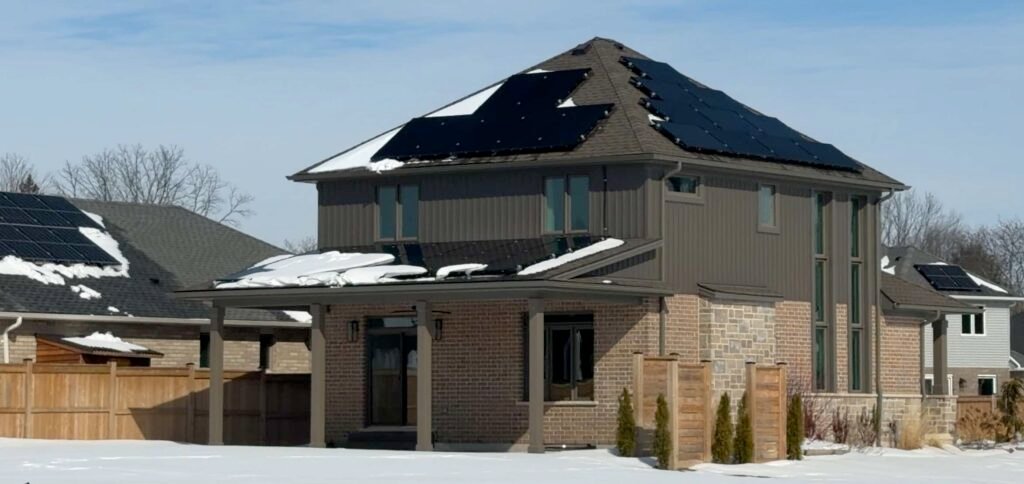
He says overheating can ironically become a big issue with these super energy-efficient homes.
It sounds counterintuitive, but Doug Tarry Homes sourced windows that resisted overheating the home.
“They are triple-glazed. So they are better insulated than a typical double-glazed window. But one of the key things that we put on it above grade and below grade is a low solar heat gain coefficient coating on here,” says Mike Fishback, manager of design and estimating at Doug Tarry Homes.
“The reason why we have that low solar heat gain coefficient on there is we do not want to overheat rooms and spaces,” he says.
The irony here is during the early days of net-zero building, many builders tried hard to work with passive solar heat gain. They built big windows facing south. Some even added concrete floors as thermal mass to store passive solar heat from the sun. And then many built window shades that completely blocked direct sun in the summer and let it shine in in the winter.
But Doug Tarry was on a mission to build the simplest, most affordable net-zero home money could buy. Keeping the design lean and simple was paramount to success.
The next challenge was heating the homes using electricity. Since these homes require 70% less energy, you need the right-sized heat pump to manage heating in the winter and cooling in the summer.
“It was a frustration point for sure within our program because we knew we had to have the comfort level. We knew we had to have the right sizing, but it wasn’t necessarily off-the-shelf solutions,” says Tarry.
So Doug Tarry started his own heat pump company
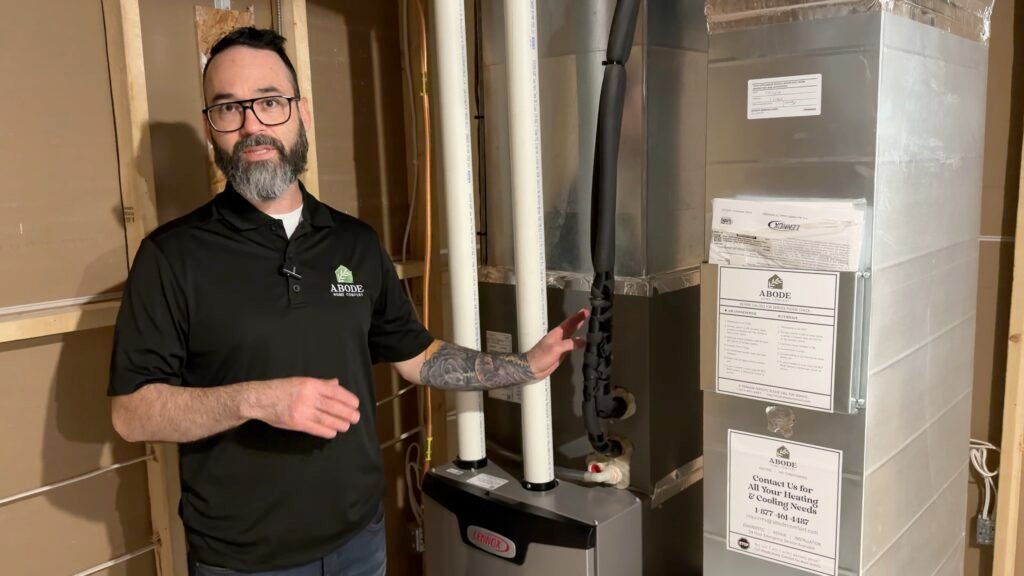
“So, Doug, Tarry Homes really took control of the situation,” says Jean-Paul Fortier residential new housing supervisor at Abode Home Comfort.
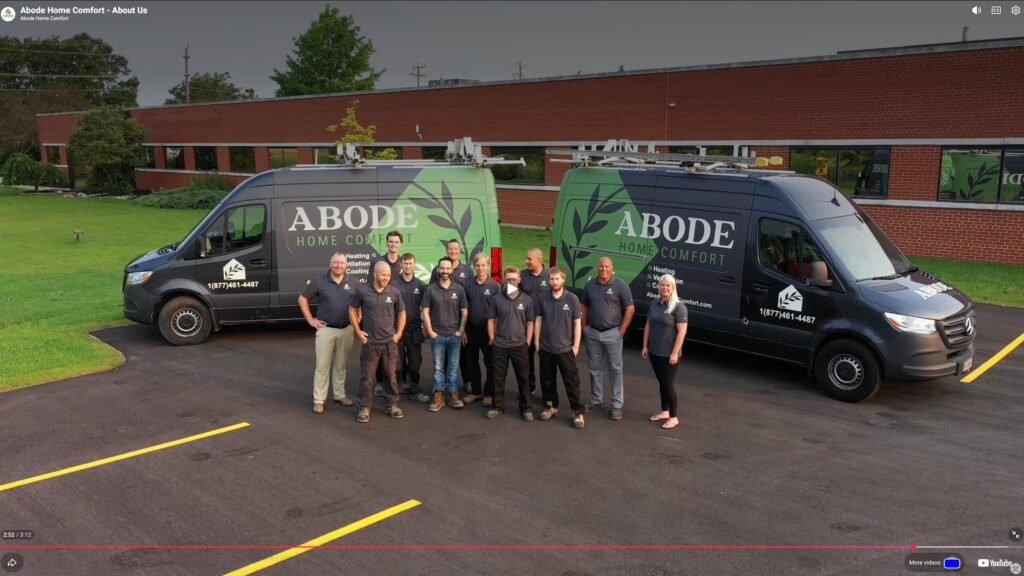
Doug Tarry Homes “opened up their own heating and cooling company. He opened up Abode Home Comfort, and we’re actually heat pump specialists in this space,” says Fortier, who heads the company today.
“Doug Tarry does want to push the envelope and be a leader in the space. And heat pumps will be standard in the future going forward,” he says.
Naturally, they increased the insulation to around R30, paid special attention to air sealing the homes, and added Energy Recovery Ventilators to provide abundant fresh air and recover up to 75% of heat in exhaust air.
The pieces were starting to come together, but with most of the technical issues solved, Tarry then needed the support of their sales team.
Yeah, but can we sell net zero?
“Our salespeople get a base wage, and they also get commission on sales, and there was a lot of concern,” says Tarry.
“I think Doug’s light went off when he was able to convince me to do it,” says Suzie Dennis, VP of Sales and Marketing at Doug Tarry Homes.
“Is this going to hurt their ability to make sales and is it going to hurt the overall company’s profit? If this doesn’t work and we find we priced ourselves out of the marketplace, then that could be a problem,” Tarry says.
“I managed the sales team, and I do the marketing for Doug Tarry Homes,” she says.
“And we had to find a way to not only get the message out, but to get people to trust us in what we do and why we’re doing it.”
“And once he got me on board, I think we were able to make that leap because he believed in it wholeheartedly,” says Dennis.
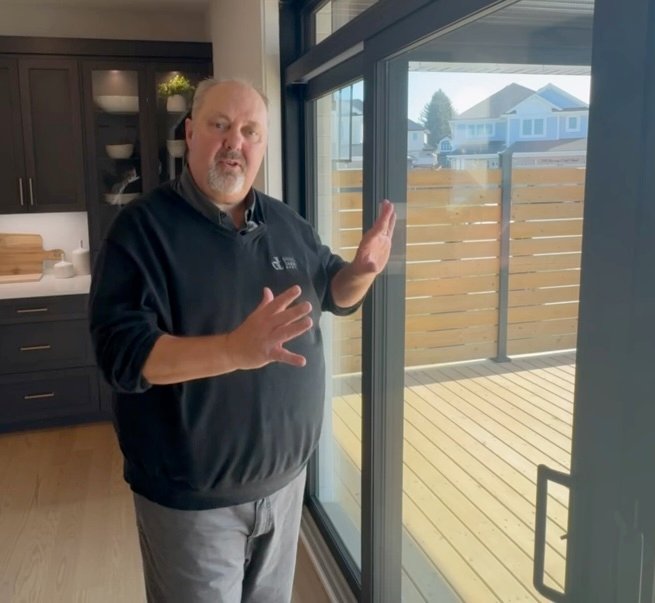
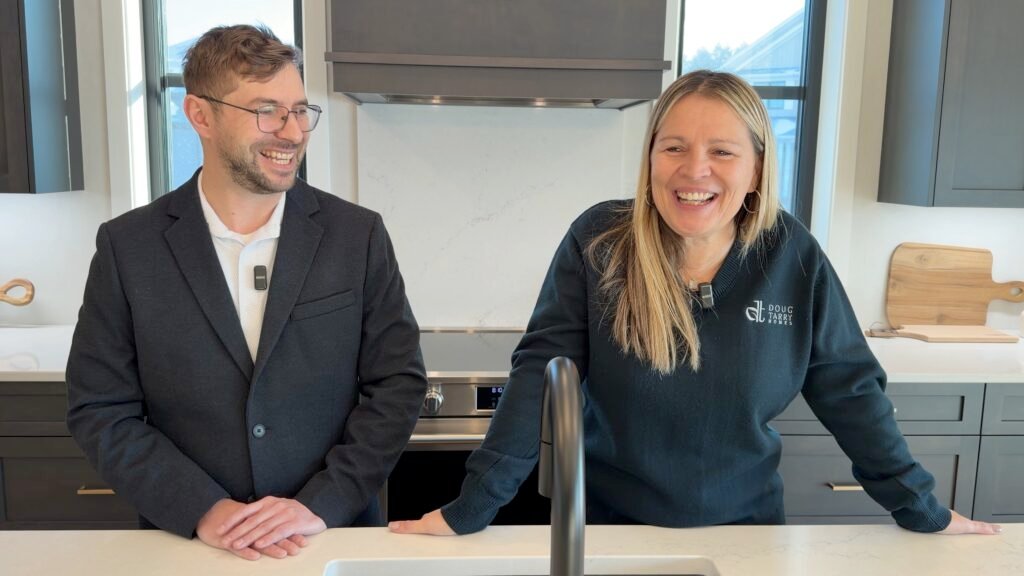
When I asked Suzie Dennis and Mike Fishback when Doug Tarry Homes went all net zero ready, Fishback said, “It was January 1st, 2019, and that was our full, complete Doug Tarry Homes package.
“We live and breathe our net zero standard.”
“Why do you know that?” I asked, somewhat surprised.
“Because we talk about it every single day. We live and breathe our net zero standard,” says Fishback. “It’s what we do,” added Dennis.
Since then, Doug Tarry and his staff have never looked back.
“We have not deviated from what our home building standard is; they’re all done to the same quality, like the same expectation, and really under the same brand of Doug Tarry Homes, and they’re all net zero ready,” says Fishback.

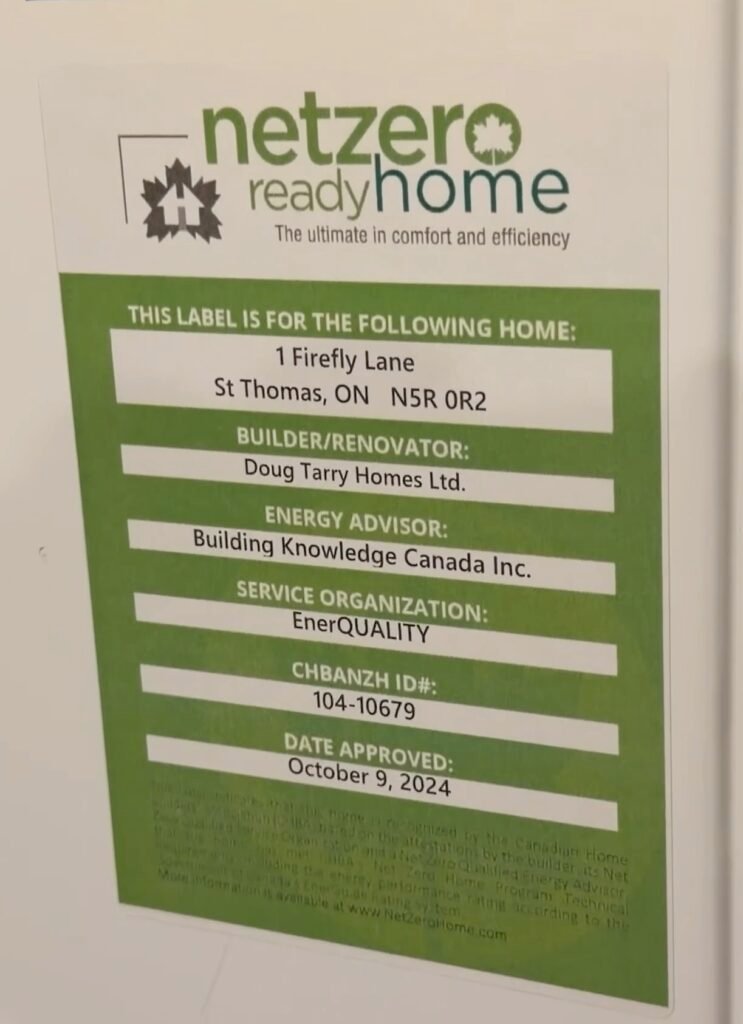
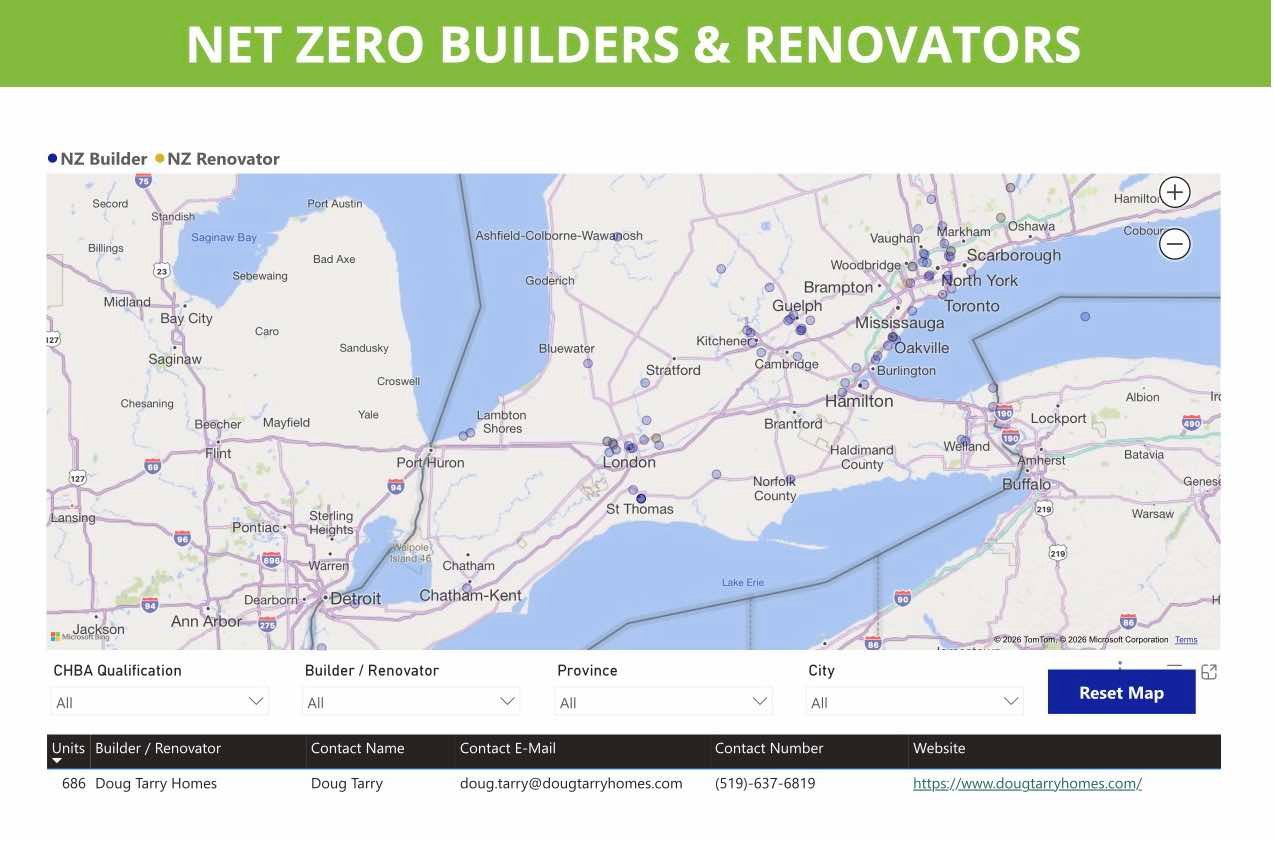
As of this writing, Doug Tarry Homes has built 686 net zero and net zero ready homes, all labelled under the Canadian Home Builders Association Net Zero Home Labelling program.
What makes Doug Tarry different is his relentless pursuit of innovations that help him build affordable net zero homes.
In the early days of net zero, builders talked about the upcharge being $70,000 to $100,000 to take a code-built home net zero.
But Tarry has single-handedly rewritten that narrative. A big part of the answer was committing to building only minimum net zero-ready homes. This means he builds one standard of home, and thanks to his relentless pursuit of innovation, he is doing it for what probably is the lowest cost in Canada.
Tarry opened his own heat pump company and his own panelization plant, all with a view to building more cost-effectively. More on this in our next story.
Lean, mean and terrific value
According to Sonja Winkelmann of the CHBA Net Zero Home Labelling Program, builders are getting so good at building net zero ready homes the added cost of going net zero ready is estimated to be less than $20,000 per home. And that’s for a far superior home that will have ultra-low utility costs for the life of the home.
Tarry says it only cost them $5,000 to take their homes from Energy Star to Net Zero Ready, which means these are some of the highest quality homes ever built for only a small premium that is more than made up for in comfort, healthy air, and energy savings.
Like many builders, Doug Tarry Homes started building net zero ready homes with hybrid electric heat pump/natural gas heating and cooling systems. Heat pumps do the lion’s share of the work with natural gas providing backup for the heat pump on cold winter days.
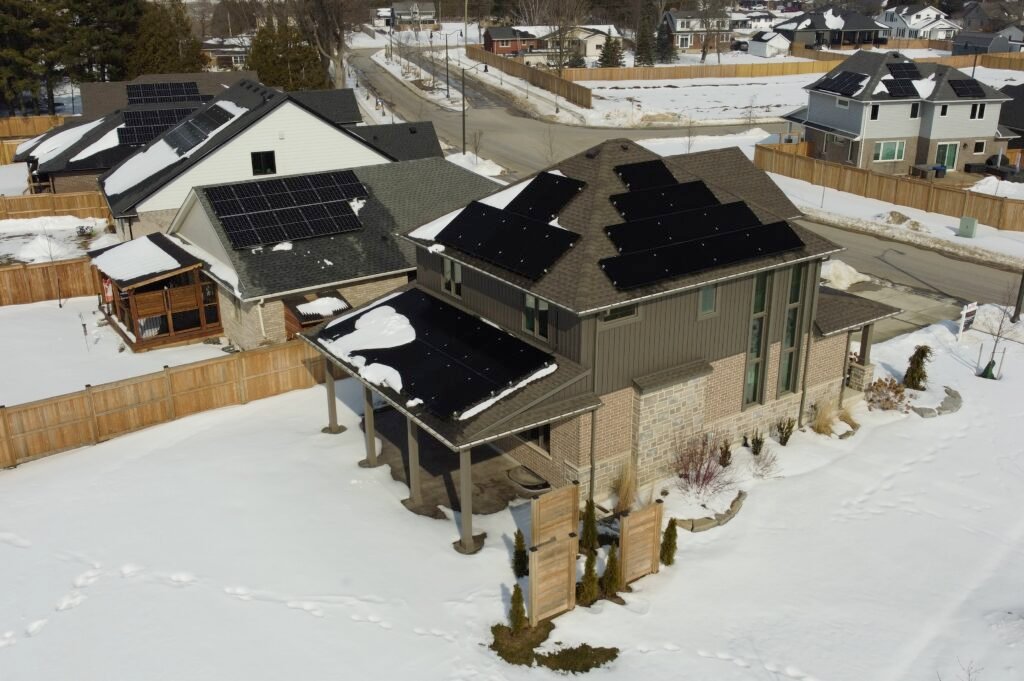
But with advances in heat pumps, some of which are rated to -35 °C these days, and improved consumer awareness, Doug Tarry is now also building all-electric neighbourhoods where there is no gas backup.
Going all electric means no gas bill and obscenely low utility costs. This will become the new norm as consumer acceptance and trust of heat pumps increases.
Doug Tarry got good advice on his journey to net zero; he hired good people and was one of the first builders in Canada to transition to building only net zero ready and net zero homes in Canada.
YWCA Tiny Home Net Zero
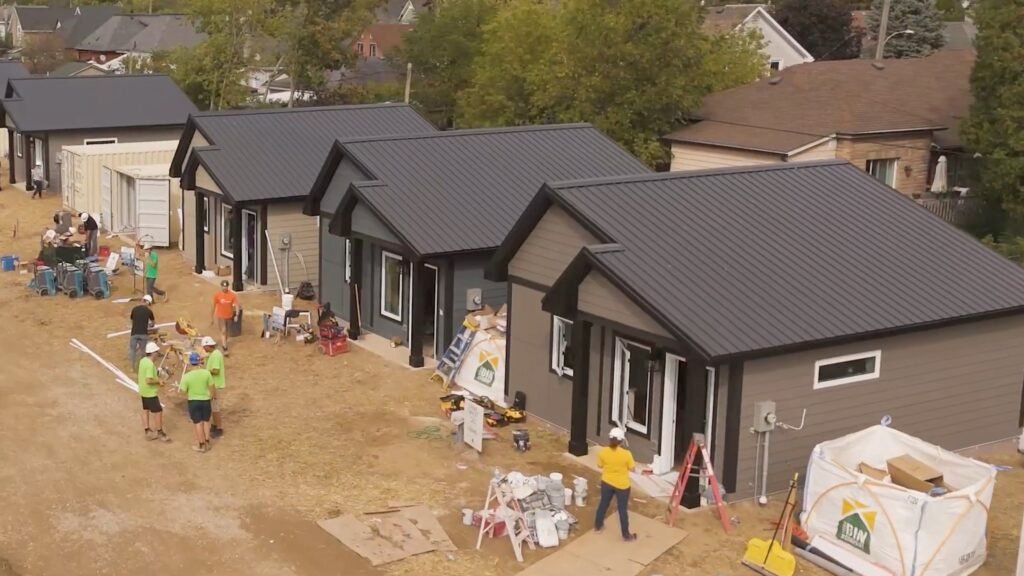
Doug Tarry even took his expertise in building net zero and applied it to Tiny Homes in a special community project.
“Tiny Homes was a big dream idea Doug had in collaboration with the YWCA,” says Dennis. The YWCA came across a parcel of land and they wanted to make housing more accessible by building tiny homes. Doug Tarry brought his expertise to the Project Tiny Hope initiative and even taught the other builders involved to build net zero ready tiny homes.
As we already mentioned, Doug Tarry wrote a book for builders on how to build net zero homes.
“We wanted to share the secret sauce if you will. To make sure that others had the opportunity to be able to do this with less pain than what we did, as we had to invent a lot of the things along the way,” says Tarry.
Indeed, many other builders have made a pilgrimage to St. Thomas to learn what Tarry has learned.
“We’re very happy to share that because we believe that more homes need to be built this way. Not for the elite, but for everybody.”
Steve Rolston of Land Ark Homes did just that as we reported in our first Chasing Net Zero story on Watercolour his net zero ready community being built in Westport, Ontario.
If you want to know Doug Tarry’s secrets for building net zero, watch for our next story, the secret cause of Doug Tarry’s net zero homes.
This is Chasing Net Zero, a series of stories on Canada’s most inspiring builders building the homes of tomorrow today.
