
CHASING NET ZERO
AUDIO BLOG
By David Dodge, GreenEnergyFutures.ca
The energy advisor is the unsung superhero of the net zero home building revolution.
Every net zero builder we’ve spoken to in our Chasing Net Zero series credits energy advisors with not only helping them get to net zero, but more importantly, helping them do it cost-effectively.
And there is one name that has come up again and again – it’s Stephen Magneron of Homesol Building Solutions. In fact, he’s referred to as “a Master Energy Advisor and Net Zero Energy Advisor.”
You rarely hear about these advisors unless you ask, but as Steve Rolston of Land Ark Homes put it when he was considering all the ways to get to net zero: “I felt like I was tied up in knots. Here are a hundred production things you can do, here are a hundred performance things you can do. You blend all those things together, and you figure out how you’re going to get to net zero.”
“They [Rolston and Land Ark] were hoping to achieve Energy Star first and then eventually net zero. And through consultation with them, it made a lot of sense to go straight to net zero now because they could do it, and it was achievable,” says Stephen Magneron.
Today Rolston and Land Ark are building an entire community of net zero ready and net zero homes in Westport, Ontario, very successfully.

Sure, building homes to net zero is the right thing to do, and many of the builders we have spoken with are very committed to net zero, but in a very price-sensitive market the economics have to look good.
The homes must be affordable, and they must offer other tangible benefits to homeowners.
Homesol Building Solutions is a big player in this space. They have offices in Ontario, PEI, Nova Scotia, New Brunswick, Newfoundland, and Alberta.

They work on residential, multifamily, and other formats of buildings, and yes, they also do the energy audits we’re all familiar with. If you have ever applied for a grant or incentive to do energy efficiency improvements to your home, you were probably forced to do one.
They are also working with builders to achieve and then verify the Energy Star for New Homes certificate and increasingly to achieve CHBA Net Zero Home Labelling.
At my suggestion, my neighbour called an energy auditor to get an audit on his cabin – the auditor asked, “Why, are you applying for grants or incentives?”
I once thought this way as well.
But I have undergone a paradigm shift. Society is on a mission to radically reduce emissions and energy use in homes thanks to climate change and energy prices.
The building code for new homes will reach net zero as early as 2030. The goal is to bring all existing buildings up to a net-zero standard by 2050. There are roughly 16 million existing single-family and multi-residential homes in Canada.
I now realize we all should get an energy audit of our homes regardless of whether we are applying for grants or incentives. The reason is simple.
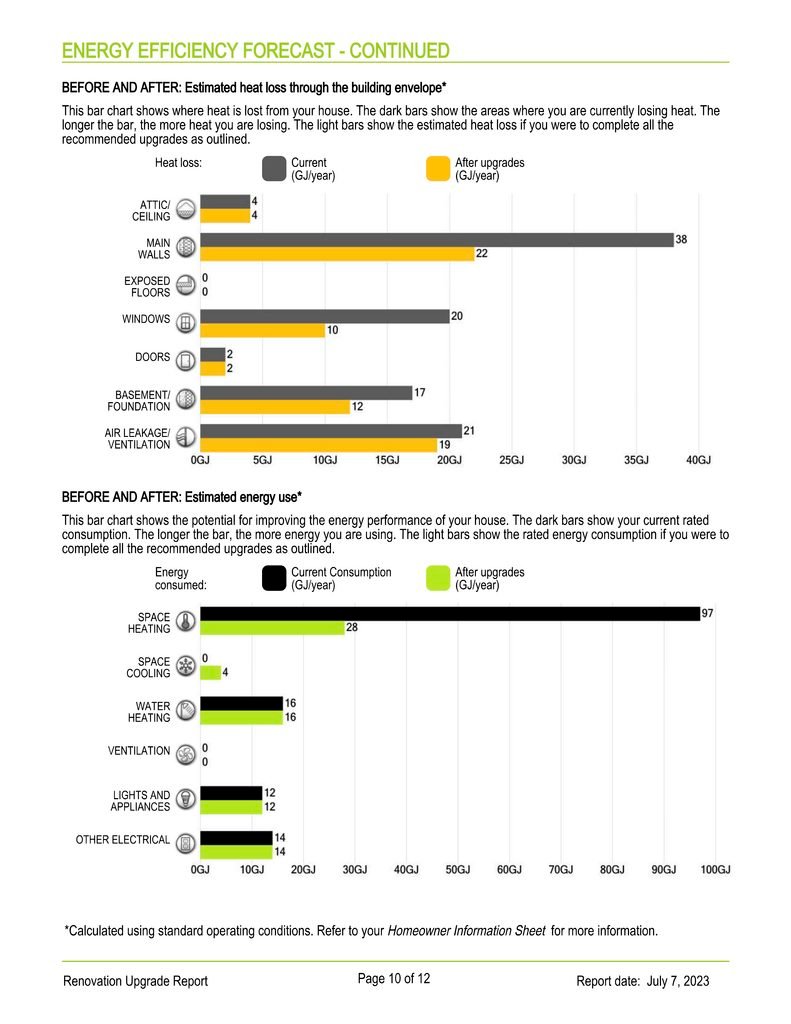
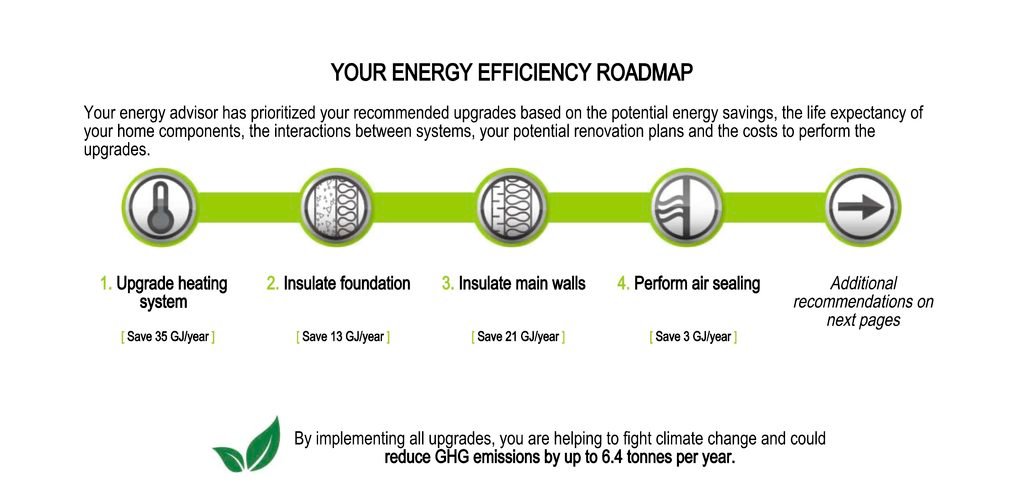
It will give you real hard data on where you are wasting energy, what your best investments are and a strategic pathway to net zero.
Ok, maybe you can’t see yourself getting to net zero any time soon, but why not spend your upgrade money wisely, get the best bang for the buck, and avoid compromising your pathway to net zero with questionable upgrades?
This describes my situation perfectly. I wanted to put a heat pump in my 2×4-walled cabin with a wood stove.
The expertise in the HVAC companies is not there yet, for the most part, to make this decision responsibly.
So, I hired an energy advisor who told me exactly where I was wasting energy, with actual numbers for the roof, walls, crawl space, airtightness, etc.
He also gave me the design heat load of the cabin. With this number, I was able to figure out if a heat pump could heat my cabin.
I described this adventure in our story “Worst-case Scenario” for a heat pump.”
“When a homeowner wants to put a heat pump into their existing home, we have several tools available to us to help them make the right choices,” says Magneron, who is increasingly being asked questions like this.
“Our advice doesn’t only provide them with numbers, but it also provides them with great, solid building science advice that relieves the myths and misconceptions that are ripe in the industry,” says Magneron.
Ask anyone; we all have our own intuitive ideas about how to make our homes warmer, more energy efficient, and better to live in. But as we have learned, a good energy audit and good data can help us prioritize actions to get the best bang for the buck and sort through the many options, as Steve Rolston of Land Ark says.
Net Zero Revolution
Energy Advisors are the unsung heroes of the dawning of the age of affordable net zero homes.
“As we get closer to the 2030 code of net zero for new construction, we can show people that it can happen now, and we’re doing that with a lot of our builders who are building net zero as a standard today,” says Magneron.
To learn more, we joined energy advisor Stephen Magneron on a tour of two builders and one retrofitter in the Ottawa area to learn more.
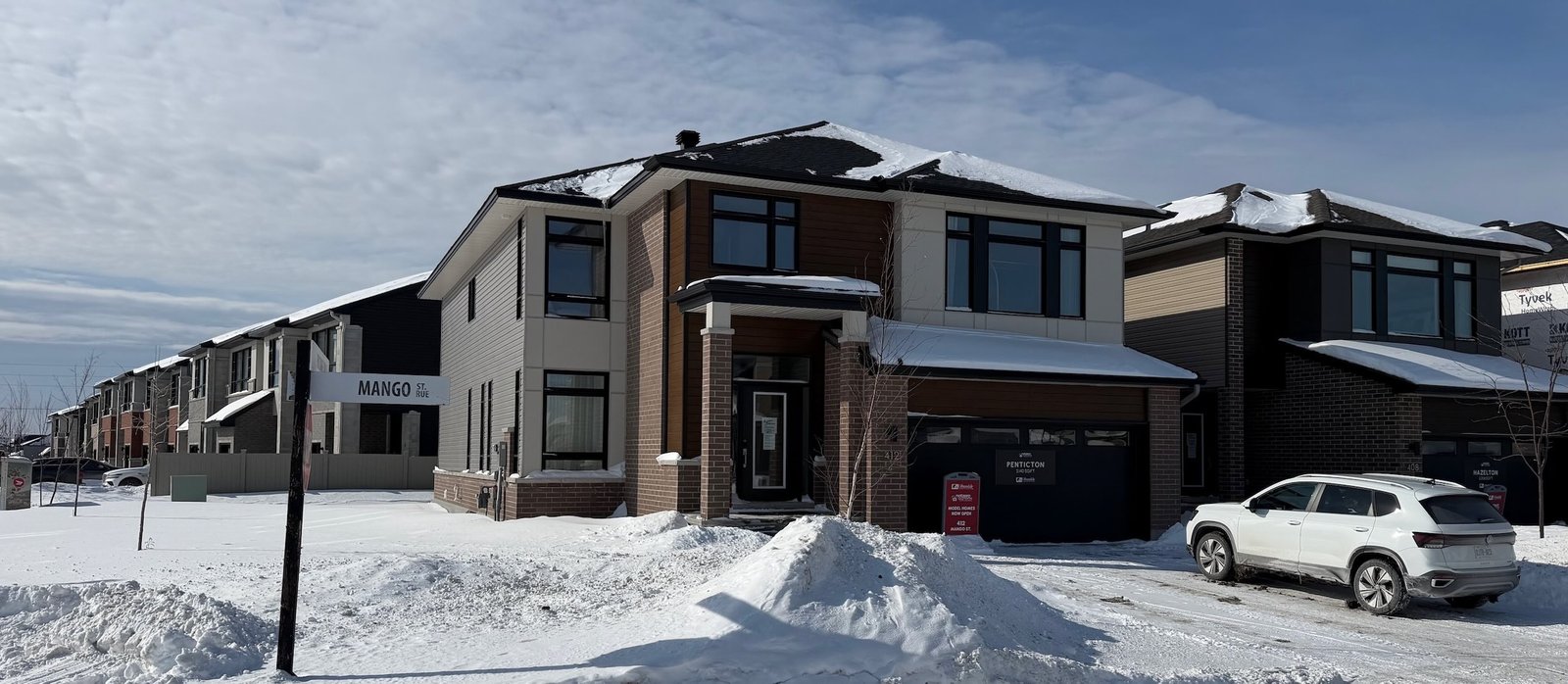
Urbandale Net Zero
“We’re at an Urbandale Construction model home in Ottawa. They’ve been building homes in the Ottawa area for the last few decades,” says Magneron.
“Energy efficiency has been top of mind with them,” he says.
Urbandale began building R2000 homes early on and then adopted Energy Star when it became available in Canada.

“And now they’ve stepped up their game, and they are now building net zero ready homes as their standard,” says Magneron.
This pathway, beginning with Energy Star, is pretty common, and it shows how taking small manageable steps leads to bigger and better things.
Energy Star homes are about 20% more energy efficient than code-built homes. And inevitably, builders learn it’s relatively easy to get beyond that once they learn the secrets of building energy-efficient homes affordably.
Many builders we spoke to followed a similar path.
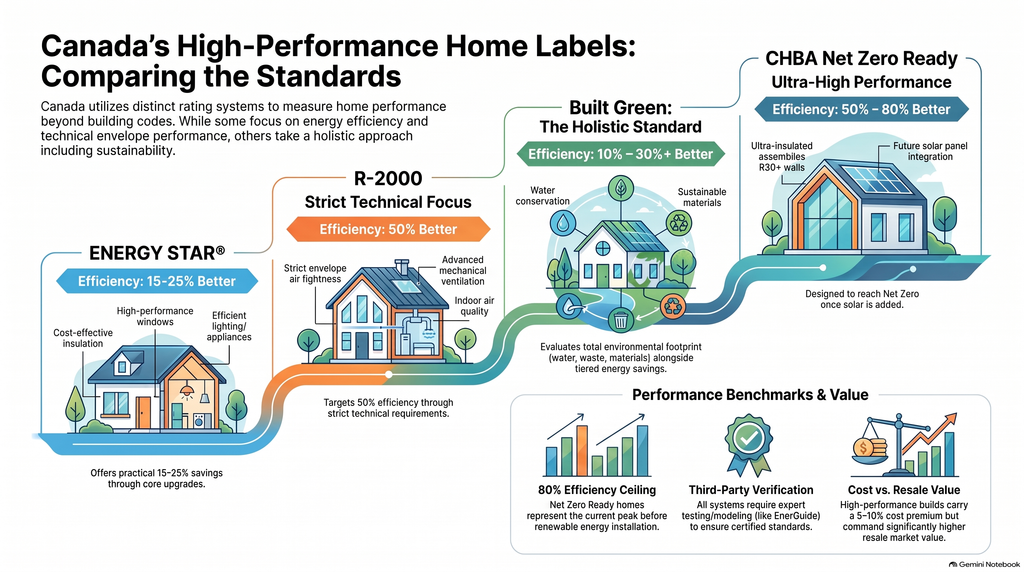
“When they get to net zero, it’s anywhere from 50 to 80 percent better” than a code-built home, says Magneron.
“We worked with Land Ark Homes in Westport at Watercolour Westport early, before they started their subdivision. They were hoping to achieve Energy Star first and then eventually net zero,” says Magneron.
Westport had no natural gas, and “through consultation with them, it made a lot of sense to go straight to net zero now because they could do it, and it was achievable,” says Magneron.
“We could bury propane tanks, but that would sort of be, you know, going back to the dark ages,” says Rolston. “And there was this newfangled thing that we were learning about called cold-climate air-source heat pumps.”
So Land Ark went all electric, and it’s worked out swimmingly well.
In the case of Urbandale Homes, Magneron says there were two key factors in their decision to go net-zero ready.
A key step for Urbandale was “the heat pump technology and the advancements in cold-climate air-source heat pumps, as well as heat pump water heaters,” says Magneron.
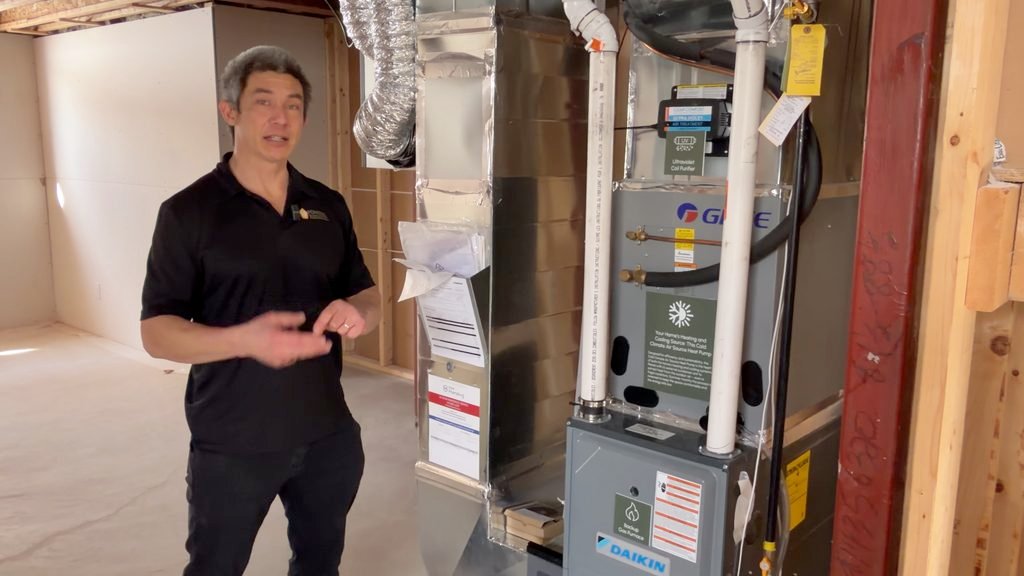
We took a tour of the Urbandale Home, and Magneron showed me the hybrid heating system. It looks like a gas furnace with the heat pump heat unit built in.
“The cold-climate air-source heat pump is providing very efficient heating down to minus twenty-five, minus thirty degrees Celsius, but also providing dehumidification and space cooling as well,” he says.
Also, technological advancements in affordable “really high-performing windows that are appropriate for our climate was the last step,” says Magneron.
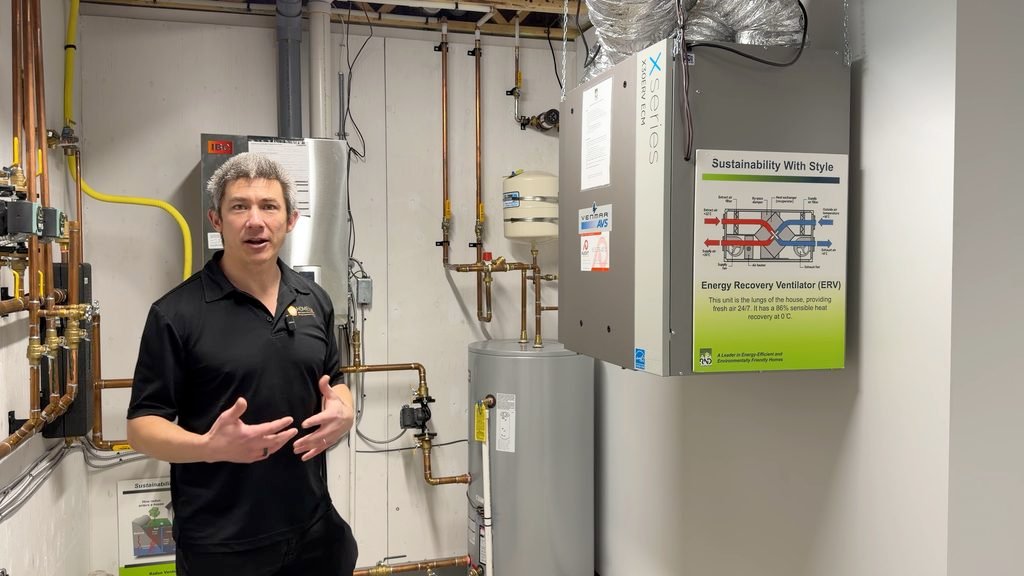
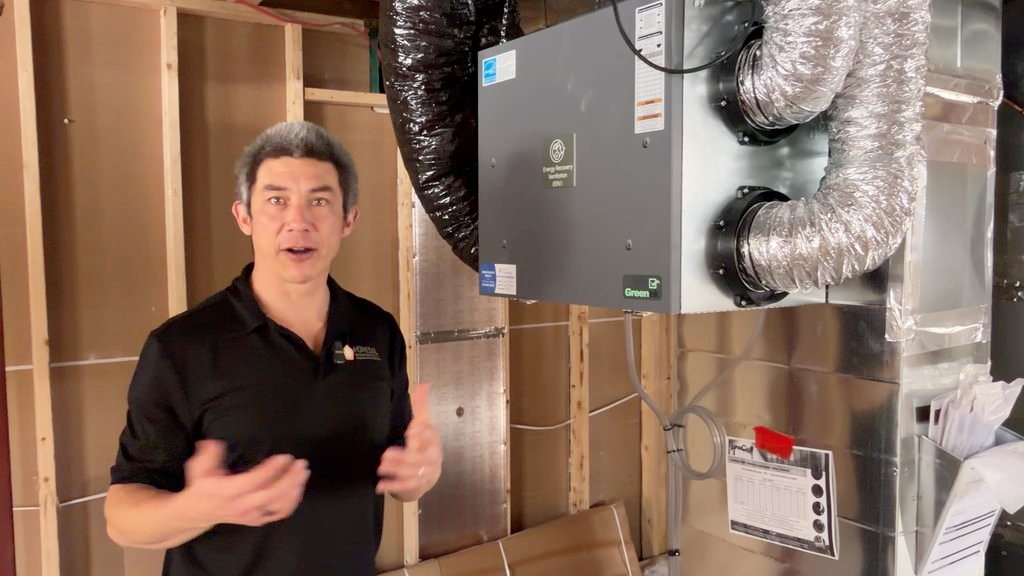
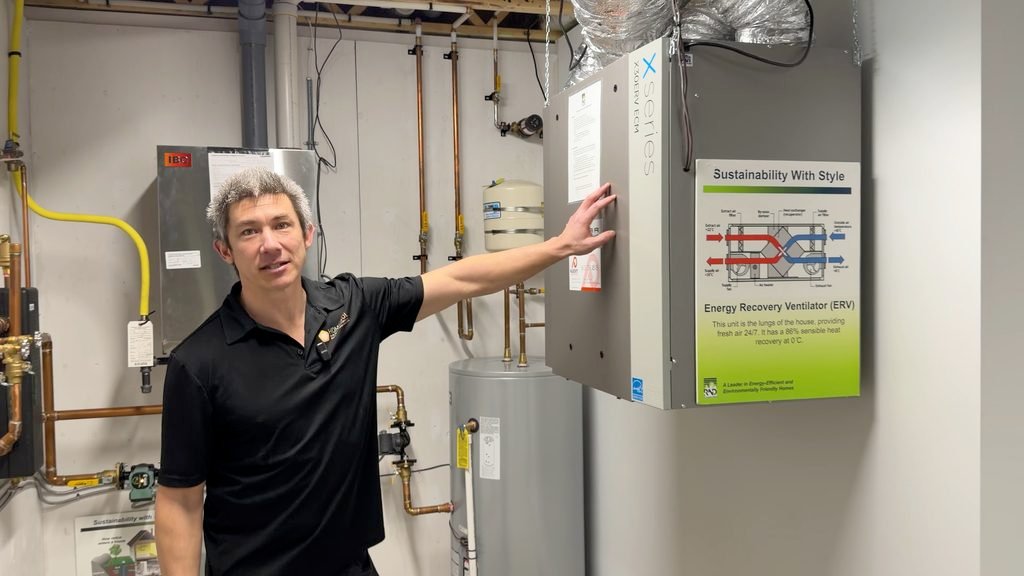
The Urbandale home also has an energy recovery ventilator, which is essential for recovering heat from exhaust air, managing humidity, and the provision of clean, filtered air in these airtight homes.
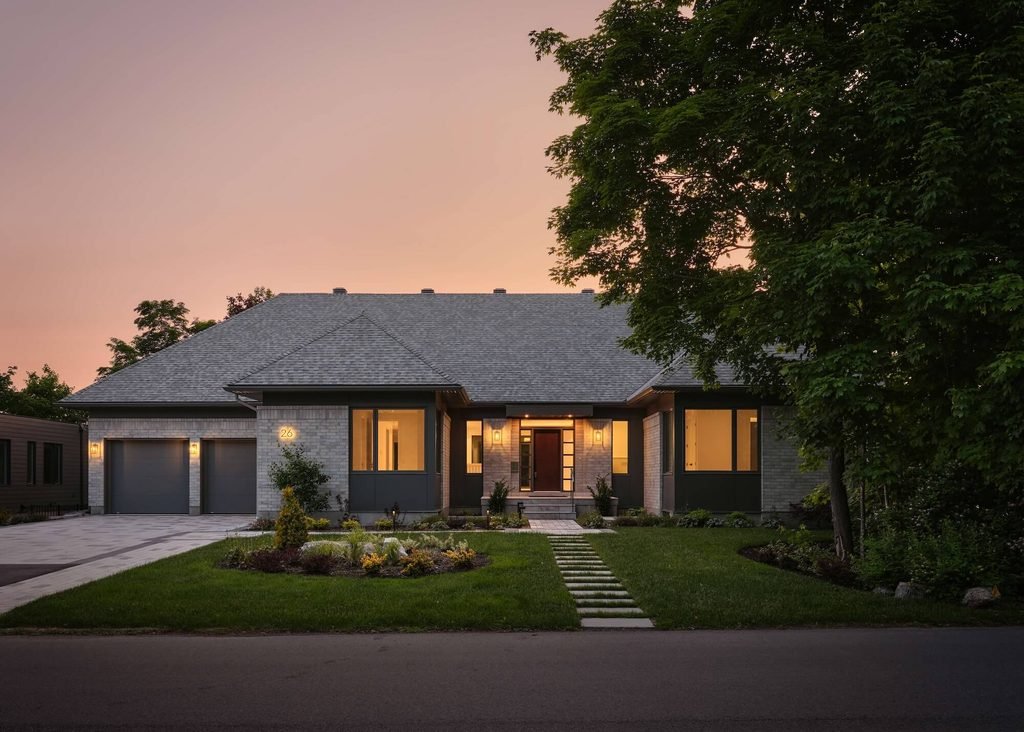
RND Construction Net Zero in Ottawa
We also toured an RND Construction net-zero home in Ottawa. They are a builder and retrofitter of award-winning net-zero homes.

“Sometimes people say I’m crazy and I’m ahead of the curve, but I really believe that we need to protect our environment, and this is very dear to me, and that’s why I focus on doing sustainable homes,” says Roy Nandram, CEO of RND Homes.
“Our homes are normally in the millions of dollars, so they’re not typical home buyers, and they’re more concerned about what the thing looks like and feels like, rather than what it’ll cost to operate because most of these people don’t even get a mortgage,” says Nandram.
Nandram says his company focuses on building stylish homes with all the features people really want, and net zero is not an option.
“Every home we’ve built in the last five years is net zero, and we don’t care what a customer thinks [about net zero]. A lot of the homes we have done, the customer did not even know that we were building them a net zero,” says Nandram.

Stephen Magneron and Homesol were there every step of the way in RND’s journey to net zero, helping them sort through options to find the most cost-effective pathway to net zero.
RND continues to use Homesol “as a sounding board” for new ideas.
“We’re still trying to go beyond the 60% efficiency [more efficient than code] at a minimal cost or no cost, so that’s our objective at this time,” he says.
The large home we toured had dual air-source heat pump units to heat the home.
The Five Most Important Features
We asked Stephen Magneron what the top five innovations are in building affordable net-zero homes.
Air Tightness & The Blower Door Test
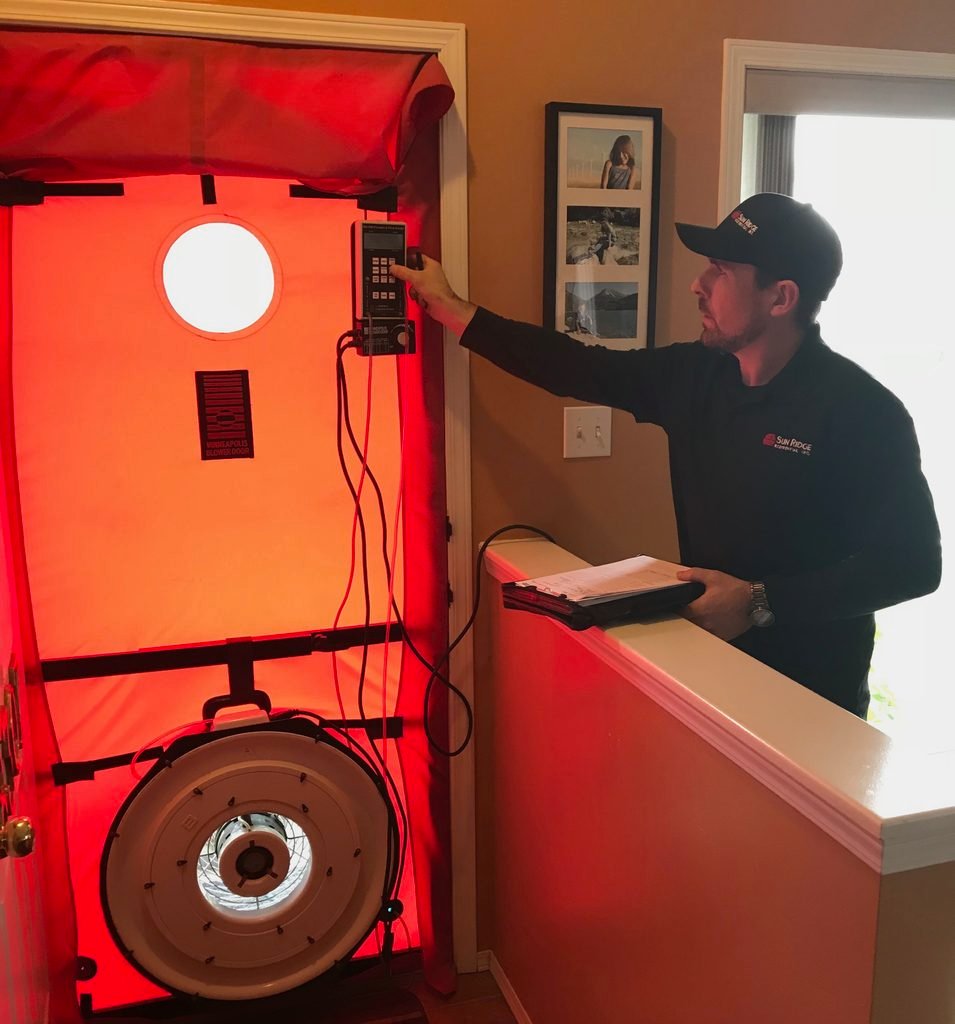
The biggest innovation isn’t new. Stephen Magneron says the blower door test shows “that the lowest-hanging fruit to achieve net zero is air tightness.”
Trust an energy efficiency geek to choose a tool as the most important thing, but there are a few good reasons why the blower door test is so important.
Blower door tests find leaks and confirm whether your home has reached a target airtightness. The target is 1.5 air changes per hour or lower for the CHBA Net Zero Ready Home Label.
If your air changes in your regular home are 5, for example, this means you are reheating all of the air in your home five times per hour!
The blower door test helps builders test new wraps and techniques, and find the most effective strategy for their homes.
Often the final step to really good airtightness is attention to detail, especially when taping the building wraps.
Windows
Magneron says high-performance triple-paned windows have become more energy efficient, have low U-values and Solar Heat Gain Coefficients (SHGC), and are much more affordable these days. The thing homeowners always comment on is how these windows seal out the sounds of the outside world.
Energy Recovery Ventilator (ERV)
The energy recovery ventilator is number three on Stephen’s list of top innovations. These are essential in tight homes; they recover 70–80% of heat in waste air and manage humidity, something that’s very important in our northern climate.
Heat Pumps
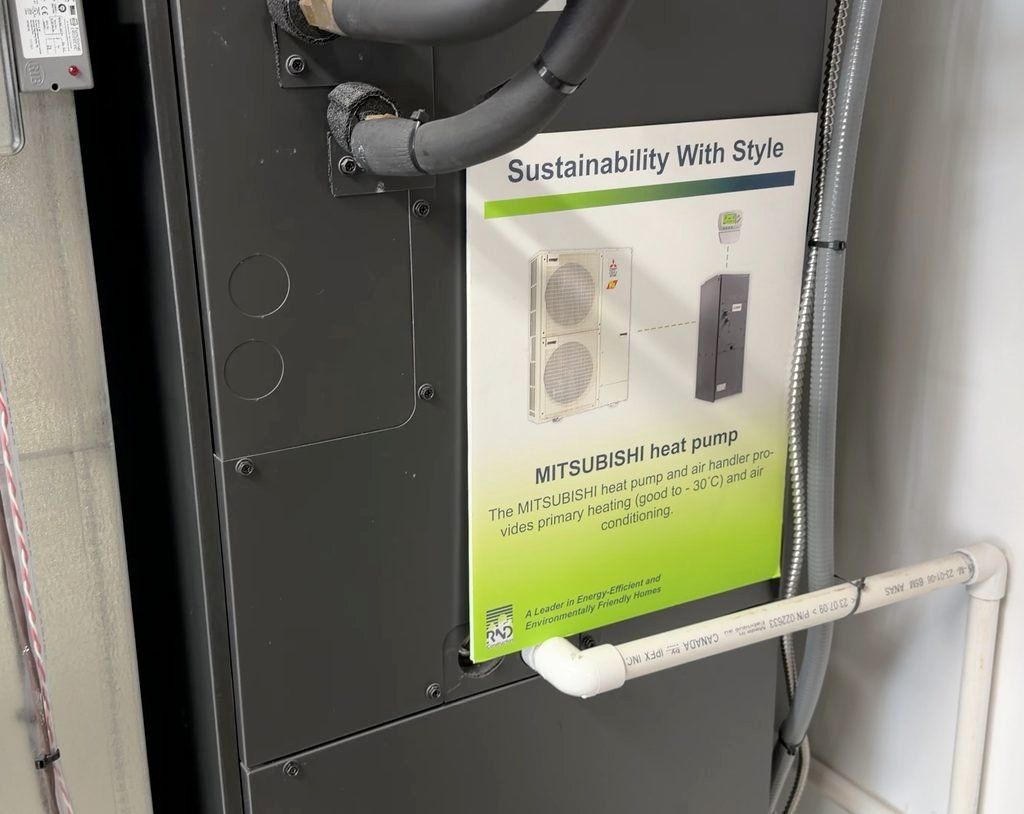
Air source heat pumps have come a long way. They condition the air in the home with efficiencies of up to 300% for heating and 700% for cooling. And cold climate heat pumps can handle the Canadian winters, with some models now rated to -37C.
Consider that it was once considered a good thing to install electric furnaces in British Columbia because hydro power was so cheap. But remember, an electric furnace is only 100% efficient, and those homes required two to four or even five times more heat because they are not well insulated or air-sealed.
Heat pumps are one of the top innovations for heating efficiently and electrifying your home.
Heat pumps are also now being used in water heaters to electrify and efficiently produce hot water. And heat pumps have even made the move to clothes dryers, which dry clothes much more efficiently and, importantly, without the need for outside ventilation, thus saving another hole in the wall.
Insulation
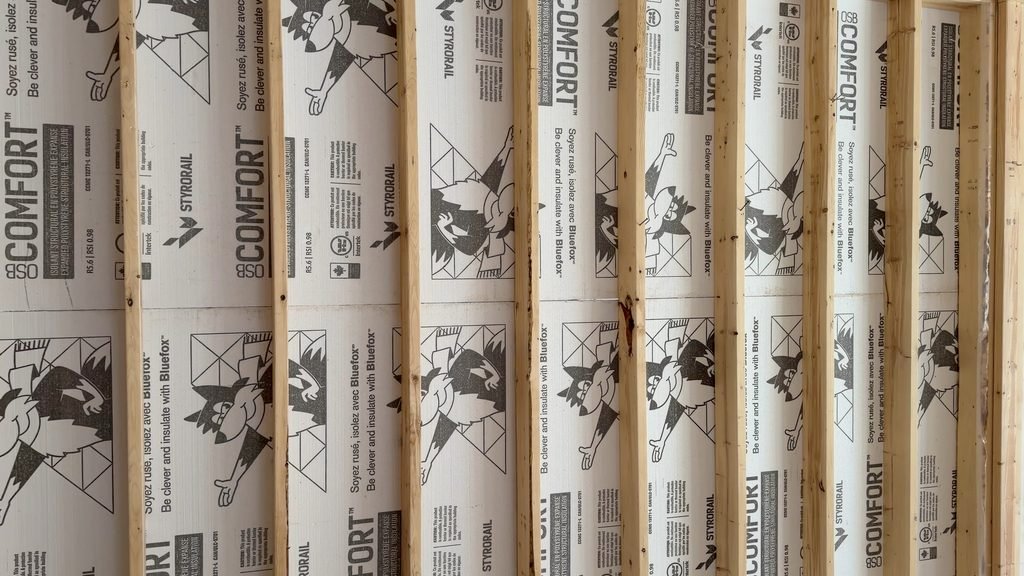
In the early days of net zero homes, it was assumed you had to reach crazy high insulation rates to achieve net zero. But most of the mainstream builders who are successfully transitioning to net zero standards are using 2×6 walls with batt insulation and an additional 1.5 to 2 inches of foam insulation on the outside. These walls typically clock in at around R-30.
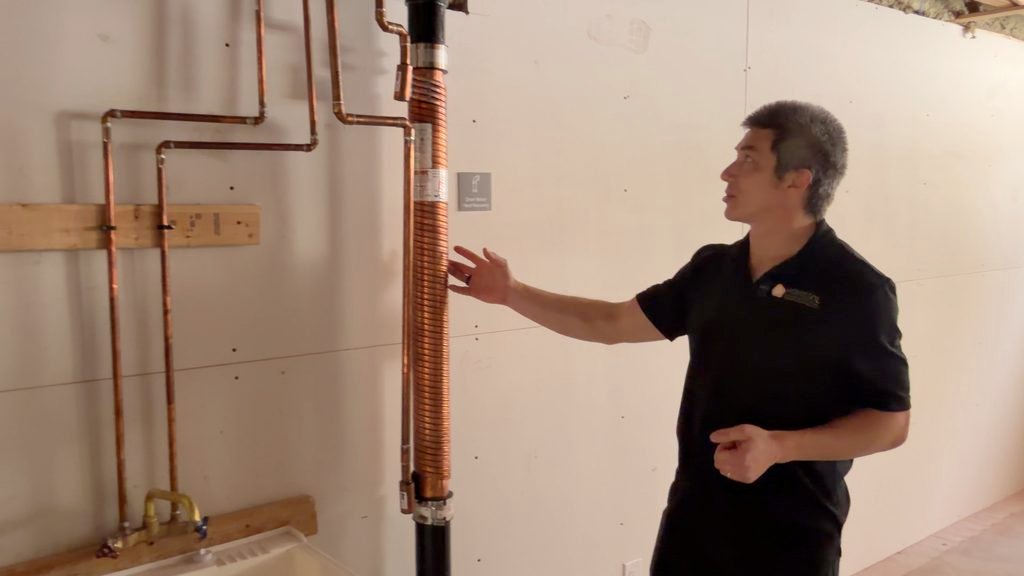
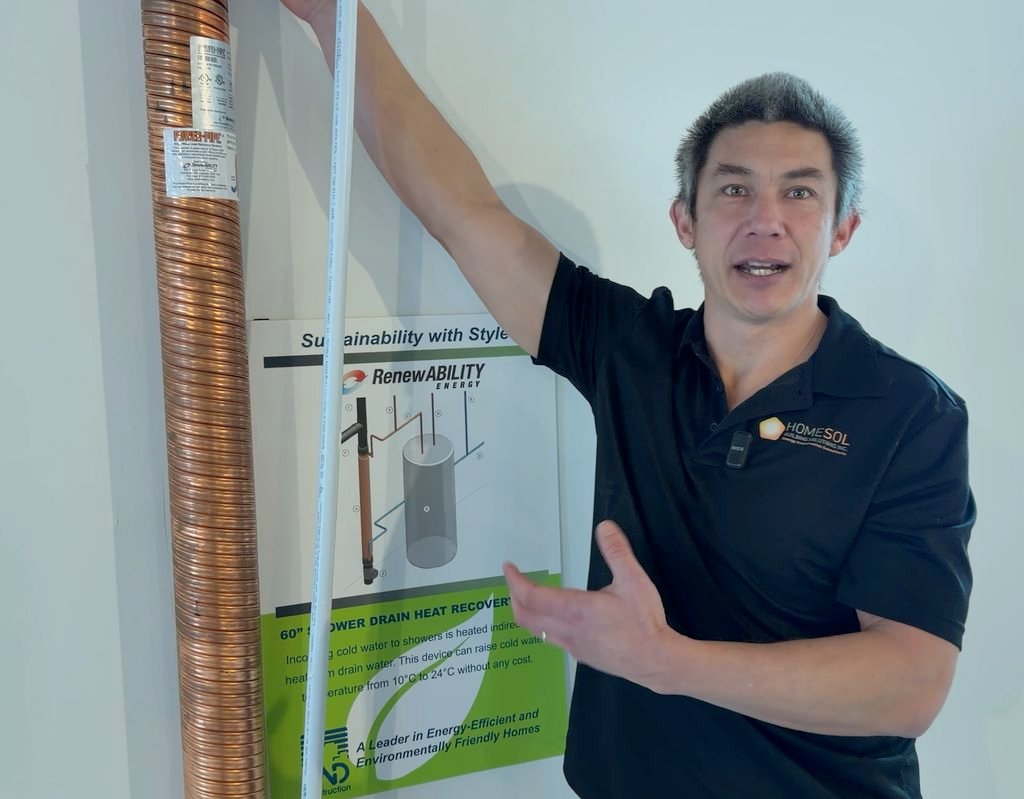
In both the RND and Urbandale homes Magneron showed us, they also had drain water heat recovery systems. This is a copper pipe wrapped around the drain that captures up to 53% of the waste heat from showers, for example.
The Urbandale net zero ready homes each come with 5 kilowatts of solar, which is not quite enough to get them to net zero, but it’s a nice touch that can be upgraded later on if the homeowner wants a larger system.
To consumers, net zero energy advisors like Stephen Magneron are the invisible hands guiding homeowners and builders alike to the most affordable, cost-effective solutions for net zero homes.
And as I have learned, getting an energy assessment, whether you are applying for an incentive or not, is the best investment you will make in your home.
The assessment report will guide all of your future home improvements by helping you understand what costs the least for the biggest benefit.
For home builders, energy advisors are invaluable guides to constant improvements in energy efficiency.
And the auditors are the ones who test the homes to verify they qualify for a CHBA Net Zero Ready Home Label once the job is done.
This is your assurance that the home is built to these high standards.
Next time we’ll head out again with Stephen Magneron to find out how he helped a home retrofitter get to net zero by retrofitting an older home.
Green Energy Futures CKUA Audio Podcast – Subscribe Today!
Chasing Net Zero Series
Subscribe to the Chasing Net Zero series so you don’t miss a single episode.
