
Tribe Solar Installs the Ultimate Home Energy Hub
By David Dodge, GreenEnergyFutures.ca
Tribe Solar is a four-year-old solar startup in Alberta that is not only installing solar systems, but they are also pioneering the next level of energy storage in homes and literally flying in solar modules.
I went to the home of Spencer Young, a 14-year solar veteran himself who had just worked with his colleague Cameron Shirt of Tribe Solar to install solar on his home using drones, a first for this area.
The two also worked together to install a SigEnergy 25-kilowatt Home Energy Bridge.
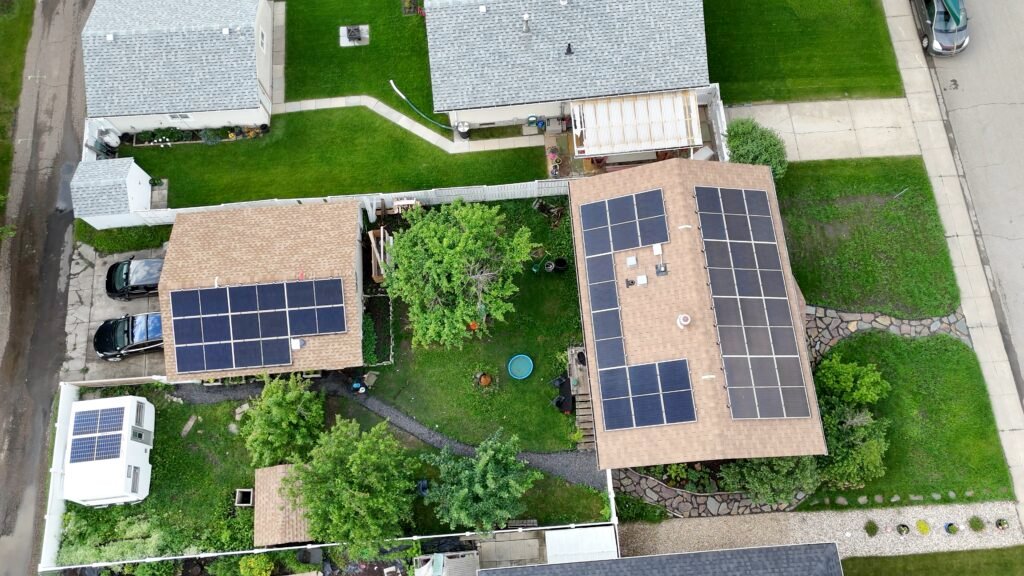
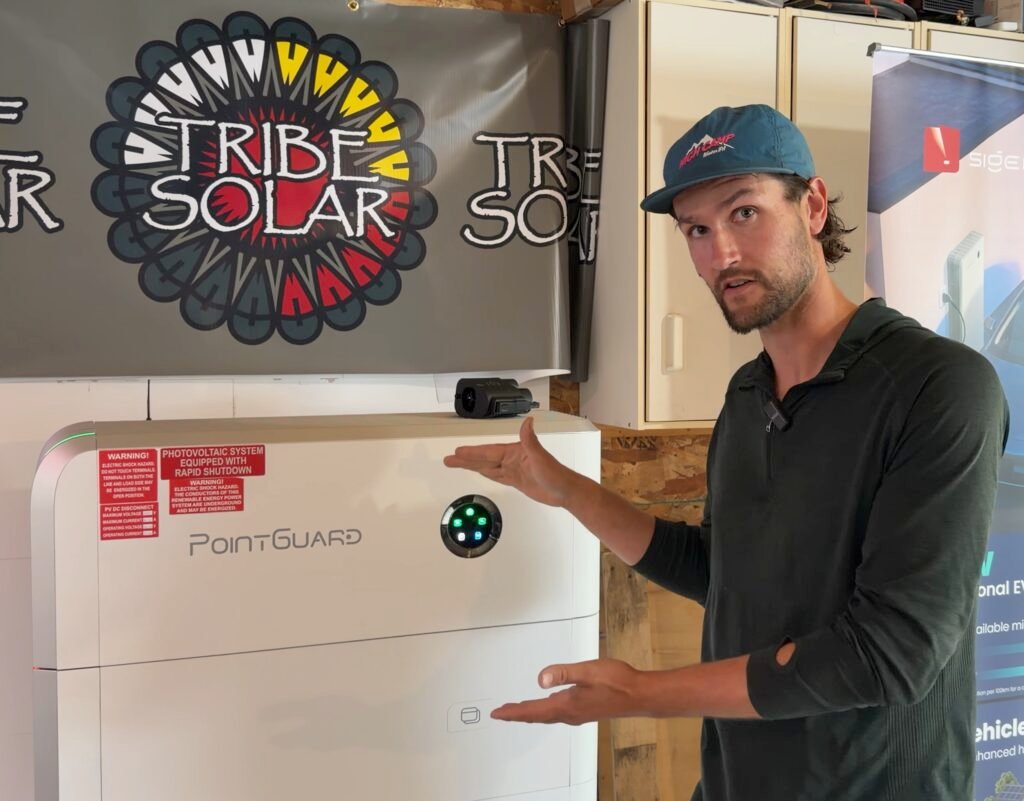
“This is the V2X [vehicle to everything] module. This is three batteries, and it’s connected to 17.5 kilowatts of solar on the roof, and tied into the load hub inside the house,” says Cameron Shirt of Tribe Solar.
To me, the unit in Young’s garage looks a little like a Tesla Power Wall, but it’s much more than that.
“This allows the home to form a microgrid that has instantaneous transfer, zero milliseconds, in the event of an outage,” says Shirt.
In other words, it’s a failsafe backup system for electricity in the home.
Energy storage in the home is definitely a coming thing that is already being used widely in countries like Australia, and once Alberta’s grid policies catch up with the times, they too will have to learn to work with EVs and home batteries to manage the grid.
EVS can be a problem or a resource to the grid
“Big picture, if we don’t figure out how to utilize EVs in our home, then the grid simply isn’t going to function,” says Spencer.
It can already be a problem for the grid when EV owners all plug in at the same time to charge their vehicles. But in time, grid infrastructure and policies will begin using batteries and EVs as grid resources to manage peaks and spread out the electricity demand over time.
“We need to find a way to get over the hills and the valleys of demand while still being able to charge our vehicles, and this allows you to do that,” says Young.
We’ve done stories on vehicle-to-grid and virtual power plants before that utilize small energy resources such as solar to help the grid, but this goes one step further.
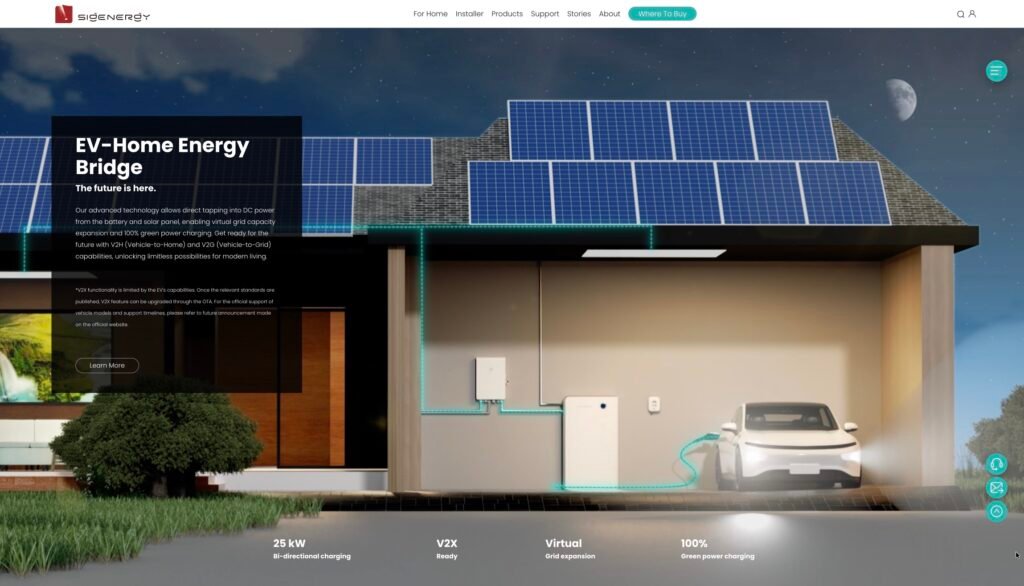
The battery system also allows direct access to DC energy, enabling you to charge your EV at 25 kilowatts per hour. These are unheard-of speeds for home chargers, which mostly operate at about 7.4 kilowatts per hour.
The unit also facilitates vehicle-to-grid energy that brings energy back into the battery to be used in the home or exported to the grid.
This could be the future of home energy production and management.
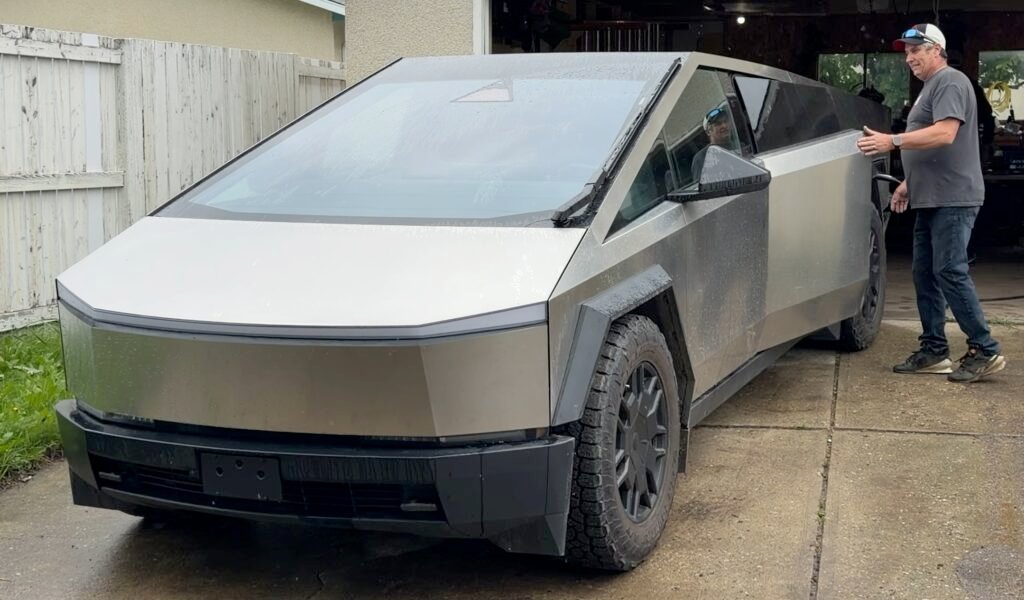
“Stuff of the future”
Present at this demonstration that Shirt and Young hosted was Mark Patterson.
“I have a 2024 Cybertruck, and I’m a customer of Tribe Solar, and my truck is just demonstrating the power that can come out of it and the power that can go in it,” says Patterson.
He described what he was seeing as “the stuff of the future.” I asked him if he was interested in getting this technology: “I’m in, so in the next year or two it’ll be done,” he says.
This is Spencer Young’s home, and he’s pretty bullish on the system.
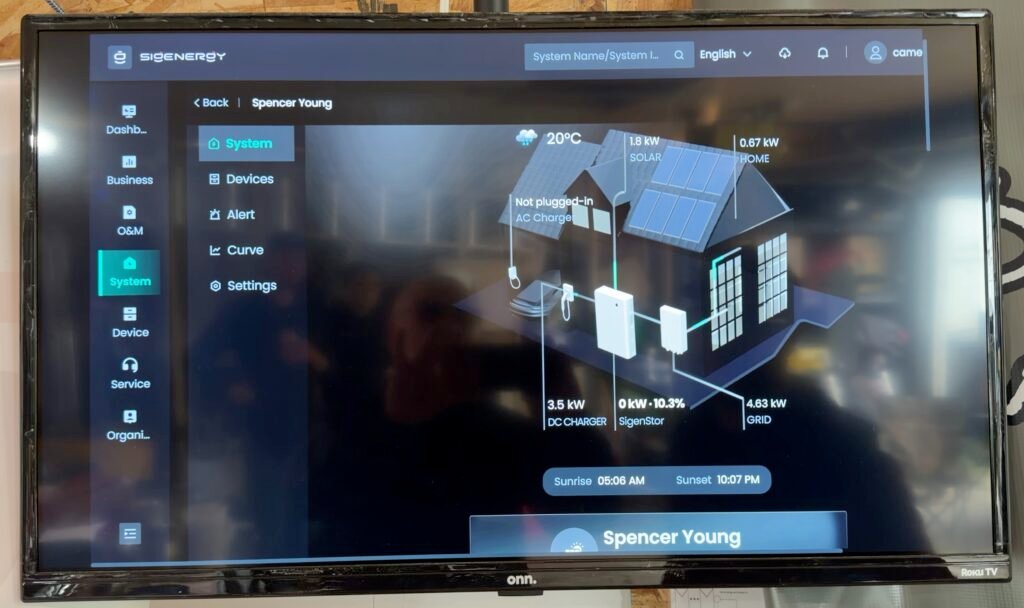
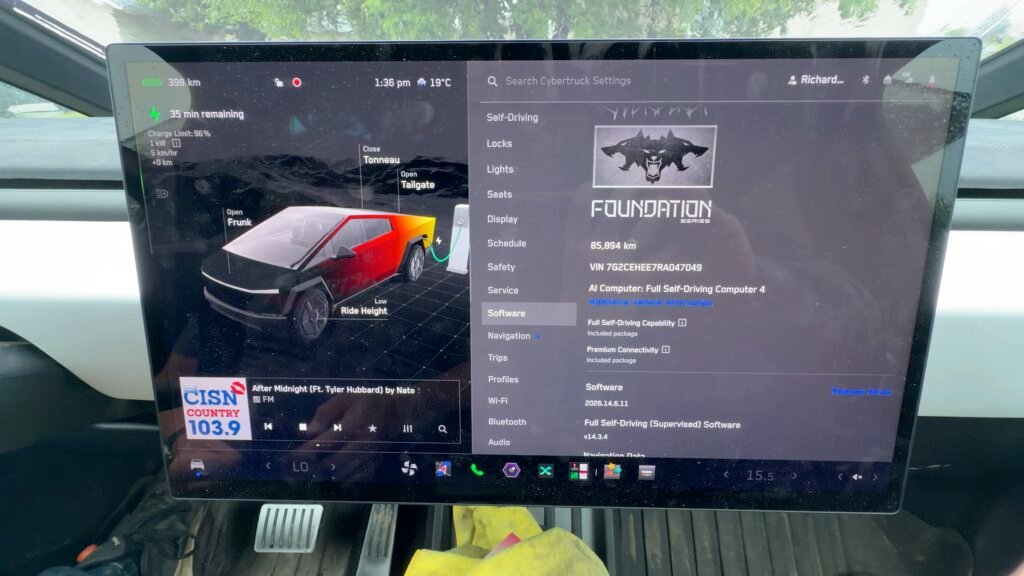
“This thing is already saving me enough money, and I’ll probably be making money on top of the savings after seven to eight years,” he says, but then added one qualification: “Now, mind you, I have started with a bit of an advantage having done almost all the labour myself.”
Once grid policies catch up with the need and potential of these technologies, the systems will become more lucrative. For now, Young can save his solar energy and use it in the home at night or charge his EV with solar energy produced during the day.
Managing distributed energy resources on the grid
This reminds us of the technology developed by DCBEL a company based in Montreal. They are producing and selling DC vehicle chargers that are also solar inverters and AI-powered energy management systems all in one unit.
As of August 2026, Alberta already had 48,103 small solar systems on the grid. And at 4.4% in 2025, the adoption rate of EVs in Alberta is slower than Quebec and B.C., which are both close to 20%; the trend is continued growth.

The need to integrate and manage these “resources” grows with each passing day.
As we discussed in our story on DCBEL, most of the sales of their integrated systems have been in the US, states like New York, California and Texas, where the grid is starting to work with small energy consumers and producers to help manage and stabilize the grid.
“No one’s going to argue [with the need to do] that,” says Young. “What we have heard from grid operators is that there is a struggle to maintain services with the existing infrastructure while greening over the grid to solar and batteries.”
Hardly anybody uses a lot of energy in the home during the day when the sun is shining, and you’re at work with your EV.
But with one of these batteries, your solar energy is stored for use at night and/or to charge your EV with solar energy in the evening.
This helps the grid, greens your energy, and someday it just might pay higher dividends.
No need to upgrade your electrical service
Another pretty cool advantage of using a battery system like this is it could save you from needing to upgrade your electrical service from 100 to 200 amps.
“You generally don’t require a service upgrade, but what you get when you install a LoadHub is you get the ability to have backup emergency power in close to zero seconds,” says Young.
Young has a heat pump and an EV, and it all runs off of 100-amp electrical service.
Upgrading to 200-amp service costs $4,000 to $5,000 or more.
Most people who add heat pumps and EVs to their homes require this upgrade.
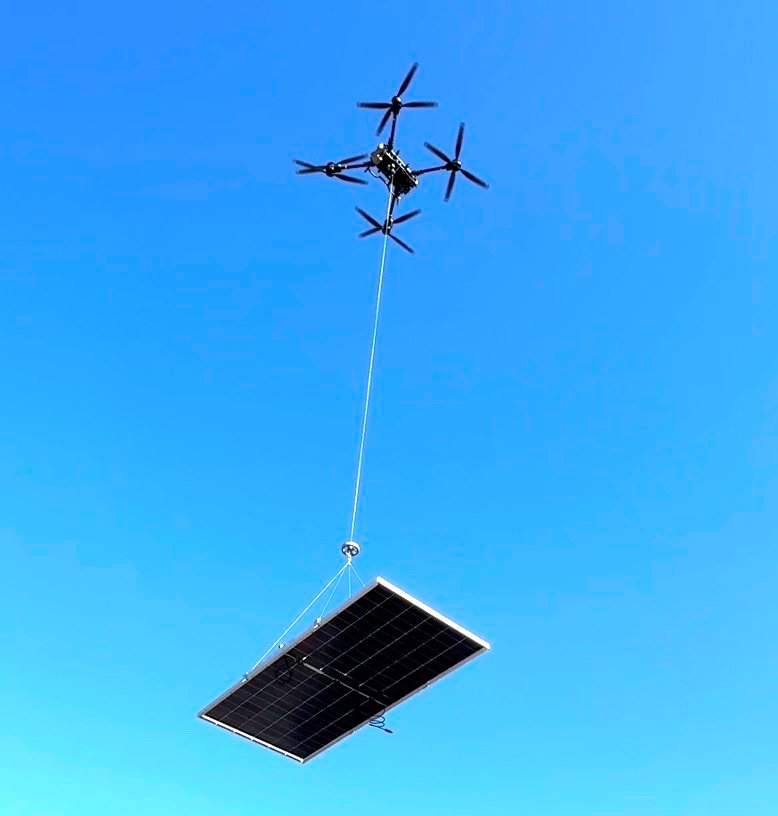
Drone solar install
It was what may be a first in Alberta: Shirt and Young also used a drone to install the solar modules.
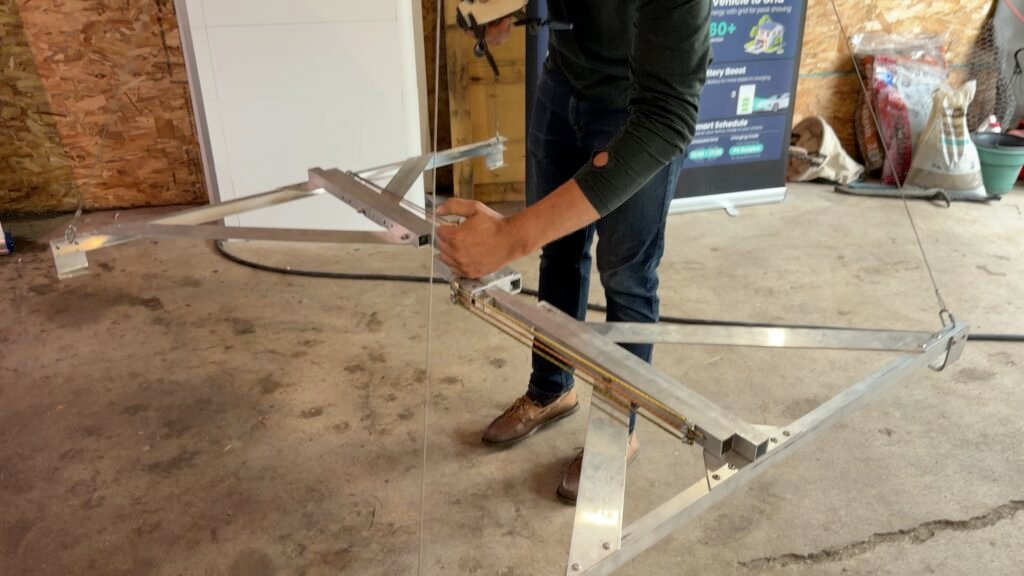
Holding the first drone he ever owned (a DJI mini) in his hand, Young said he got the idea of using drones to install solar from seeing drones lifting things online.
“I was seeing drones be used more frequently for heavy lifting,” says Young.
So he thought, ‘why not use a drone to lift the solar modules on the roof?’
“The challenge wasn’t so much whether or not we can lift; it was how can we attach and detach quickly from the solar panel,” he says.
So Young created a design of an attachment for the drone that attaches and detaches from a solar module quickly. (If you want to see this drone in action or the SigEnergy system, check out our video story.)
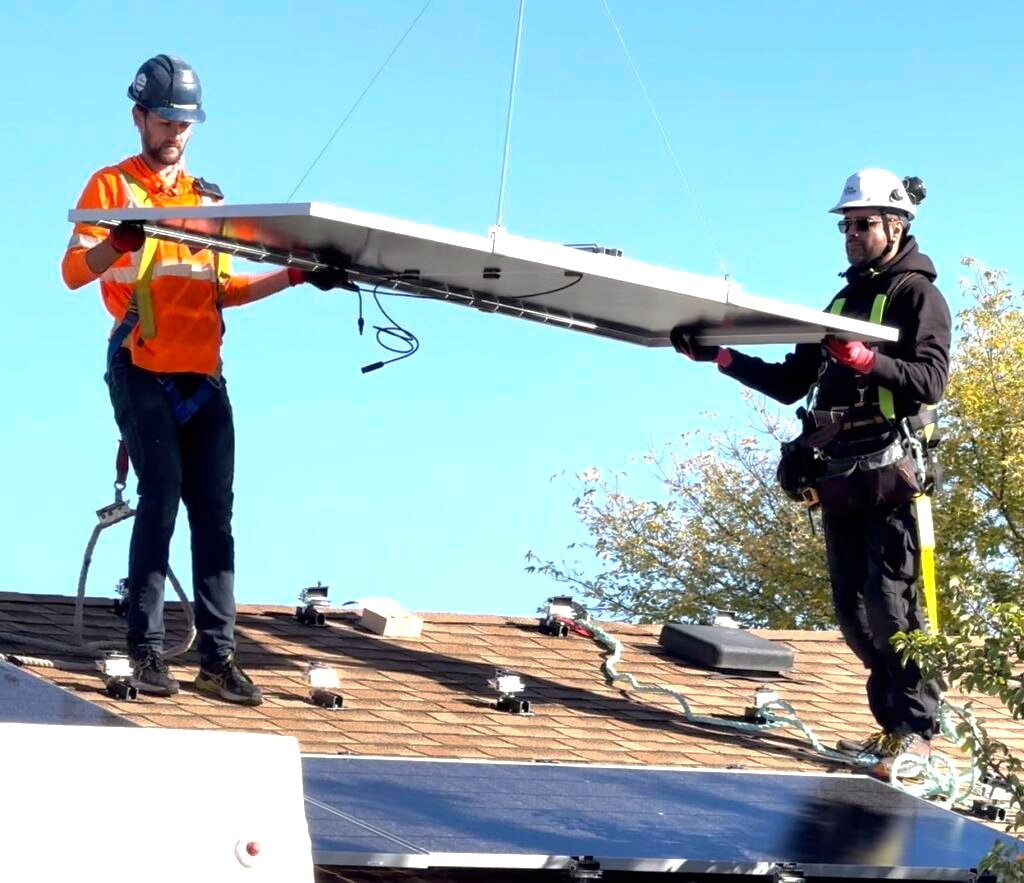
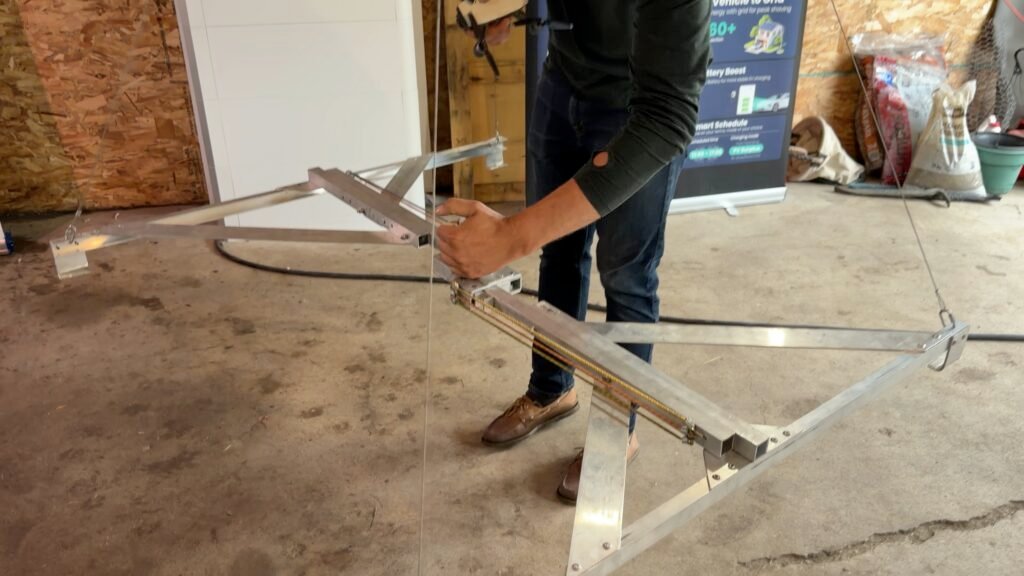
The system worked like a charm.
“I think it behooves all of us to use the technology available to get things done at a quicker, more cost-efficient price so that we can install more solar faster and cheaper,” says Young.
The 17.5-kilowatt solar system on his home was installed using drones.
Young wanted to demonstrate how the battery system works as a backup system in the home, so he took me down to the mechanical room.
He snapped his 100-amp breaker off and then said, “See if the light flickers.”
I didn’t even see a flicker in the lights. The system takes his home off-grid instantaneously.
This could be the future of energy management in homes, and it could facilitate smart grid services that could help optimize the use of EVs and solar systems on the grid and even help provide peak energy when needed.
Tribe Solar Origin Story
Cameron Shirt started Tribe Solar just four years ago. We wanted to know how and why he started this innovative company so we did a CKUA Radio Feature and an audio podcast feature on the company’s origin story.
In part II of our CKUA Radio series on Tribe Solar Cameron shows us the ultimate home energy hub that just might be the future of home energy.
More Related Content
See the two stories embedded above that we did on related topics: The first is on vehicle-to-grid and home battery systems created by a Canadian company, DCBEL.
The second is a story (below) on Rob Safrata and his work to create a network of vehicle-to-grid electric buses.
The third story is called “Batteries Included.” It’s a story on Landmark Homes in Edmonton and their pilot project to install 100 batteries in homes and connect them as a virtual power plant.
