
By David Dodge, GreenEnergyFutures.ca
Three students from the business club at Adrian Wilcox High School in Santa Clara, California, were inspired to make a difference, so they started Green Silicon Valley.
Their goal was to share practical presentations about climate change and the environment with students from other schools.
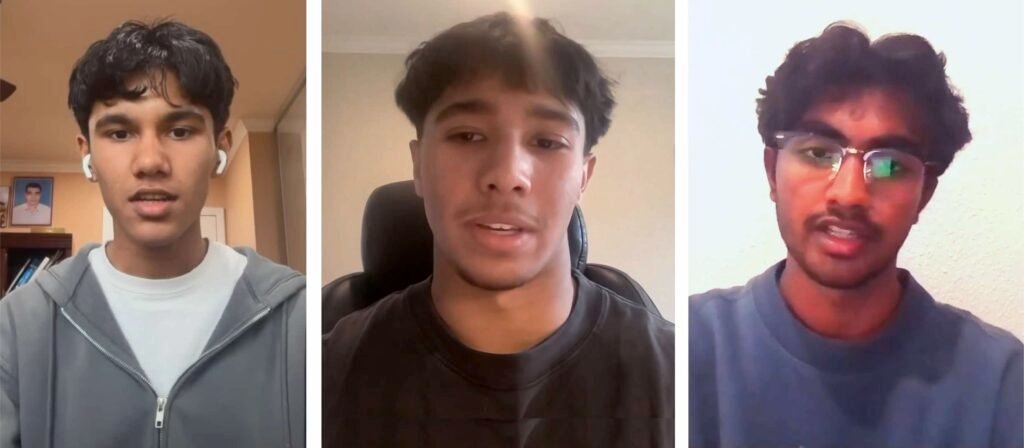
Meet Dev Shah (left), Ayush Garg (middle), and Abhi Tenneti (right), three grade 11 students at Adrian Wilcox High School.
“Green Silicon Valley started kind of as a business club project. So, we were awarded a $5,000 grant from Silicon Valley Power,” says Garg. “And we ended up being able to do six presentations with the $5,000 at Peterson Middle School.”
“We wanted to bring this to younger kids of all backgrounds. We wanted to specifically touch on STEM because a lot is going on with STEM, whether it’s global warming, solar power, or renewable energy,” says Shah.
The idea of STEM learning is to break down silos and teach students to apply knowledge from multiple subjects to real-world scenarios.
The first class they worked with focused on environmental issues.
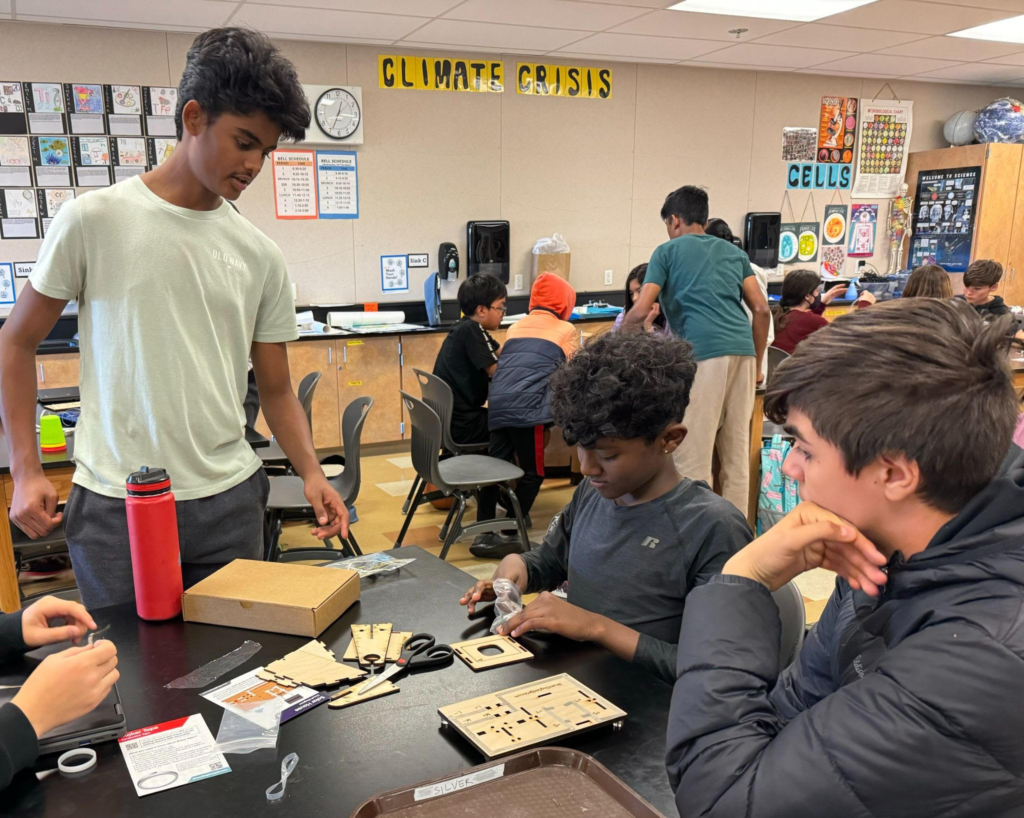
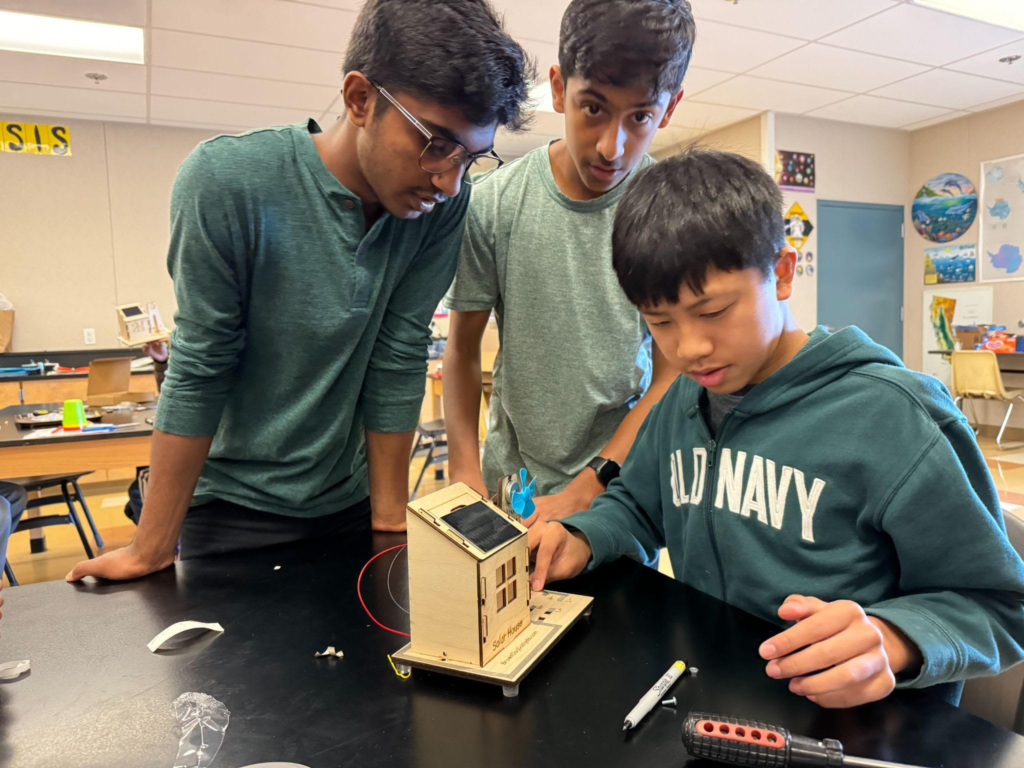
“We brought a hands-on kit, and we made a short presentation to them first about environmental issues in general and how STEM can help solve those issues. And then the majority of the presentation was with the kit. And what we found was that the students were really satisfied. They were learning really well,” says Tenneti.
Scaling up climate education
The students sat on the project after their pilot classes and then decided to ramp up their efforts to build the structures necessary to take their idea beyond their own realm.
“How we operate is we first have us, who started it as founders. We did a couple of presentations as they stated, but our main goal is to open up chapters in other schools,” says Shah. So currently we have eight chapters in the Bay Area.”
The three founders see their role as building the structures, materials, and systems so the idea can be replicated in chapters, not only in California, but beyond as well.
The presentations are always delivered by volunteers trained in the chapters.
“And eventually we want to cover as much of the US as we can,” says Shah.
“We have growth in one area that leads to growth in another …And for the most part, our kids would reflect issues that are most prominent in that area,” says Shah.
This also allows the program to adapt to each region.
“For example, if one area has a lot of polluted water, we’d focus on water filtration. If one area does not have as much solar or renewable energy, we’d focus on that,” Shah says.
Why focus on the environment?
“I’m from India, okay? The air pollution is really bad over there,” he says. “I’ve seen patients who have been severely impacted by environmental issues like pollution,” said Tenneti.
So he says he has a strong passion for preventing these impacts as much as possible.
For Shah, his motivation is “global warming” as represented by temperature changes, ice melting, and a series of impacts resulting from it.
Garg is a self-described “nature kid” who “loved being out in nature” and is worried about species extinctions.
“We also wanted to make a real impact in the world. So we wanted to gear it more towards environmental change and climate change,” says Garg. “So really the topics are anything that relates to engineering and how it can help climate change.”
Our ultimate goal
“Each chapter is self-sustaining. So, each chapter is responsible for finding its own local volunteers, finding their own teachers in their area who are willing to host presentations,” says Tenneti.
You could think of this as multi-level marketing for environmental education.
“Our ultimate goal is international expansion. We want to be in as many countries as we possibly can,” says Garg. “By the end of high school. If we were able to get at least one volunteer group in a hundred different countries and have one successful presentation in a hundred different countries, that would be our ultimate goal,” says Garg.
We don’t often cover startups on Green Energy Futures. Still, we had to admire the strategic thinking and ambition of these three young men who are applying a systematic approach to scaling peer-to-peer hands-on environmental education.
Green Energy Futures CKUA.com Podcast – Subscribe Today!
More than 400 episodes!
