
By David Dodge, GreenEnergyFutures.ca
AUDIO BLOG
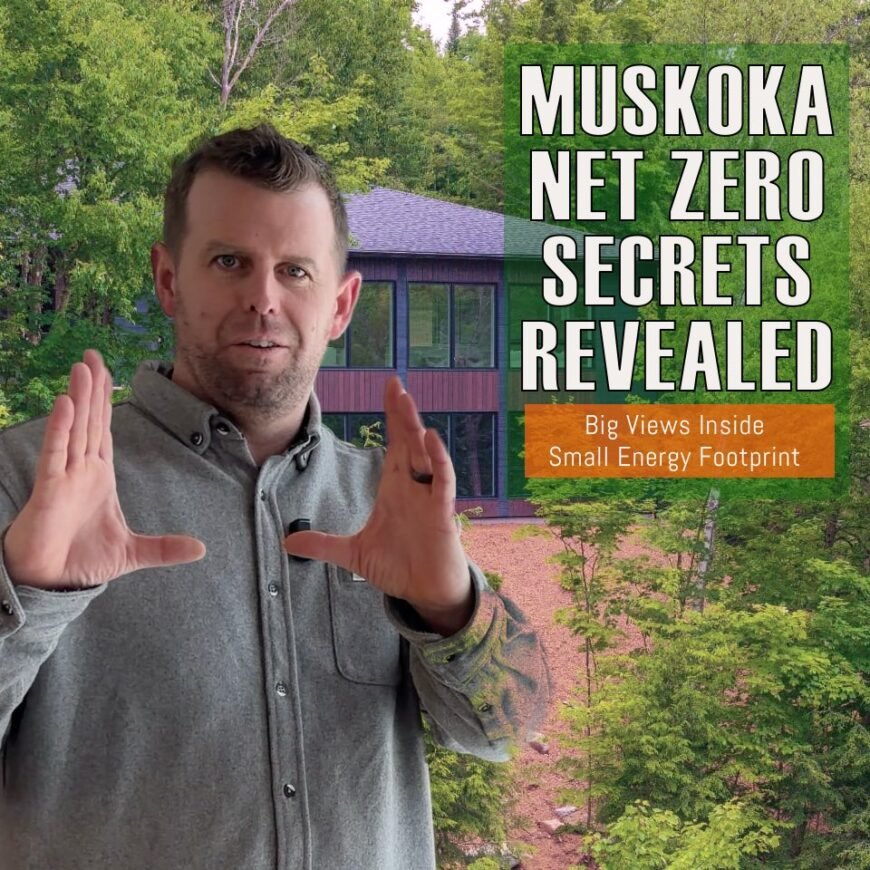
Kyle Newman has been passionate about the environment and building things from a young age.
He grew up on construction sites, and his father loved concepts such as passive houses and straw bale homes so it seemed perfectly natural for Kyle to find a way to build the most energy-efficient homes he could.
But he was frustrated at first. He was pretty sure his budget wouldn’t allow him to build to a passive house standard and still be able to sell the homes.
So, he followed the advice of Martin Holladay, a green building guru who began the “Pretty Good House” movement. Holladay advised people to forget about super prescriptive building labels and their hard-to-achieve check boxes and just build a really good house.
And as we learned in part 1 that’s exactly what Kyle did.

And today Kyle’s company, Stratton Homes, builds everything to a minimum net zero ready standard, and the homes carry the Canadian Home Builders Association Net Zero Ready Home Label.
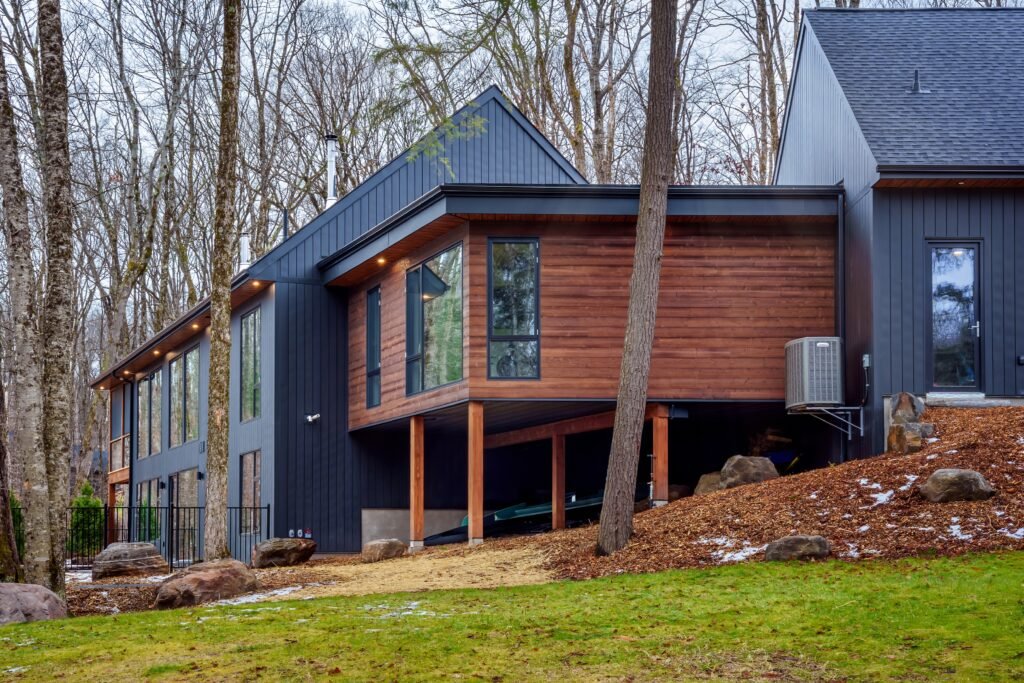
We travelled to Huntsville, Ontario in the dead of winter to see the homes Stratton is building and get a tour to learn all of Kyle’s secrets for building affordable net zero.
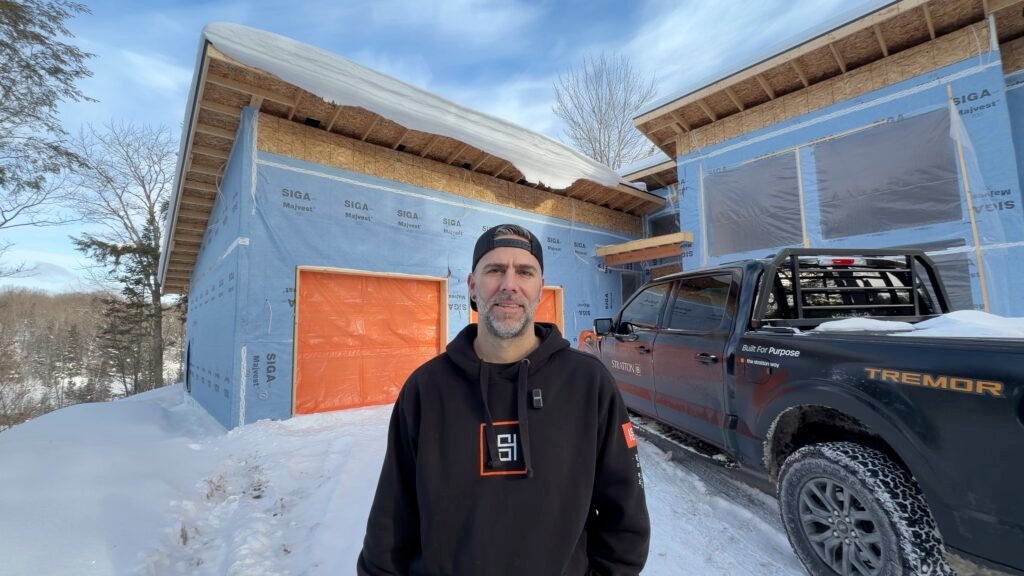
We met at a home under construction so Kyle could show us his secrets for building affordable net zero homes.
And yes, affordable is different here in these homes that can sell for millions of dollars, but believe it or not, it’s just as important to be cost competitive in this market as it is in the townhouse market in Calgary, Alberta, which we saw in our story about Avalon Master Builder.
Stratton’s Secret Sauce for Net Zero
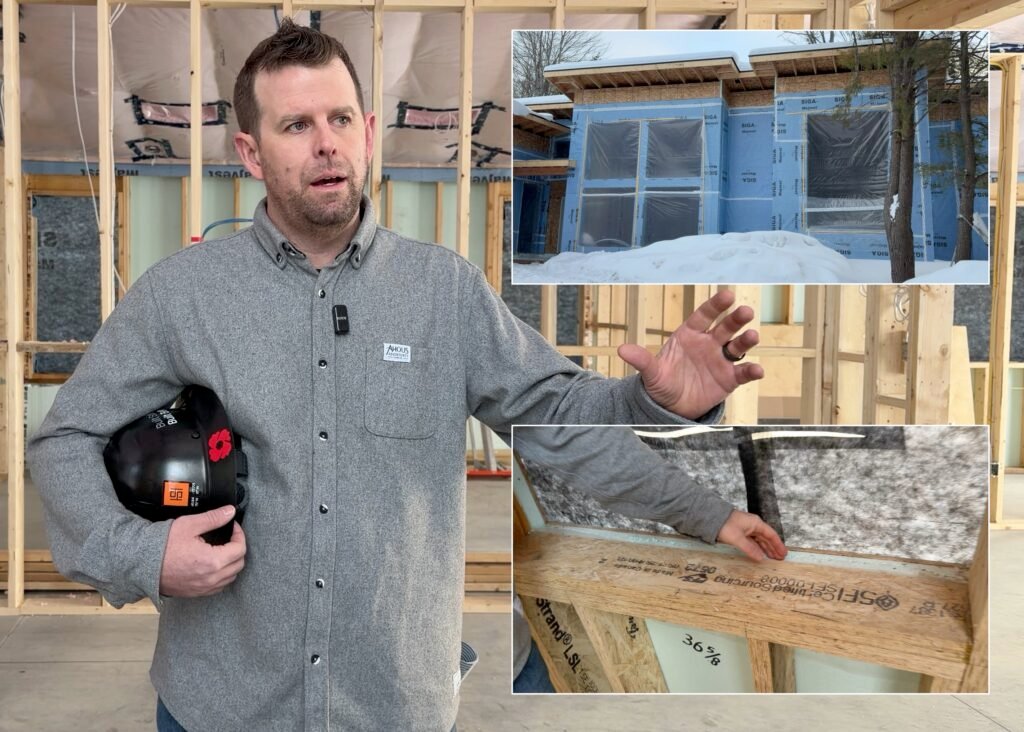
“The wall assembly that we ultimately landed on fit three criteria: cost efficiency, energy efficiency, and buildability,” says Newman.
Air Sealing and Insulation
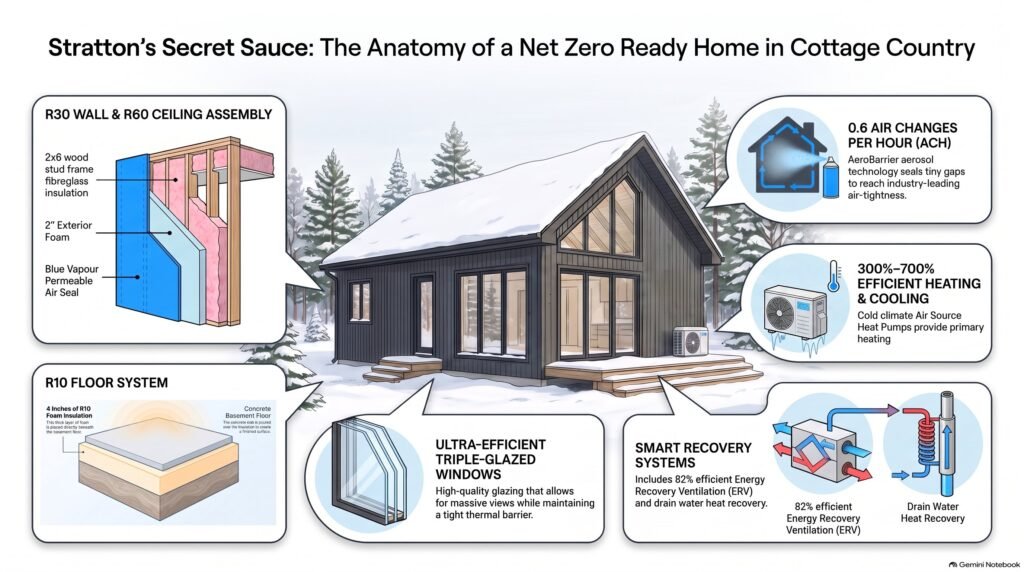
“Our typical wall assembly is a two-by-six stud,” says Newman. But then they use Isobrace oriented strandboard with 1.5 to 2 inches of expanded polystyrene (EPS) laminated on the inside of the sheets.
Then on the outside of the wall, they use a vapour-permeable air barrier (Majvest 200) that is sealed up tight with special tapes.
“What we’ve seen with the performance modelling is that some of the lowest hanging fruit for us on energy efficiency is that really tight building envelopes,” says Newman.
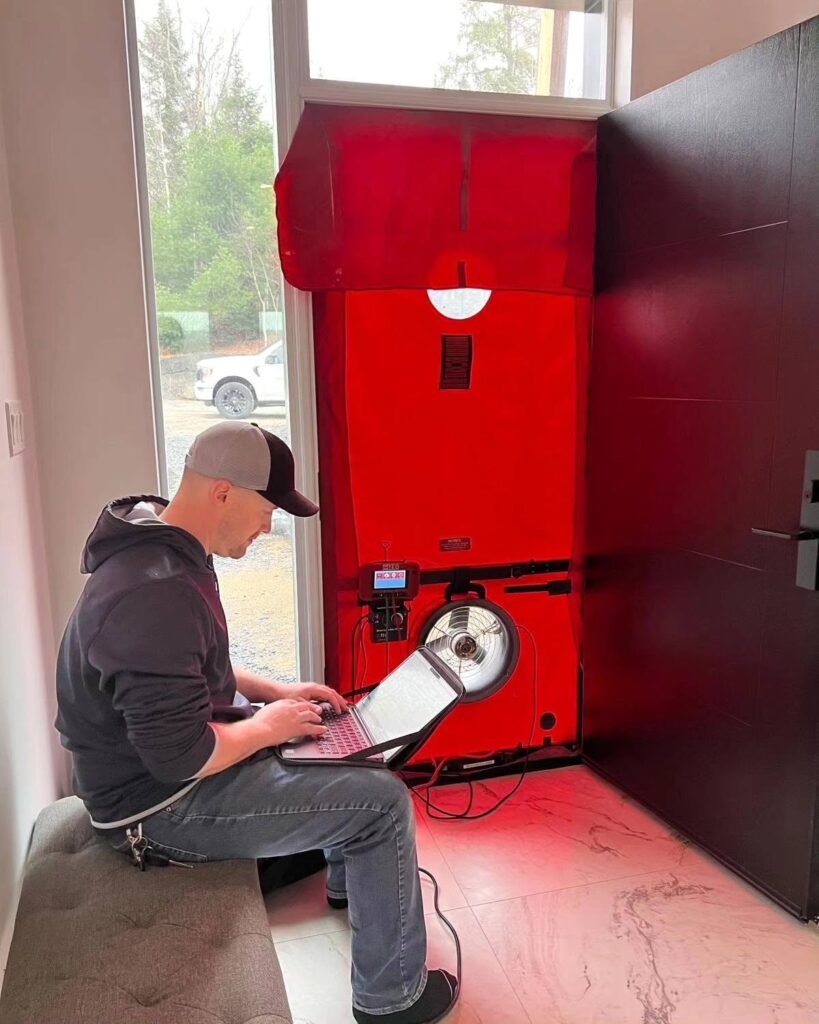
Indeed, builders of net zero ready homes must get their air changes per hour down to 1.3 or less. And if you think about it the importance to energy efficiency is critical. Even if you had 2.6 air changes per hour, which is still pretty good, but that’s twice as much air to heat every hour. This is the very definition of low-hanging fruit.
Kyle’s goal in Stratton Homes is 0.6 air changes per hour.
In terms of insulation values, the walls are R30, the ceiling is R60 and beneath of the basement floor is four inches of foam insulation (R10), ensuring the floor feels naturally warm all the time.
Windows
Here’s one of the reasons Kyle would have found it hard to meet prescriptive standards such as Passive House.
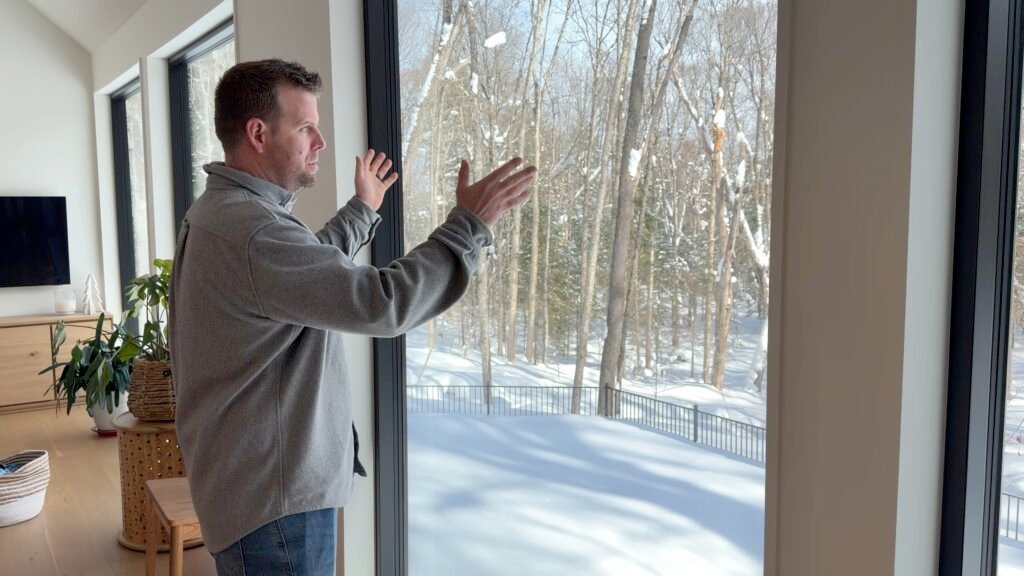
These homes are set in one of the most beautiful parts of Canada in Ontario’s Cottage Country, and people want lots of big windows to bring as much nature into the home as possible.
Stratton uses very high-quality triple-glazed windows to let the nature views shine in and keep the cold out. The effect is stunning as we saw in Stratton’s first net zero labelled home, a large 4,000 sq foot open design bungalow.
Ventilation and Heat Recovery
All modern energy-efficient homes use a Heat Recovery Ventilator (HRV) or an Energy Recovery Ventilator (ERV) to bring fresh filtered air into the home and recover 80% or more of the heat from waste air. This is a huge difference from the old days when there were large holes in homes for vent fans and fresh air that brought ice-cold air into the home in winter. Stratton is using an ERV in their homes.
ERVs manage moisture as well as heat, whereas HRVs only manage and recover heat. In cold climates, builders are increasingly using ERVs.
Heating and Cooling
The star of these energy-efficient net zero homes is the air source heat pump.
“One of the biggest innovations that we’ve been adopting in every single one of the homes that we’ve built is air source heat pumps,” says Kyle.
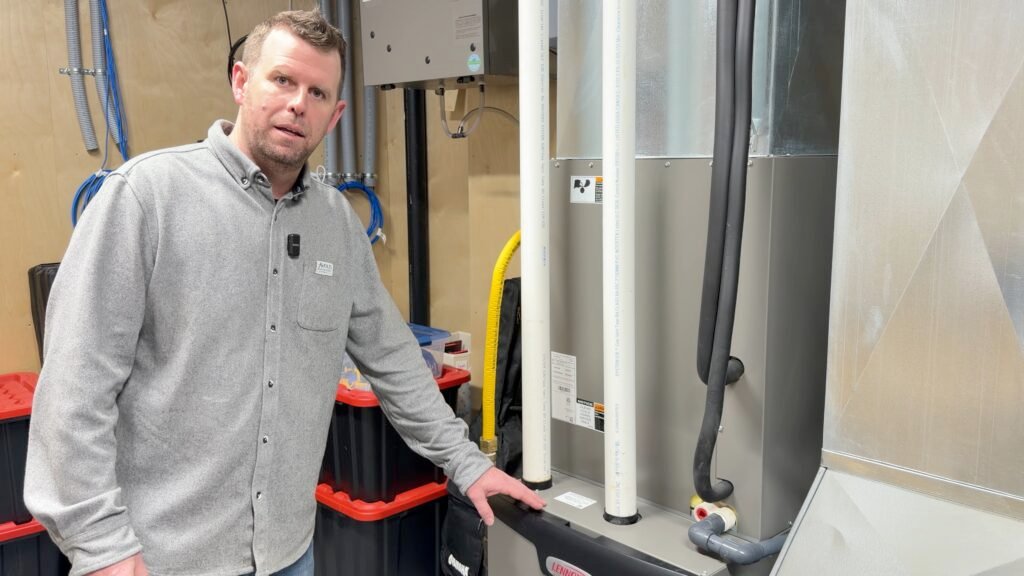
He says they are simple to install and very effective at efficiently heating and cooling homes.
Heat pumps are up to 300% efficient when heating and up to 700% energy efficient when cooling.
For backup heat, Stratton uses a gas furnace as an air handler which the heat pump coils are built right into. The heat pump does most of the heating.
Cold Climate heat pumps are now rated to fully function at temperatures as low as -37C which is a game changer for the Canadian climate.
I installed an air source heat pump rated to -35C in my own cabin with only electric heat backup and then did a story on it we called “Worst Case Scenario” (for a heat pump).
Other Features
Stratton also installs drainwater heat recovery systems in their homes. These are coiled copper pipes wrapped around the drain that can save 20% or more on water heating depending on usage. Big families and higher use cases benefit more.
Stratton also uses heat pump water heaters, which also produce hot water efficiently.
Stratton probably doesn’t need to do this, but they also use Aerobarrier in their homes, which is a pressurized aerosol that finds and seals even the tiniest gaps in the home, helping them reach an amazing 0.6 air changes per hour.
So, in summary, here are the key features of a Stratton Net Zero Ready home:
Net Zero Features Summary
- R30 Walls
- R60 ceiling insulation
- Air Source Heat Pump
- Air Sealing with Siga water permeable air barrier
- Blower door tests achieving as low as 0.6 air changes per hour
- R10 (4 inches of foam) beneath basement floor
- AeroBarrier Air Seal Technology
- Ultra efficient triple glazed windows
- ERV 82% Efficient Energy Recovery Ventilation
- Drain water heat recovery
- Air Source Heat Pump Water Heater
Exploring New Building Techniques
Kyle not only tested and implemented the best, most cost-effective energy efficiency solutions in Stratton’s home; he also researched and did a real-world test on three emerging construction techniques:
- Panelized construction
- Modular construction
- Stick-built construction
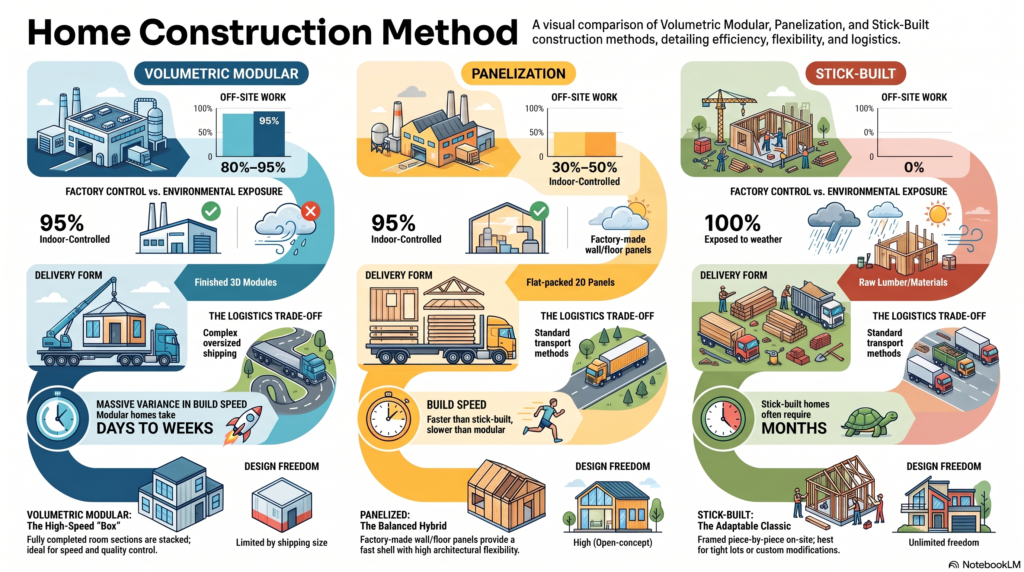
Kyle built three homes side-by-side, all to a net zero ready standard, to compare the solutions.
Panelized construction involves building full wall systems in a plant, loading them on a truck and shipping them to a building site, and then quickly erecting the home.
Volumetric Modular construction involves building entire rooms or sections of the home in a plant and craning them onto the foundation.
Stick-built is the traditional way of building homes. A big pile of lumber is delivered to the site, and the home is built from scratch on-site.
These new techniques are being deployed by many builders in large cities where the plants are located. Landmark Homes in Edmonton uses ARQ, an automated panelization plant that uses robots and can assemble all of the walls and roof of a home in a single day.
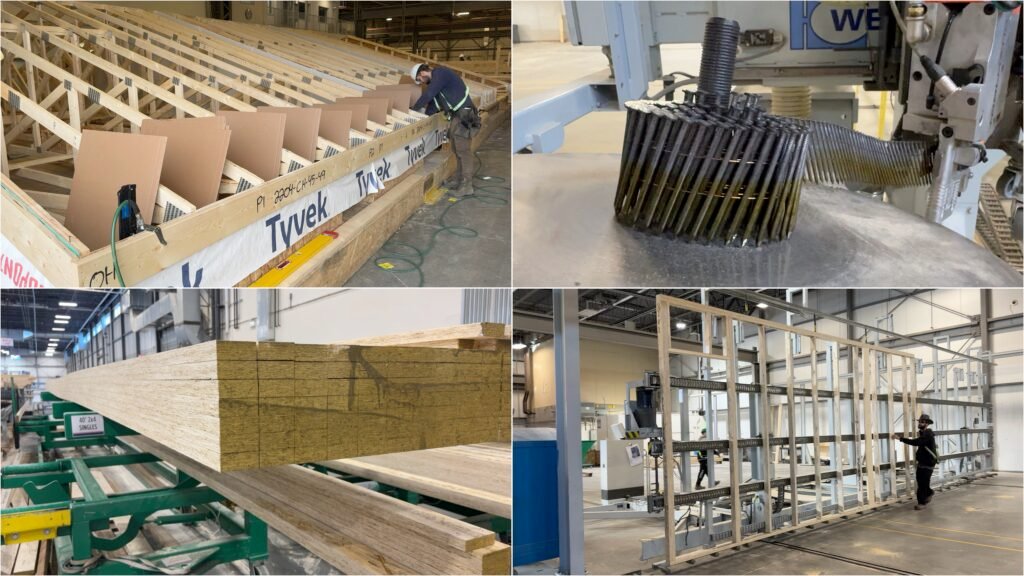
Doug Tarry Homes, also featured in our Chasing Net Zero series, has a smaller plant with a computerized saw where walls are assembled inside.
In Canada, this offers significant benefits. First, building walls inside a climate-controlled plant is far better than building walls outside on a -20C day in the winter. And it can be more efficient and cost-effective, and very few materials are wasted.
But Stratton Homes is in Huntsville, hundreds of kilometres from big cities and the plants. And the company often builds on land located down narrow, winding roads and even on islands.
Kyle says his tests were done during COVID, so supply chain issues may have affected his learnings.
But in the end, he determined stick-built was best for Stratton: “We’re able to just point our systems to it, and we can just rinse and repeat and do the same thing over again.”
After first-hand experience, he now knows the advantages of each system and may use panelized construction in some applications.
Living with Net Zero – Seeing is believing
Morgan Shaver is the director of construction at Stratton Homes and Kyle Newman’s business partner.
He’s a long-time builder. While Kyle geeks out over the details of super energy-efficient homes, Morgan builds them. He loves where Stratton is going with their super energy-efficient homes, but he wanted to experience it firsthand.
He recently built his own home, and so he included all of the net-zero features and a bunch more.
”This build included full triple-pane windows in the whole house. We have an air-source heat pump, heat pump water tank, heat pump dryer, and an induction stove cooktop,” says Shaver.
“We just tried to take all the best of the best and put it into our build.”
Now that he’s living in one of these amazing homes, there is no going back.
“The comfort of the house is night and day. You can be in the house and looking out of those big windows, and there’s a blizzard outside, and you don’t hear a whistle or a creak, and there are no cold zones in the house. It’s just warm and efficient,” Shaver says.
This is the irony of net zero. While the public doesn’t yet fully appreciate the many benefits of net zero homes, once they live in one, they love it.
Net Zero Ready for Habitat for Humanity
Kyle Newman says they are taking these ideas to other formats of buildings.

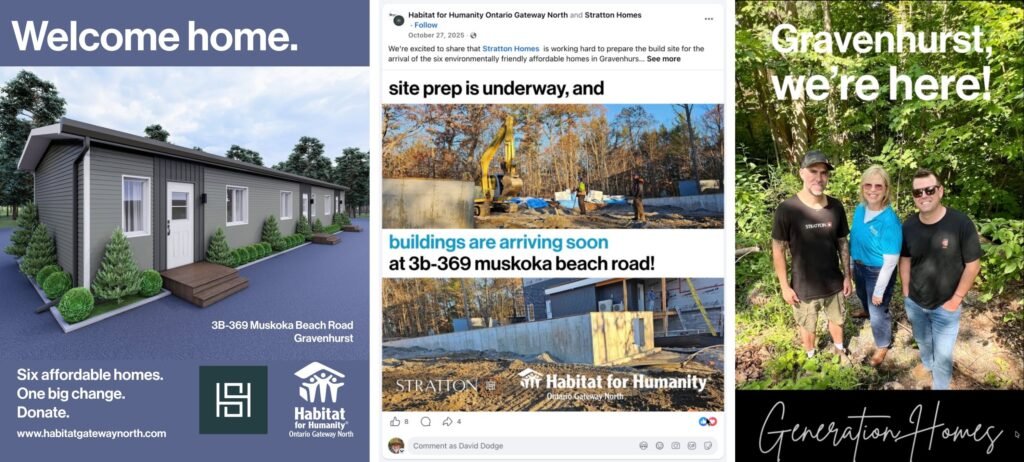
He recently worked on a Habitat for Humanity project and helped them build it to a net-zero-ready standard in Huntsville.
And his ideas are also attracting new business.
A resort company approached him recently to do the same for a new nature resort they are building in the Muskoka Region.
After all of his research and hands-on experience, Kyle now builds all their homes to an affordable net-zero-ready standard.
Kyle says mentors such as Gord Cooke at Building Knowledge Canada and Doug Tarry and Doug Tarry Homes have really pushed the envelope, and now he wants to share what he’s learned.
It all goes back to a conversation Kyle had with a friend in his younger years when he realized the legacy he was looking for was not a mansion in the Bahamas but a lifetime of meaningful work that makes a difference.
Kyle is determined to continue to serve that legacy. “You know, thinking about my kids and future generations. It’s about trying to influence other builders and be the best example that we can of something that’s meaningful.”
Indeed, to many of the builders in our Chasing Net Zero series, the mission of building affordable net zero homes has powerfully motivated them to keep pushing the envelope, and its homeowners that will be the big winners in the long run.
If you liked this story you may also enjoy our story on Kyle Newman’s journey to net zero, which began in a high school environmental class. See our story entitled One With Nature – Kyle Newman’s Journey to Net Zero in the Muskoka Region at GreenEnergyFutures.ca
Green Energy Futures CKUA Radio Podcast Feature
Subscribe to our CKUA Audio podcast on your favourite app and get our concise four-minute features delivered to you every week. Or dive in and listen to our 430 episodes!
Related Stories
Chasing Net Zero Series
We’re travelling across Canada to tell the stories of some of Canada’s most inspiring pioneers of net zero home building. Find out who the builders are and what they are doing to make net zero homes the affordable norm in Canada.
