
By David Dodge, GreenEnergyFutures.ca
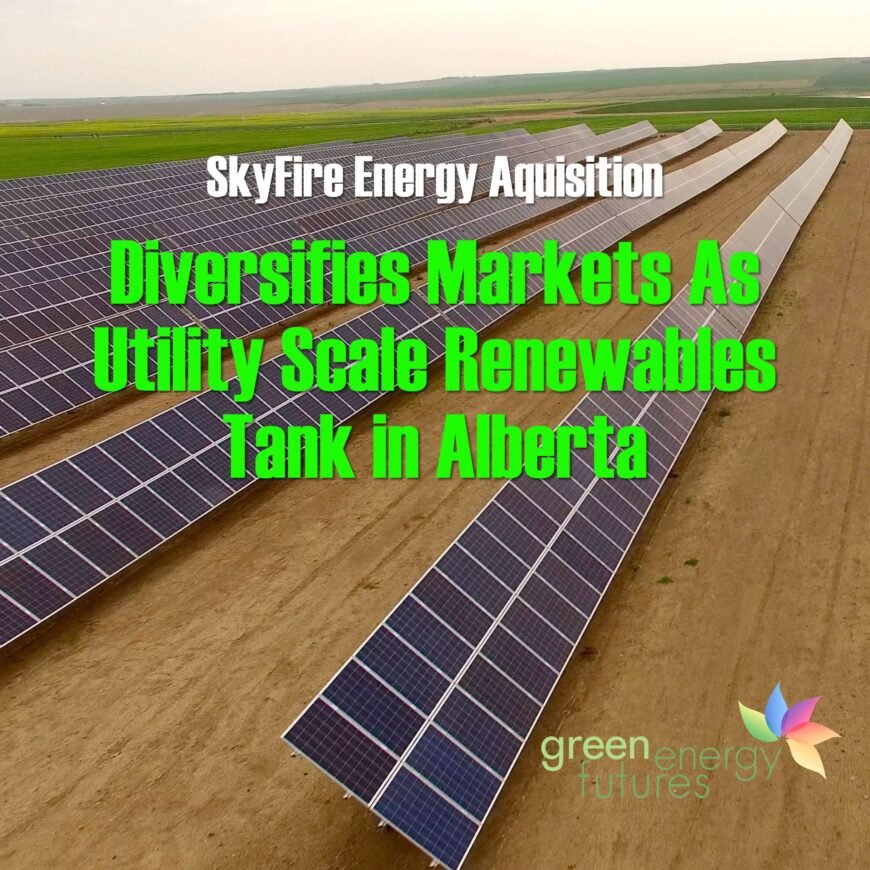
SkyFire Energy, one of Alberta’s oldest solar companies, just acquired Hakai Energy Solutions, diversifying their operations into coastal and remote BC locations.
Their strategy of diversifying their markets and the geographies where they operate is one of the reasons the company has continued to thrive through the booms and busts of the solar industry in Alberta.
We profiled SkyFire’s founder, David Kelley, in 2022 in a story we called “From Niche to Boom.” Alberta was leading the nation in renewable energy development then and now, thanks to particularly onerous regulations and red tape. Utility solar in Alberta has all but come to a grinding halt.
INSERT KELLY VIDEO STORY HERE
About 25 gigawatts of renewable energy projects have been scrapped in the wake of punishing new rules, representing a loss of billions of dollars of investment in Alberta.
SkyFire’s strategy has been to diversify through acquisitions. This strategy got them an Edmonton office in 2012 and another in the Okanagan in 2018.
Skyfire acquires Hakai Energy Solutions
Hakai Energy Solutions works in the residential and commercial solar space on the coast, and they are also a leader in off-grid projects. “So they bring a lot of battery storage expertise to SkyFire,” says David Vonesch, president and CEO of SkyFire Energy.
Vonesch says the strength of their business has come from diversification by sector and geography. The company works on residential, commercial, and utility-scale projects, as well as on the operation and maintenance of utility-scale projects.
While solar at a utility scale has tanked in Alberta, the residential and commercial sectors are booming. Hidden beneath the headlines screaming about the collapse of utility-scale solar, more than 10,000 rooftop solar systems were added in Alberta last year alone.
Rooftop solar is quietly booming in Alberta
“In Alberta, we have over 40,000 behind-the-meter microgeneration systems. So, homes, businesses, and industrial consumers are putting solar on their facilities to reduce their energy consumption and offset power from the grid,” says Vonesch.
These solar systems are starting to add up, with a combined capacity of 400 megawatts.
SkyFire itself has installed 5,000 small solar systems on Jayman homes in Alberta, which includes solar with every home they build.
Vonesch says the home market is now beyond the early adopter phase and low-interest, long-term loan programs such as the Clean Energy Improvement Program (CEIP), which allow homeowners to finance solar against the property instead of the individual, are big enablers.
And Vonesch is pretty jazzed about the commercial industrial market right now, which is benefiting from federal 30% investment tax credits and accelerated capital cost allowances.
“Commercial industrial solar is a really exciting space right now where it’s a great economic opportunity,” he says.
Alberta’s hostile policy environment towards renewable energy is sending companies like SkyFire and many others to other Canadian provinces where renewable energy is booming.


BC, Ontario and Quebec in renewable boom
“The most exciting markets, I would say, over the next 10 years in Canada are BC, Ontario, and Quebec,” says Vonesch.
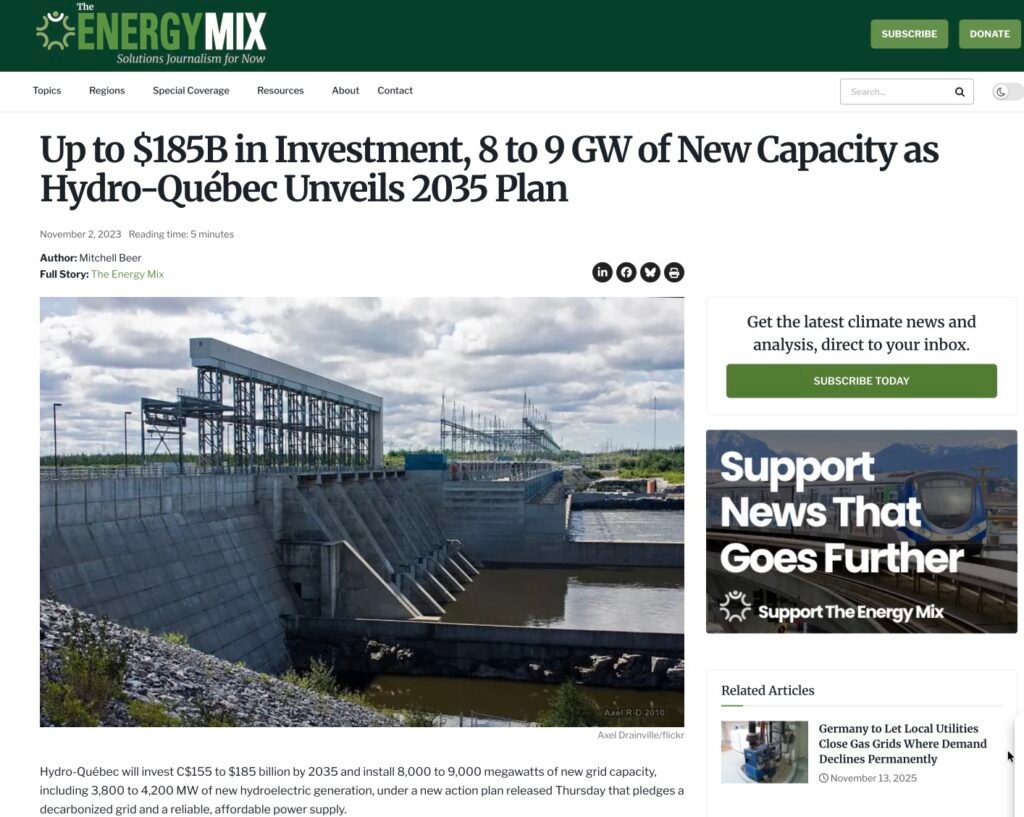
Hydro Quebec is set to invest between $155 and $185 billion over the next decade to add 11,000 megawatts of new clean energy to their grid.
That’s the size of Alberta’s entire electricity grid today.
When Alberta was booming prior to 2023, the Business Renewables Centre recorded $3.3 billion worth of Power Purchase Agreement sales in Alberta and $6 billion capital investment in renewable energy.
Just as Alberta is turning its back on an industry with trillions of dollars in investment committed globally.
The federal government just announced a major national energy grid corridor “to boost the reliability of the grid and prepare for an increasingly electrified economy,” says Tim Weis of the Pembina Institute in reaction.
Even solar used to repurpose abandoned oil wells resisted
SkyFire worked on what some would call a model energy transition project in Alberta and even it is caught up in Alberta’s frustrating and uncertain rules.
SkyFire worked with Renuwell, a small Alberta company to pioneer the repurposing of two abandoned oil wells sites in Alberta.
“These are really awesome projects where we’re taking abandoned oil and gas infrastructure and converting it into small solar power plants,” says Vonesch.
In Alberta, landowners and municipalities are owed millions in lost revenues from tens of thousands of abandoned oil wells.
The solar projects on these sites renew tax revenue for municipalities and lease payments to landowners in a spectacular win-win.
Plus, they reuse roads and electricity infrastructure that was abandoned.
In these projects “the solar developer is paying from their own pockets to cap and close that abandoned oil and gas well. They’re doing some basic reclamation of that abandoned oil and gas site, says Vonesch.
This is better than reclamation since the sites now produce electricity and revenue.
But now the province wants solar developers to “post reclamation security payments.”
“It’s just another barrier,” says Vonesch. “Those small projects of that type were already economically challenged.”
Changes needed – not chaos
Alberta’s electricity policies and regulations do need to change. The system needs to prepare for tens of thousands of EVS, the electrification of home heating, data centres, and much more.
But for now, the industry is in chaos, and billions in investment have already been sent packing to other provinces and jurisdictions.
“It’s at a point to David where we’re risking the future of this province’s economy, you know, it isn’t just solar and wind projects that are affected,” he says.
With “the amount of uncertainty in the electricity generation market…we could be at risk of losing industry or new industrial developments.”
“It’s a very difficult time for developers of solar in this province,” he says. “ And it’s really disappointing where we’ve historically had conservative governments that have really enabled choice and really worked to provide a fair and level playing field for investors,” says Vonesch.
Alberta’s deregulated market was perfectly set up to attract billions in investment in renewables, and it worked great until it was brought to a grinding halt politically.
And now major changes, politically motivated changes, are occurring that are really putting a damper on one specific industry…It’s really egregious,” he says.
While Vonesch would like to see things working again in Alberta, the industry is still busy, just not as much in Alberta.
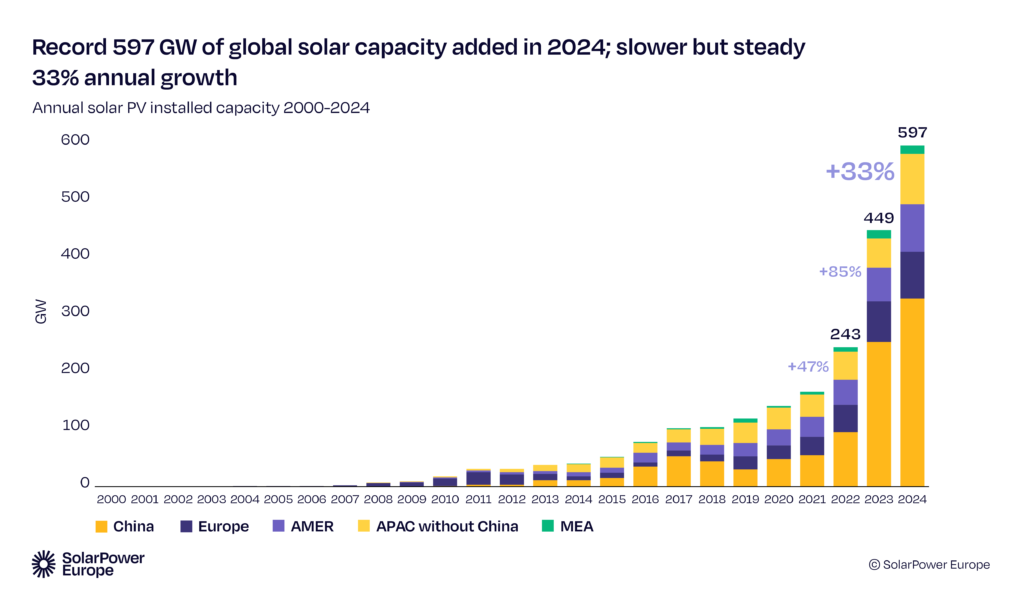
Solar winning, just not in Alberta
“The one thing that I continue to sort of hang my hat on and that gives me hope is this idea that, you know, while policy and politics can slow the pace and the timing of the solar industry, economics will win the day,” he says.
Ironically, while Vonesch mourns the Alberta situation, “It’s a really exciting time,” almost everywhere else.
There is huge demand for solar, wind, and battery storage. Demand for clean electricity is growing from the electrification of transportation (EVs), for heating homes with electric air source heat pumps, and for data centres.
“That increased demand is driving a need for new [electricity] generation, and the regulated utilities [outside of Alberta] are very alive to the fact that solar and wind are your lowest cost energy sources to meet that demand,” says Vonesch.
