

By David Dodge, GreenEnergyFutures.ca
Affordability is the holy grail of net-zero home building, and thanks to two decades of pioneering work, Chris Williams of Avalon Master Builders in Calgary, Alberta, can now say you get net zero for zero extra dollars.
In our previous story, we learned how Ryan and Christine Scott, the second-generation owners of Avalon Master Builders, took Chris Williams on as a partner and, through years of research and experience, learned to produce affordable net-zero and net-zero-ready homes.
Since those early pioneering net-zero pilot projects, the price of solar has plummeted, making it a good investment, and another technology has improved a great deal.
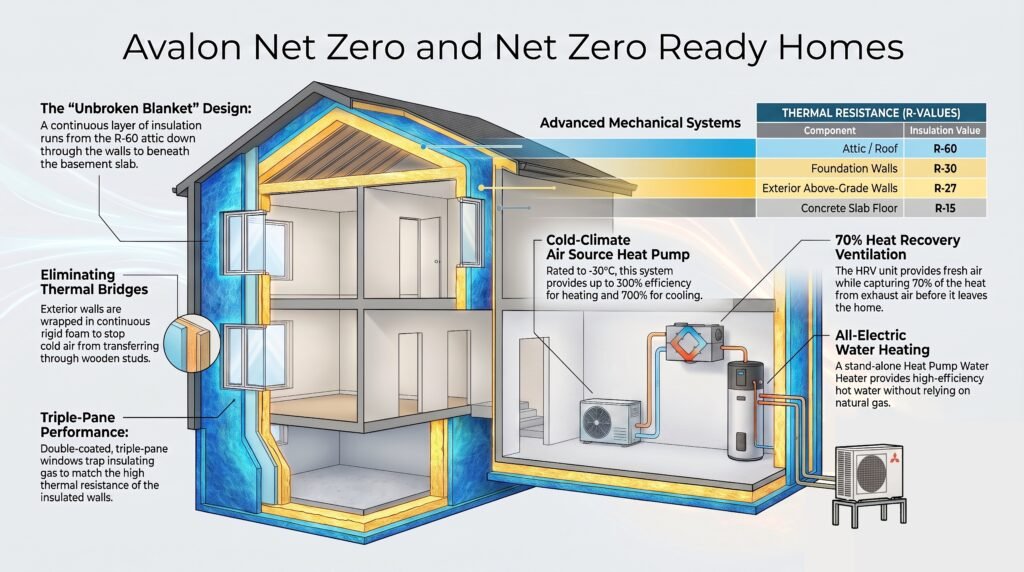
“Air source heat pump technology became more affordable,” says Chris Williams, and today it can heat a home efficiently in temperatures as low as -25 with some going as low as -35C.
The culmination of their research and experience testing wall systems, triple-paned windows, various air sealing techniques, heat recovery air systems, and the right amount of insulation is affordability.
“All of those things coming together really got us to the point where we can now, in the type of building we do, build for the same monthly cost of living in a code-built home,” says Williams.
Indeed, Williams says the format of their homes actually makes it easier to get to net zero.
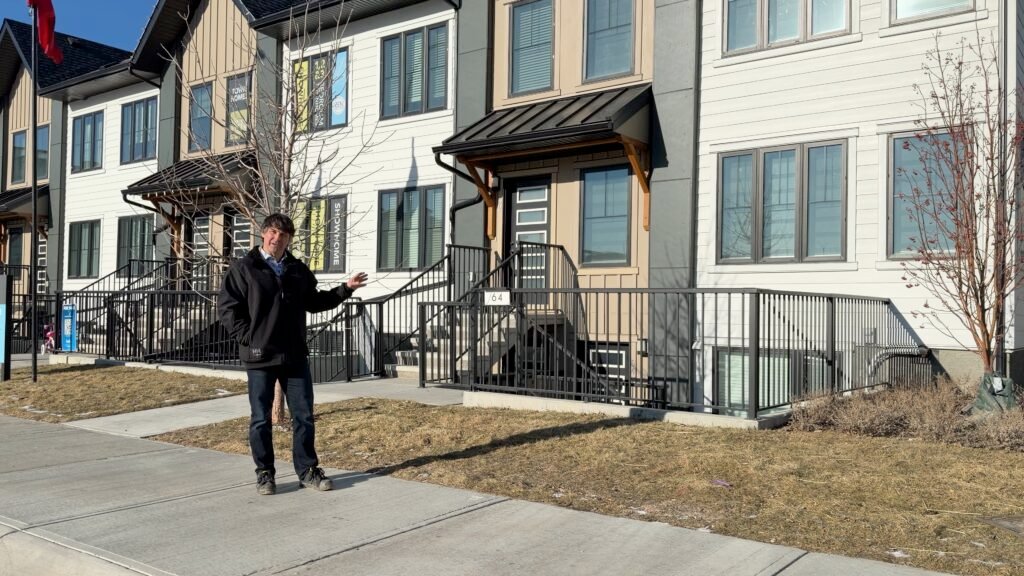
Standing in front of Avalon’s Zen Livingston stacked townhouse project, Williams describes the units.
A quick tour of the features of an Avalon net zero townhome
This building type is very typical of our affordable net zero,” says Williams.
We’ve got 600 to 700 square foot single-level living, and over top of that, around 1,200 square feet, or two stories of living space in a townhome-style home.
“And the big advantage to net-zero affordability is all that shared wall space,” says Williams. The townhomes have fewer walls to super insulate thanks to the shared walls between them.
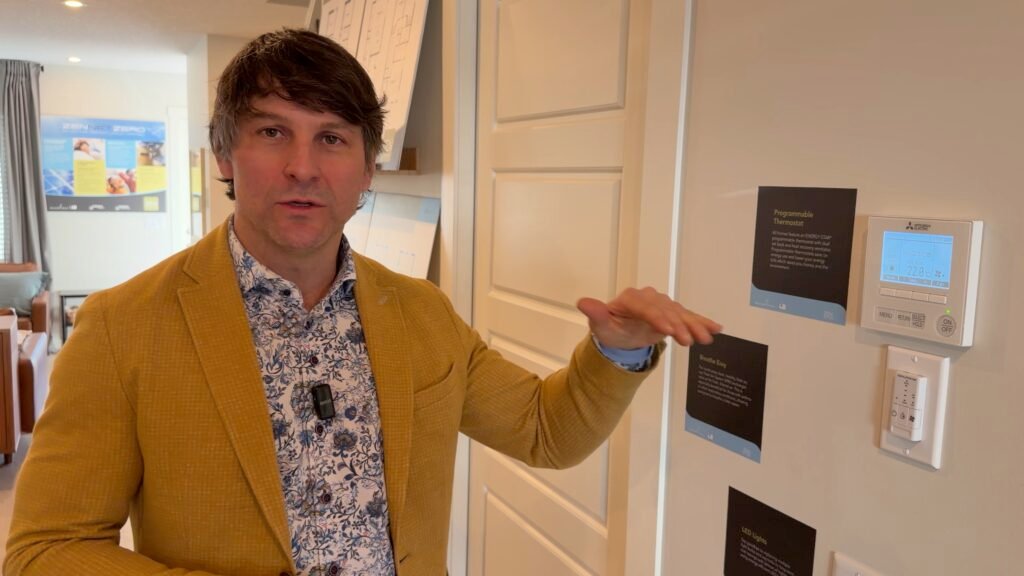
Williams begins our tour at the thermostat for the heat pump heating system.
Set it and forget it
But as it turns out, it’s pretty simple managing a heat pump-heated home. As one expert described to me, when it comes to heat pumps, you set it and forget it.
You simply set your favourite temperature level, and the heat pump system will heat the home or cool the home as needed automatically, says Williams.
“It’s going to keep it to a steady temperature, whether it’s -30 outside or +30 outside, it’ll just stay at that set point,” says Williams.
Since these are stacked townhomes, the mechanical room is hidden behind doors off the kitchen for the upper units.
Fresh air and heat recovery
Williams cracked open the mechanical room door and showed us a fresh air heat recovery system, or heat recovery ventilator (HRV) as they are properly called. He showed me how the exhaust air passes over the incoming fresh air, and the HRV recovers up to 70% of the heat from the exhaust air. (see video story)
Heat pumps for water, heat and cooling
Williams then showed the heat pump water heater, which is becoming the method of choice for efficiently providing hot water using electricity in net-zero homes.
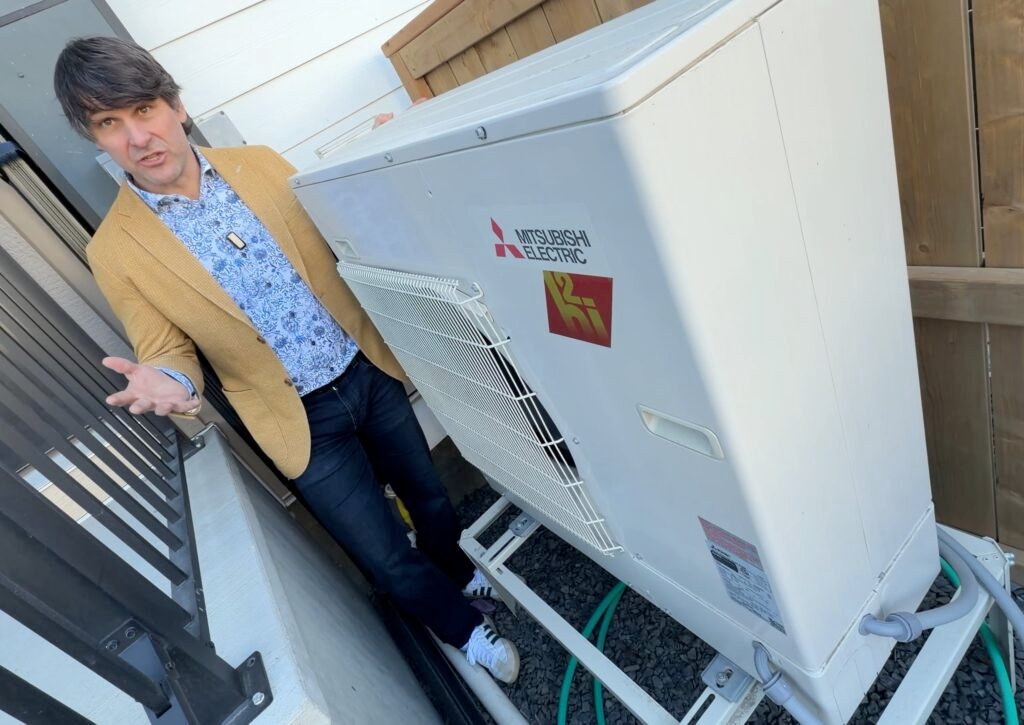
This Zen Livingston home is heated with an Air Source Heat Pump which is rated to -25C that comes with an electric backup system. The heat is distributed by a forced air system. At -25C, this heat pump still cranks out 80% of its heating capacity at 140% efficiency. The electric backup system only comes on when it’s needed.
The exterior heat pump unit looks like an air conditioner and is a key part of electrifying the heating system in a home, which means the home can be powered by solar and does not require gas.
Effective and economical wall system
Over the years, we have seen many elaborate wall systems, such as double walls and insulated concrete forms and even straw bale.
But Avalon’s focus once again is affordability.
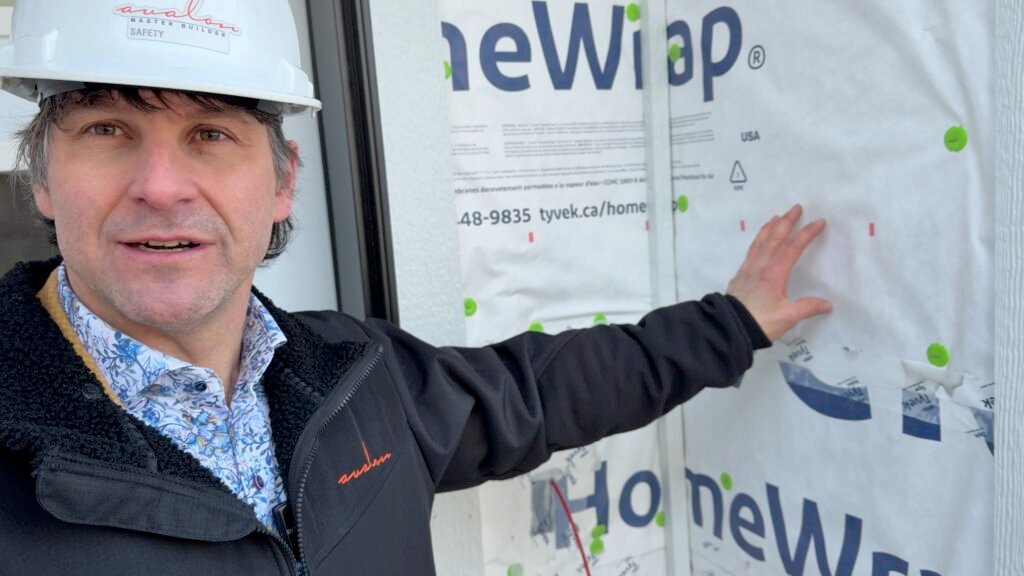
And like many production builders, we’ve seen they use a regular 2×6 wall with R22 batt insulation inside the cavity and 1.5 inches of foam insulation on the outside along with a water-permeable air seal. The above-grade walls are R27, while the below-grade walls use 2 inches of foam insulation on the outside of the walls and reach R30.
Air sealing is about attention to detail
Caulking beneath the vapour barrier and careful taping of all of the seams helps achieve 1.3 or less air changes per hour, which is an important component of energy efficiency and getting to net zero.
Williams walked me around a building under construction where you could see gaskets in wall penetrations and special flexible wrap-around windows and other corners. They even avoid using staples to minimize the punctures in the barrier.
“This seems pretty simple, and there’s been a lot of experimentation over time where we keep coming back to this wall because of affordability,” says Williams.
Affordable net zero is key to what we’re doing, and this is where we’ve arrived.
The home has R60 insulation in the attic to round off the continuous envelope of insulation that forms an unbroken blanket under, around, and over the entire home.
This is a far cry from the good old days of sloppy vapour barriers and air change rates of 5 to 10 and higher per hour.
In the past, this meant your furnace had to reheat all of the air in the home 5 to 10 times per hour. And the fresh air coming in was as cold as it was outside. In these homes, the air changes are 10x better, and the heat recovery ventilator recovers about 70% of the heat from exhaust air.
It takes 50 to 70% less energy to heat these homes.
Climate Resilience
As we toured the outside of the townhomes under construction, Williams said Avalon and some other builders are increasingly deploying climate resilience measures in their homes to combat the impacts of severe weather events.
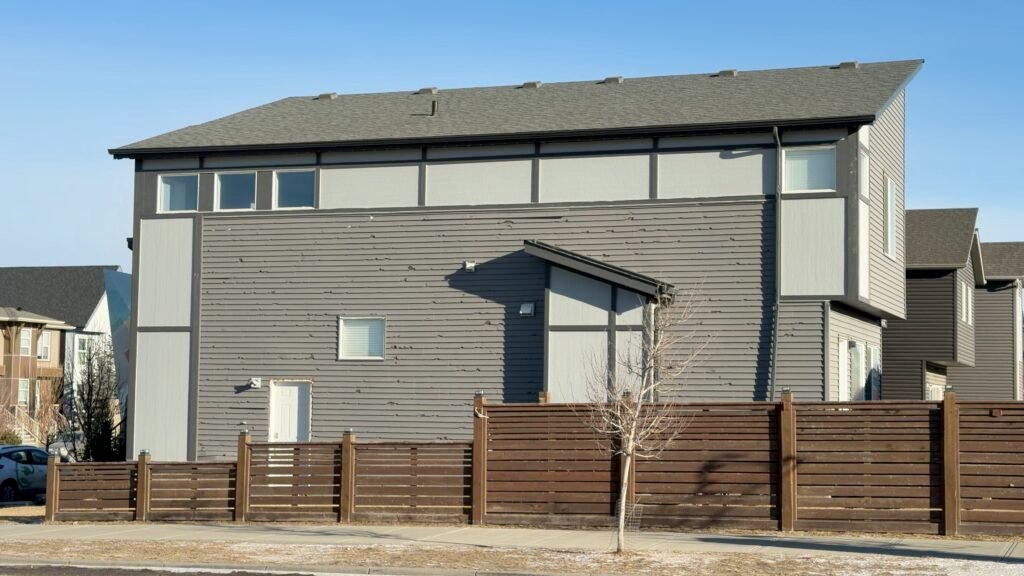
“In Southern Alberta, we’re in the hail belt,” says Williams as he gestures right across the street to another building that was pummelled by a recent hailstorm. The siding was full of holes and completely destroyed.
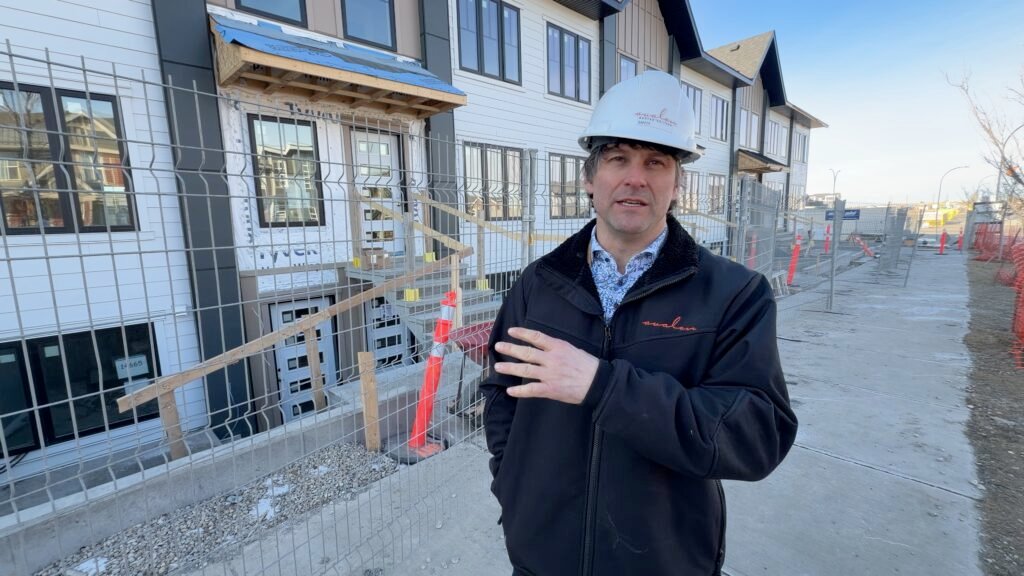
“It’s a real thing, and it’s a real risk that we have to consider,” says Williams.
“So, what we’re doing here differently is we’re using siding that is hail resistant, we’re using shingles that are hail resistant, and we’re also changing the way that we fasten and tie walls together,” he says.
Calgary can experience high winds, so increasingly builders are using hurricane ties or special fastening systems to help ensure roofs don’t blow off.
Gas furnaces
Like many net zero pioneers, Avalon still offers homes with gas heating or hybrid gas/heat pump systems, but their net zero ready and net zero homes are heated by electric energy-efficient air source heat pumps.
The gas heating option is still comforting to some consumers, but as we have seen with other builders, once more and more consumers live with heat pumps and realize they are robust heating and cooling systems, the uptake is expected to rise over time.
Some still opt for hybrid systems, but the biggest benefit comes when owners of net zero homes are able to completely eliminate natural gas and no longer get gas bills and no longer pay all of the distribution and administration charges associated with it.
Net Zero
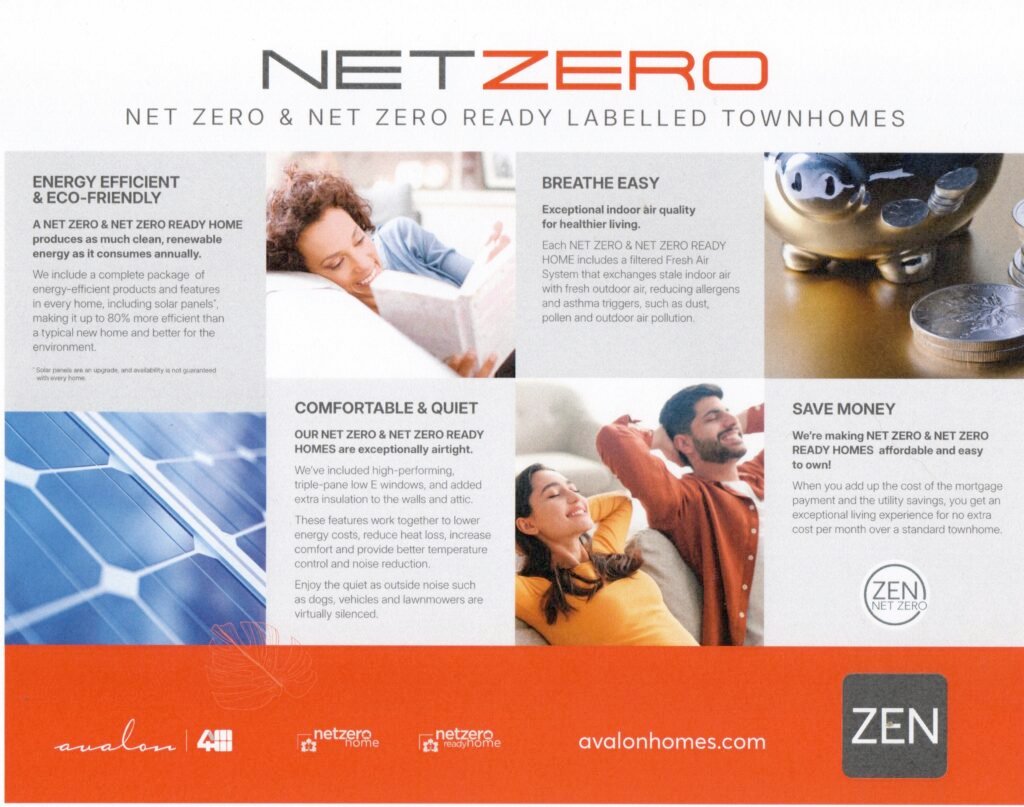
“Net zero to Avalon is simply when you’re living in the home, you’re able to produce as much electricity via those solar panels as we use for your lights, your TV, and your heating system,” says Williams.
Net zero ready is the same home with no solar added to it.
Related Episode
Chasing Net Zero – Subscribe to the series
Subscribe to the series on YouTube and don’t miss a single episode as we travel across Canada to find the best net zero home builders in Canada.
