

By David Dodge, GreenEnergyFutures.ca
Affordable Chinese EVs costing $35,000 or less are coming to Canada.
The move came as a surprise to many when Prime Minister Mark Carney secured a deal in which China will drastically reduce tariffs on Canada’s agricultural goods, and Canada will reduce tariffs on Chinese EVs.
Canada is “moving from a tariff that was over 100% to one that will be 6.1%, allowing up to 49,000 Chinese-made EVs into Canada a year,” says Adam Thorn, director of transportation at the Pembina Institute. (Trade deal details from CBC)
“That quota will rise about 6% per year, reaching 70,000 vehicles within five years, with about half of that quota reserved for EVs that are under $35,000,” says Thorn.
Thorn says he was pleasantly surprised by the announcement. “The Canadian government has been signalling, I think for quite some time, that Canada needs to diversify its trading relationships. And I think this is a really positive step in that direction.”
Increase choice of EVs, decrease emissions
“I think what it really means is more choice for consumers. Access to lower-cost EVs, which can only really increase the uptake and decrease emissions while increasing affordability,” says Thorn.
In Canada today, it’s pretty hard to purchase an EV for less than $50,000.
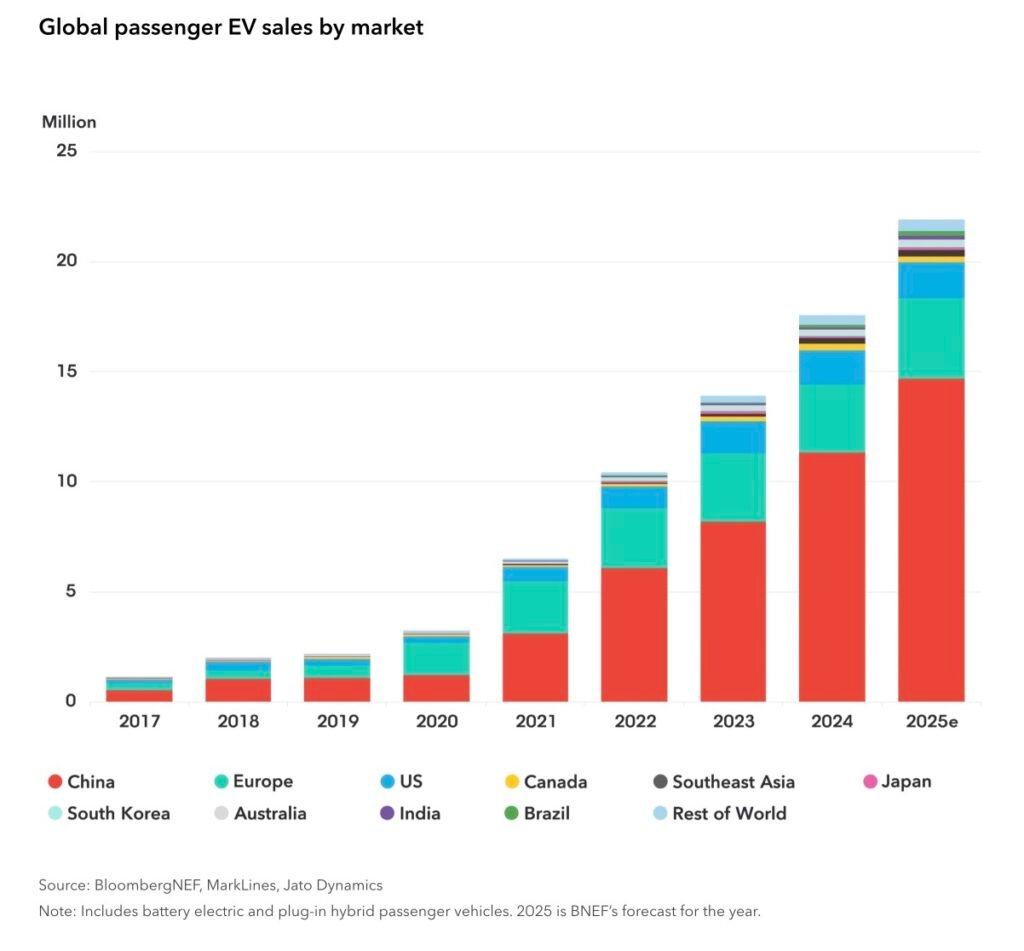
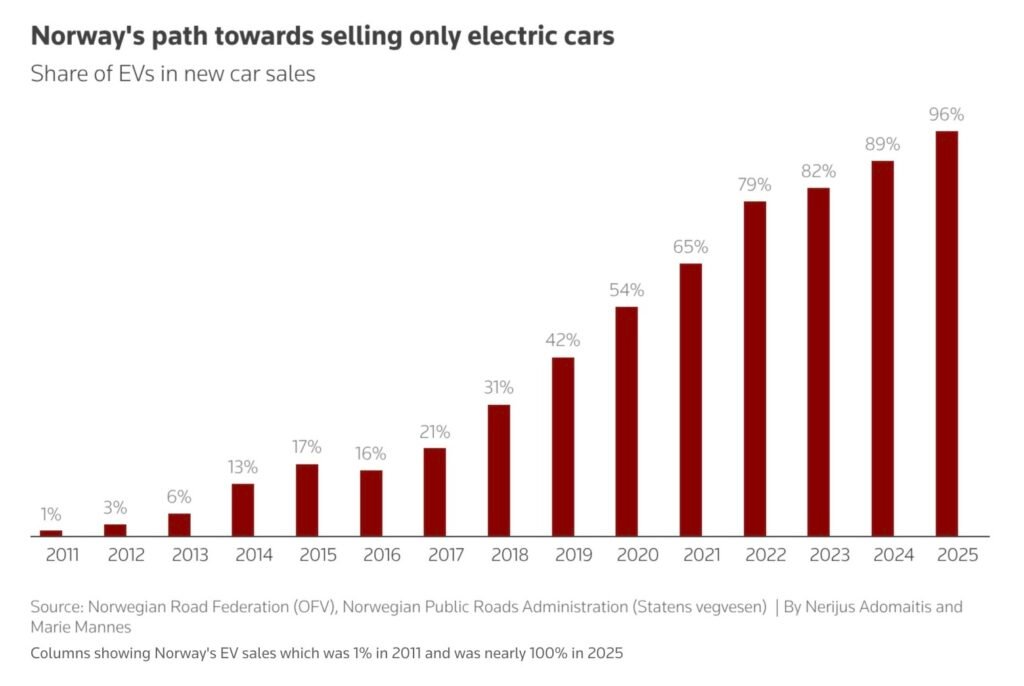
EV sales have been soaring around the world, with up to 50% of all new car sales in China being EVs last year and around 20-30% in other countries. In Norway, 93% of all auto sales last year were EVs.
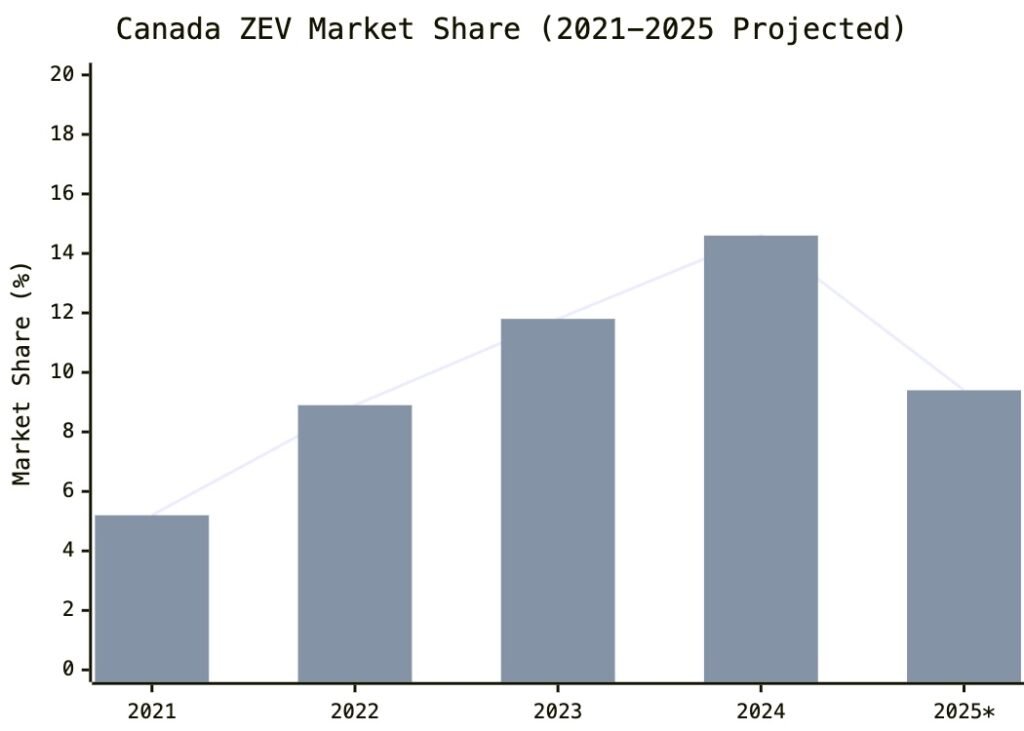
EV sales are growing in Canada too, but sales growth slowed last year when tariffs and the end of federal incentives impacted sales.
“We know EVs are lower cost. That is, we see less maintenance and, of course, lower fuel costs with those. EVs can offer real savings to the Canadian consumer,” says Thorn.
Thorn says transportation is a significant source of pollution contributing to climate change.
“Transportation represents Canada’s second-highest area of emissions, and on-road transportation represents more than 85% of those emissions. And so the transition to EVs is a really crucial policy for Canada to reduce those emissions.”
Affordable EVs for under $35,000
And Thorn says one of the barriers to EV uptake has been the sticker price. “I think what’s really exciting about this policy is that a portion of that quota is reserved for EVs that are priced under $35,000.”
Ontario Premier Doug Ford denounced the deal saying it will hurt Canada’s auto industry.
The 50,000 vehicles represent 3% of sales in Canada, and even in five years when the quota rises to 70,000 vehicles, it represents a small slice of the Canadian market.
The move comes at a time when North American automakers are pulling back from Canada and slowing down their EV programs in the wake of US tariffs and political chaos.
Canada exports more than 80% of the autos manufactured in Canada; of those 92%, go to the US. Currently, only US and Japanese autos are manufactured domestically.
Canada’s auto industry is extremely vulnerable
This export figure highlights just how vulnerable Canada is to the whims of the US, but it also does not tell the whole story.
For autos, or light vehicles, it looks like Canada has an automotive trade surplus of $8.3 billion with the US, but when you bring medium and heavy trucks into the discussion, Canada has a $3 billion trade deficit with the US.
“One of the things that’s been raised, and I think is a really important question, is about whether or not this creates an opportunity for some manufacturing of Chinese EVs in the Canadian context,” says Thorn.
“That’s not included in the deal yet.”
“What we’d very much like to see is if we are going to open the market to Chinese EVs even further than we’re seeing right now, that that would really need to come with investment in jobs and manufacturing in Canada as well,” says Thorn.
